


 Shkruar nga Gjergj Zefi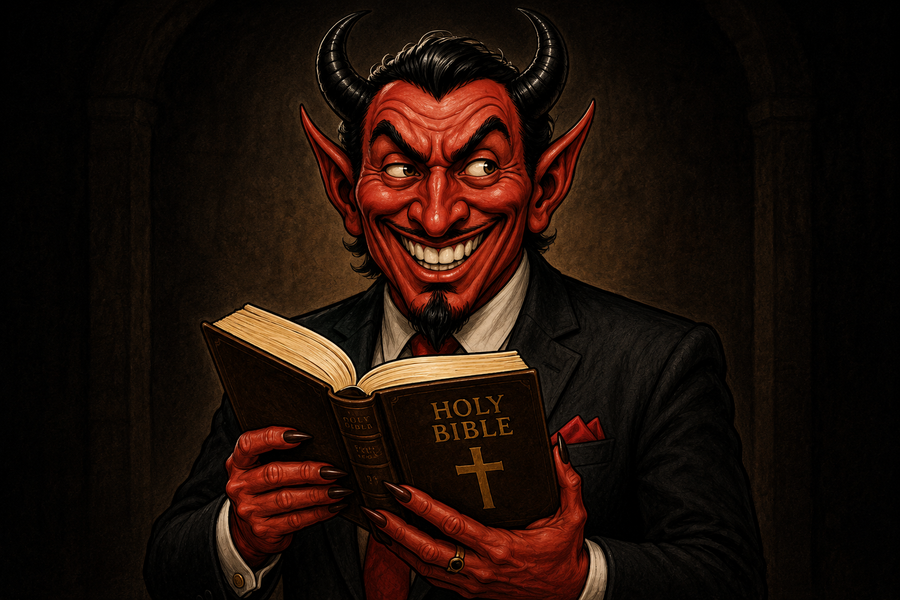
When the left and the right come together!
There are moments when politics removes its ideological mask and emerges naked: not as a battleground of ideas, not as a competition of programs, nor as a clash between the left and the right, but as a power bargain.
The case of Romania is one of these moments. A pro-European government collapsed after the PSD social democrats joined forces with the far-right AUR in a no-confidence motion. Prime Minister Ilie Boloian fell, and Bucharest plunged once again into a political crisis that is not just Romanian, but European.
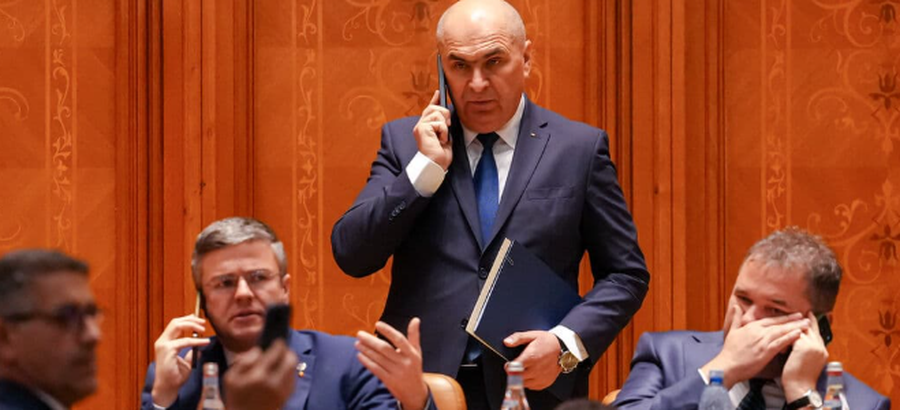
On paper, these two camps should be irreconcilable opponents. One side carries the banner of the social left, the other of fierce nationalism. But when it comes to power, positions, control over the budget, administration, and the circulation of elites, ideologies become smokescreens.
The left and the right, who curse each other on podiums during the day, find common ground in the corridors of power at night.
For Europe, the Romanian case is more than a local crisis. It shows that populist pressure, economic fatigue, and the calculations of traditional parties can break down political taboos that were previously considered untouchable.
If the cordons sanitaire fall one after another, the far right no longer needs to directly gain power; it is enough for it to become an indispensable factor in the overthrow or conditioning of governments. This movement constitutes a new crack in what is known in Europe as the “firewall,” or the political cordon sanitaire that aims to keep nationalist extremists out of power.
This is the real drama: not that parties make alliances, because democracy in itself is the art of compromise. The drama begins when compromise is not made for the citizen, but for the survival of the elites. When parties that claim to represent different political worlds unite only to close the door to change, to hinder new forces, to maintain a monopoly on institutions and to not allow the system to breathe.
Romania is the most recent example of this paradox. The Bolognese government fell against the backdrop of harsh fiscal measures, high deficits, tensions over European funds and the rise of the far right. But beyond the numbers, the message is political: traditional parties, when they feel threatened, are ready to cross any 'red line' they have declared sacred.
This is not just a Bucharest disease. Albania also knows this theater well.
In our country, the left and the right often appear on the screen as enemies for life or death. One speaks of oligarchy, the other of crime; one of state capture, the other of endangered democracy; one of stability, the other of rotation. But when the real architecture of power is touched upon, when the discussion opens on the electoral system, on party financing, on lists, on appointments, on justice, on control of the administration or on the space that should be left to new political forces, suddenly the "enemies" find a common language.
Because in Albania, the great conflict is not always between the left and the right. It is often between old elites and a society that seeks circulation. Between parties that want to keep politics as private property and citizens who want to enter the race without the blessing of eternal presidents. Between the system that produces the same faces and the new energy that seeks to break the blockade.
Here lies the hypocrisy. When a new force emerges, when a group of citizens seeks representation, when young people try to build an alternative outside the grand doors of power, then the left and the right are no longer so divided. Then the silent game begins: rules that make competition difficult, media that polarizes, funding that remains in the hands of the strong, an electoral system that favors old machines.
In public, the major parties talk about democracy. In practice, they behave like cartels. They compete fiercely for the chair, but agree on the table. They fight for power, but not for the system that guarantees them power. They accuse each other of corruption, but rarely open the black box of political financing to the end. They talk about reform, but take care that reform does not disrupt their comfort.
Romania reminds us that democracies are not only endangered by extremes. They are also endangered by traditional parties that use extremes as a tactical tool. They are endangered when “red lines” become elastic according to the interests of the day. They are endangered when principle is replaced by calculation and when politics becomes a survival sport for worn-out castes.
In the end, the question is not whether the left and the right can come together. Of course they can, when the public interest demands it. The question is: for whom do they come together?
If they come together for stability, reform, justice, and European integration, then compromise is an act of responsibility.
But if they come together to shut down the system, to preserve privileges, to block the circulation of elites, and to show the new forces that politics is their private club, then we no longer have compromise. We have a survival pact.
And the survival pacts of the elites are always at the expense of the citizens./ Pamphlet




Bravo Gjergj Zefi! Sa herë që je vetvetja , shkëlqen në analiza.
Pikes I kë rene! Politikanet diten shëtisin me engjejt natën kercejne me djajtë????????♂️????????♂️????????♂️. Nqf do ndodhte ndryshe nuk do quheshin politikan ….