


 Shkruar nga Gjergj Zefi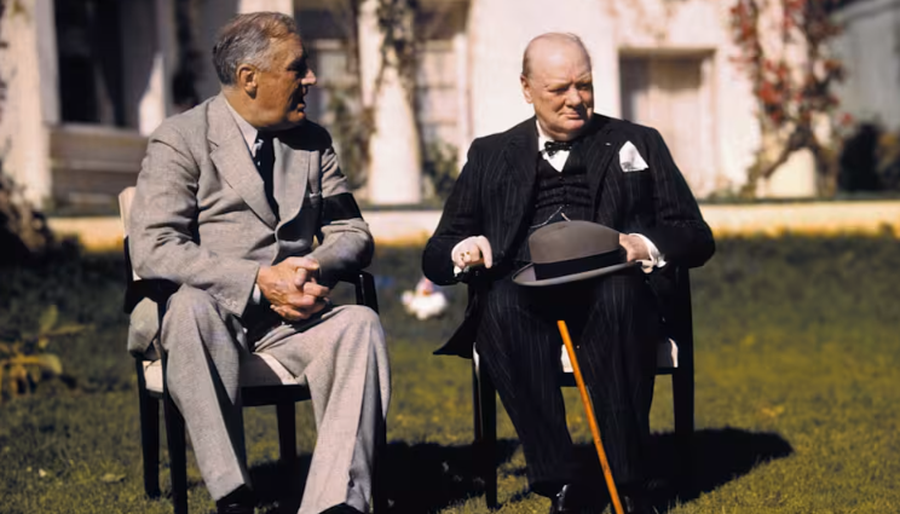
Without Europe, America is not a superpower: the truth that is not told in Washington...
What would America be without Europe? A more exposed superpower, more costly to defend, and, above all, less reliable as an architect of global order.
This is not an ideological thesis, but a historically proven reality. From the time of Franklin D. Roosevelt, when the US decided to be inextricably linked to the fate of Europe through the alliances of World War II, to the founding of NATO and the international economic system after 1945, American power has not been built on isolation, but on partnership.
In an increasingly fragmented world, where tensions in the Middle East and rivalry with China are creating a “new strategic encirclement,” the idea of an America acting alone sounds more like an electoral slogan than a sustainable doctrine. Even for figures like Donald Trump, who have traditionally promoted an “America First” approach, today’s reality imposes an uncomfortable truth: without Europe, the cost of global leadership becomes unaffordable.
Europe is not just a military ally. It is the hub that connects transatlantic trade, industrial standards, technology, and global finance. Without this hub, the US would face an immediate weakening of its economic influence. Trade between the two shores of the Atlantic constitutes one of the largest economic corridors in the world, and any rupture in this relationship would produce ripple effects in global markets.
But the most critical dimension is the geopolitical one. If the US distances itself from Europe, the space is not left empty; it is filled: by China, by regional powers, by actors who do not share the same democratic or economic standards. This is why any attempt to relativize the transatlantic relationship has historically produced instability.
The parallel with Otto von Bismarck's strategies is clear: great powers survive not by isolating themselves, but by managing alliances. The US is at a similar juncture today, where it must choose between solitary dominance and shared leadership.
On the other hand, Europe is no longer what it was after the Cold War. It is more politically fragmented, but still strategically essential. Germany's industrial capacities, the financial weight of countries like France, and the diplomatic role of the EU make it an irreplaceable partner. In this equation, the US is no longer the "absolute protector," but part of a mutual balance.
Further, an America without Europe would be more dependent on unstable regions for energy and supply chains. Gulf crises, tensions in Asia, and technological competition would require a much greater military and financial commitment, with no guarantee of success.
In the end, the question is not whether America needs Europe. The real question is: can America maintain its global status without it?
History provides a clear answer. Every time the US has acted in coordination with Europe, it has built order. Every time it has withdrawn into itself, it has left room for crisis.
At this critical moment, when the world is entering a new phase of rivalry, the transatlantic alliance is not simply a political choice. It is a strategic necessity./ Pamphlet






Plotèsisht e saktè analiza e Gjergj Zefit... Pa Evropèn SHBA do jetè njè balenè e mbetur jashtè ujit... Evropa ka qene si qytetèrim shumè shekuj pèrpara Evropès dhe ajo epopulloi dhe qytetèroi edhe SHBA-ne..Etj., etj.
Europa eshte nondaja e Amerikes, nondajat jane si miniera floriri e kane dicka neper sirtare e tapi trashegimie.
Eurpe is the grandmother os America and grandmothers are like goldmine and have something valuable in their drawers.