


 Shkruar nga Gjergj Zefi
From the illusion of a quick victory to panic in the markets, the Iran crisis is turning into the harshest test for Western diplomacy: either a painful political solution now, or a long conflict that the whole world will pay for...
At first it was sold as a short war. A quick strike, a regime in panic, a new order rising from the ruins of the Ayatollahs. There was talk for days, maybe weeks. Of a subdued Iran, of a reorganized Middle East, and of a victory that would give the world security.
Today, the reality is much colder and much more dangerous. The regime in Tehran has not fallen. The war is not over. The Strait of Hormuz has become the exposed nerve of the global economy. Oil prices stand above $100 a barrel, while Brent was reported near $114, in a market commanded more by geopolitical fear than by economic logic.
This is the point where the propaganda of the beginning clashes with the reality. Because wars rarely end according to scenarios drawn up in safe offices, far from ports, far from markets, far from the citizens who pay for fuel, bread and energy.
In this crisis, no one is winning. The US seeks to maintain its authority as the guarantor of freedom of navigation. Iran seeks to prove that it cannot be hit without cost. Israel seeks to break Tehran's military architecture. Europe seeks stability, but discovers once again how fragile it is when energy crises are set outside its borders. Meanwhile, citizens, from Asia to the Balkans, no longer listen to the declarations of military commanders; they only see prices rising and rising by the hour.
The Strait of Hormuz is not just a map on television screens. It is the gateway to a vital part of the global supply of oil, gas, fertilizers and strategic goods. The strait has been virtually closed since the launch of US-Israeli attacks on Iran on February 28, sending prices soaring worldwide.
Herein lies the brutal dilemma of diplomacy: is it better to have a terrible ending, a painful, imperfect agreement, unpleasant for all parties, or an endless horror, where the war drags on, markets go crazy, alliances tire, and the region slides closer every day to an even greater clash?
The answer is not moral, but strategic. A terrible end might be a ceasefire with hard concessions, with international guarantees, with cruise control, with a gradual reduction in tension, and with a formula that no one entirely likes. But that end, however bitter, produces a horizon. A horror without end produces nothing but fatigue, radicalization, and chaos.
The history of the Middle East has shown it time and again: when wars begin with the promise of a new order, they often end up producing new vacuums. When it is said that a regime will soon collapse, one must always ask: who comes after it, who controls the territory, who guards the borders, who holds the ports, who controls the army, who guarantees the energy?
In the case of Iran, these questions are more serious than the war itself. Tehran is not an isolated target. It is a state, ideological, military and regional node. A strike against it produces ripples in the Persian Gulf, in Lebanon, in Iraq, in Yemen, in Asian markets, in European stock exchanges and in the pockets of ordinary citizens.
Therefore, today, diplomacy should not behave like a war commentator. It should behave like a firefighter of the international order. Seeking an end to war does not mean rewarding aggression. It means recognizing that prolonged war is often the most expensive form of political failure.
The US operation “Project Freedom” aims to reopen Hormuz and restore freedom of navigation, while Washington claims to have destroyed Iranian assets and neutralized drone and missile threats. Iran denies these claims and continues to treat the US presence as a provocation. This means that the parties are no longer just in conflict over territory or influence; they are in conflict over the narrative of control.
And when two sides are fighting not just to win, but to not look like they've lost, diplomacy becomes even more difficult.
Because today the question is no longer whether the Ayatollahs' regime will end tomorrow. The question is whether the world can withstand another month of a crisis that holds the sea, energy, and markets hostage.
In diplomacy, absolute victories are rare. Peace is usually built on compromises that seem ugly on the first morning, but save far more than they lose. This could be one of those moments.
Better a terrible end than endless horror./ Pamphlet


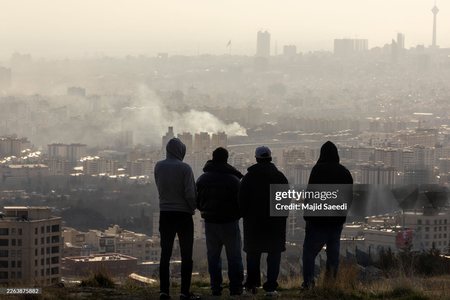


Ne vend qe te shkruaj me ne fund shyqyr qe doli dikush ti shkaterroje dhe ti heqi qafe Ajetllahet, shkruan jo po lufta ska mbaru e gjera pa kuptim. Mendo pak se si Irani ka qene nga vendet me te zhvilluara ne gjirin Persik ne vitin 1989 kur ishte mike e partnere me USA e ku eshte sot kur te gjithe ato vende ne ate pjese te kontinentit kane pare nje zbvillim te jashtezakonshem duke shitur nafte kurse Irani ka bere mbrapa ose ka ngelur ne vend me ekonomine me te dobet ne rajon. I denuar me sanksione, duke pasur nje rregjim cnjerezor qe i vret njerezit pa pike meshire, e ngelur mbrapa teknegjollikisht e detyruar te shesi naften vetem tek Kina ku Kina e blen me cmim me te ulet se ce shesin te tjeret. Per momentin te gjithe aty po bejne namin duke shitur nafte me dyfishin e cmimit kurse Irani nuk shet dot asnje pike nafte.
Wow, wo, Tironci me brekushe turqish t'zbardhe prej diellit e pono cop politiken e botes. Or cun zdroms, zdryp ere prej fiku, a t'q... rrethn e kapeles!