


 Shkruar nga Pamfleti
The Italian government denies any diplomatic incident, but the Prime Minister's cancellation of the EU-Western Balkans summit has highlighted differences with France, Germany and the UK over Ukraine and Bosnia.
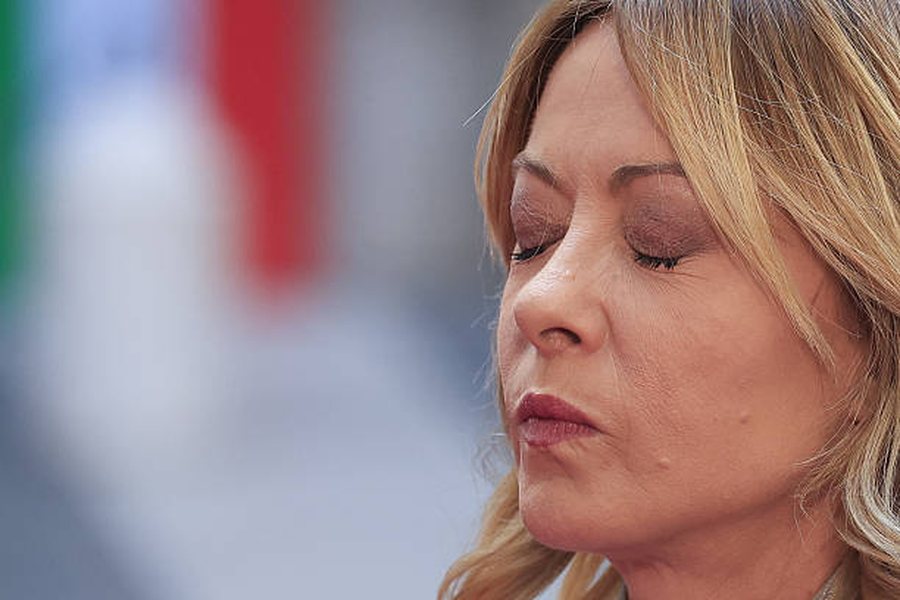
Sometimes even a postage stamp can hide an entire geopolitical history.
Italian Prime Minister Giorgia Meloni's decision to attend the philatelic stamping ceremony dedicated to the anniversary of the Arma dei Carabinieri in Reggio Calabria, an activity that was not initially scheduled on her agenda, has sparked discussions about her absence from the EU-Western Balkans summit in Tivat, Montenegro.
The event has put the spotlight on the relationship between Meloni and the three main leaders of the so-called "Coalition of the Willing" between France, Germany and the United Kingdom, who will soon meet in London with Ukrainian President Volodymyr Zelensky, without the participation of Italy.
The Italian government has downplayed any political implications and insisted that there is no diplomatic crisis. However, Meloni's absence has drawn attention, especially since the Tivat summit dealt with the enlargement of the European Union to the Balkans, a topic that the Italian prime minister has consistently supported.
Government sources in Rome note that the format of cooperation between France, Germany and the UK "is still failing to consolidate" and remains far from Meloni's approach on key issues such as sending troops to Ukraine, peace negotiations with Russia without the involvement of the US, and accelerating Ukraine's membership in the European Union.
Although Palazzo Chigi (the Italian Prime Minister's Office) denies any connection between Meloni's absence and political disagreements, the fact remains that in Tivat she would have met French President Emmanuel Macron and German Chancellor Friedrich Merz, two of the main figures of European support for Ukraine.
The Italian government expresses skepticism about the prospects of this grouping, implying that Rome does not fully share the same vision as Paris and Berlin.
In the background, the traditional rivalry between Italy and France continues.
Another sticking point is the race for the post of High Representative of the international community in Bosnia and Herzegovina. Italy supports the candidacy of Ambassador Antonio Zanardi Landi, while France promotes its envoy for the Balkans, René Troccaz.
The Italian candidate enjoys the strong support of the United States, as well as Japan and Turkey, while the French candidate is supported by Germany and Great Britain.
This diplomatic alignment also reflects Meloni's efforts to rebuild relations with the Donald Trump administration after a period of tensions ahead of the G7 summit in France and the NATO meeting in Turkey.
In this context, the planned visit to Washington on June 15 of the Italian Minister of Defense, Guido Crosetto, who will meet with the US Secretary of Defense, Pete Hegseth, is also seen.
But are these political calculations really behind Meloni's absence in Tivat?
The official version of the Italian government is much simpler.
According to Palazzo Chigi, there were no diplomatic incidents. The ceremony in Reggio Calabria lasted longer than expected, partly due to the reception reserved for the prime minister.
When her staff realized that she would not arrive in Montenegro on time, Meloni decided to accept the invitation to the activity at the prefecture and forgo participation in the summit.
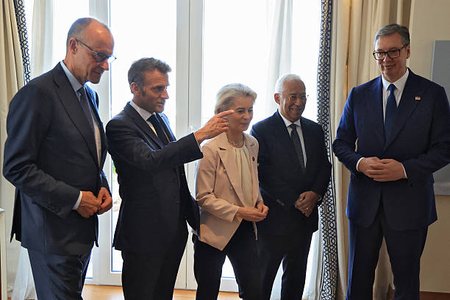
She was expected to arrive in Tivat at around 3pm according to the official schedule, when the summit was almost over. In practice, her participation would have been limited to around 30 minutes, before the traditional family photo and joint press conference of European Commission President Ursula von der Leyen and European Council President António Costa.
After the ceremony in Reggio Calabria, Meloni informed Montenegrin President Jakov Milatović and António Costa of her absence and stayed for about half an hour at the prefecture for the philatelic activity.
The government plane then returned to Rome with the entire official delegation. The Prime Minister arrived in the Italian capital at around 3:30 p.m.
Officially, everything was just an organizational problem.
But at a time when Europe is discussing Ukraine, EU enlargement and the future of the Balkans, Meloni's absence from such a summit continues to raise questions that go beyond a day's agenda./ Corriere della Sera


Lini një Përgjigje