


 Shkruar nga Gjergj Zefi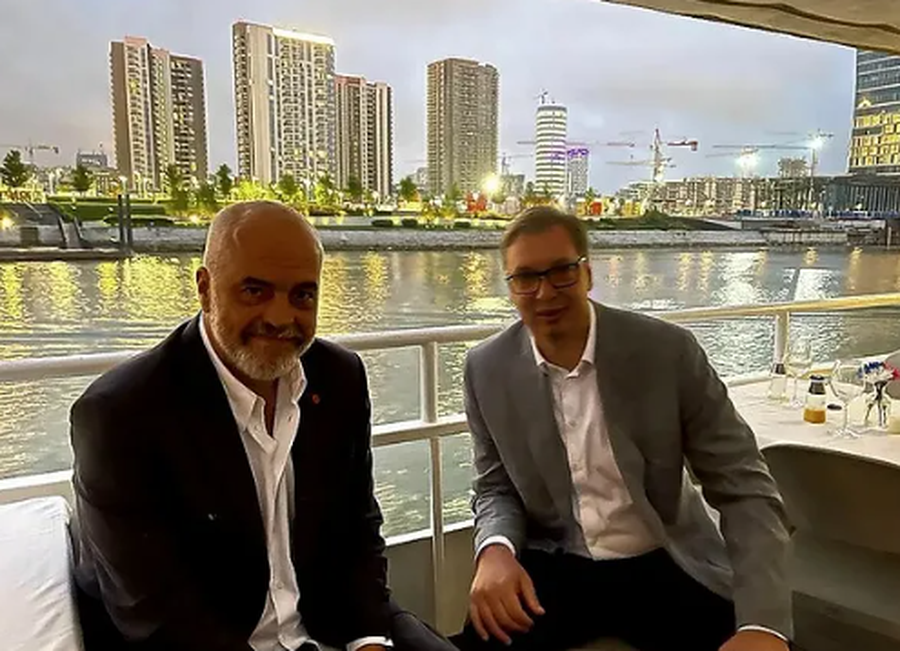
From Belgrade to Tirana, long-term leaders face the same dilemma: listen to citizens or seek imaginary enemies after every protest...
In the Balkans, leaders who have been in power for a long time have one thing in common: when civil discontent takes to the streets, the protest is rarely read as a natural reaction of society. More often, it is presented as the product of a dark scenario, sponsored by invisible forces, foreign centers, or destabilizing interests.
In Serbia, President Aleksandar Vučić has been talking about a "colored revolution" for months.
According to him, the massive protests that have filled the streets of Belgrade are not an expression of civic anger, but part of an operation to overthrow the elected government.
But as Vučić declares victory over the "color revolution", Slavija Square fills up again with thousands of citizens.
Students, professors, intellectuals, and ordinary people continue to protest, proving that dissatisfaction is not extinguished by political labels.
The question that naturally arises is: is the same reflex starting to appear in Albania?
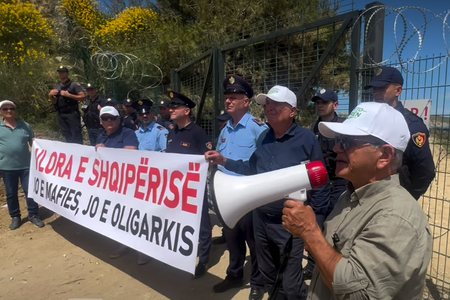
The protests of recent days in Tirana have brought a new political reality. They were not organized around a classic party battle, but around a concrete cause that has touched a nerve with public opinion.
In any democratic country, protest is the most normal mechanism of civic reaction.
The problem arises when the government refuses to listen to the message and begins to search for the secret perpetrators behind it.
Balkan history is full of examples where governments have erred on this point. Instead of analyzing the reasons for discontent, they have focused on conspiracy theories. Instead of correcting policies, they have attacked protesters. Instead of opening dialogue, they have constructed hostile narratives.
The longer a leader stays in power, the greater the risk that he will lose touch with reality. Every criticism begins to be seen as an attack. Every protest as a threat. Every discontent as a conspiracy.
This is not just a Serbian story.
It is a well-known syndrome of long powers.
Therefore, the question is not whether a “colored revolution” is taking place in Albania. The real question is whether the government is starting to use the same logic that Vučić uses today: not to see the citizens, but the shadows behind them.
Because protests can be suppressed, ignored, or labeled. But discontent doesn't disappear. It accumulates. And when it accumulates for a long time, there is no need for a color revolution. Reality is enough./ Pamphlet



Lini një Përgjigje