


 Shkruar nga Pamfleti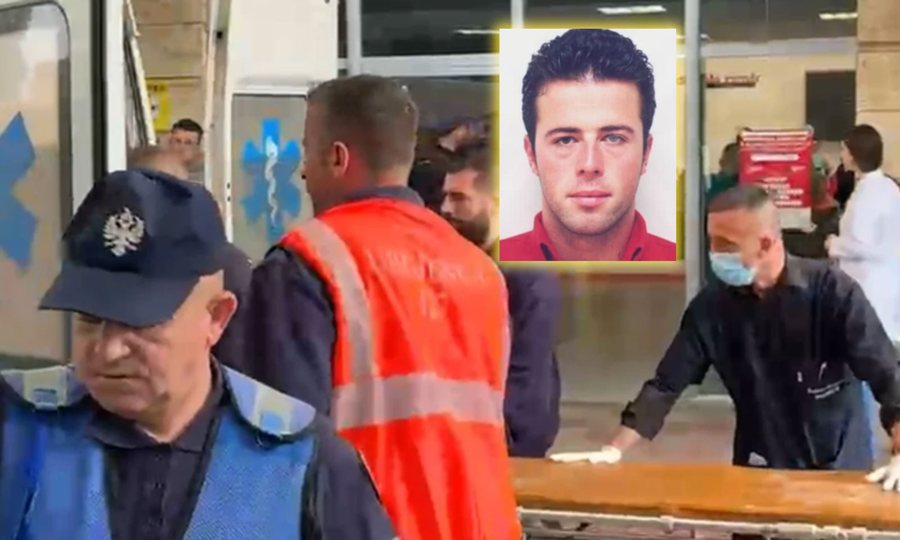
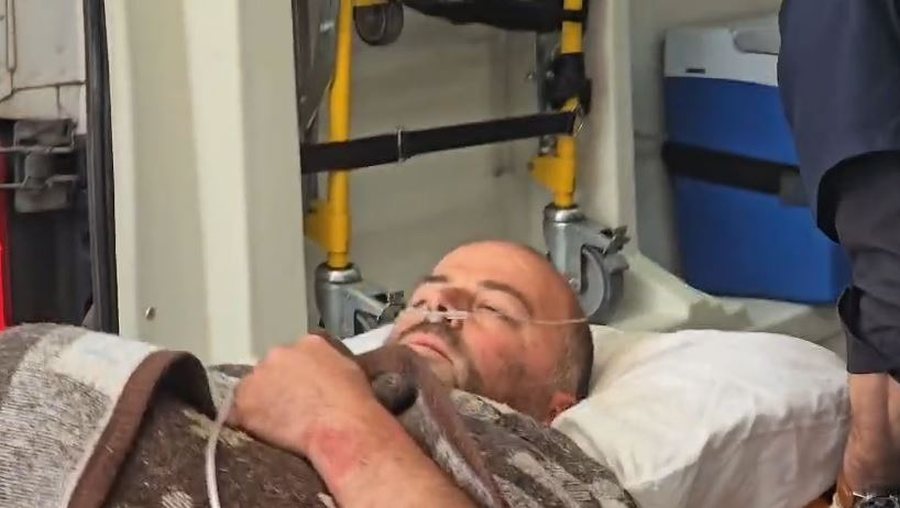
Violand Braçellari is the author of the serious incident in the village of Lozhan in the Maliqi area of Korça. The 43-year-old was declared wanted, while the police were able to locate him and this morning they launched an operation to arrest him in his hometown.
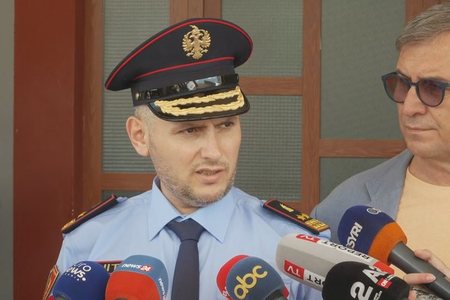
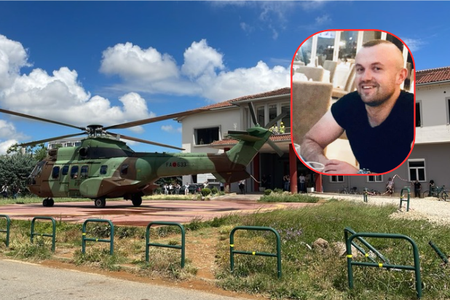
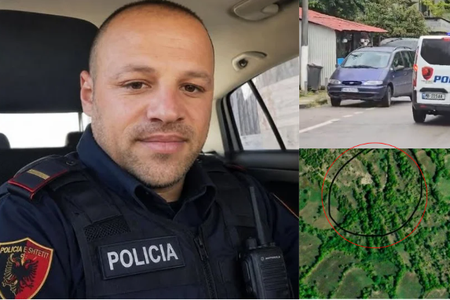
According to reports, Bracçellari, a former soldier, did not obey police orders and responded with gunfire to calls for surrender. As a result of the exchange of fire, the Eagle Forces officer, Enea Mekolli, was killed and Edison Adri was injured, out of danger to life, and was taken by helicopter to Trauma.
The perpetrator of today's massacre was criminally prosecuted and subsequently found guilty by the Korça Judicial District Court for the criminal offense of "Production and sale of narcotics", committed in collaboration with other unidentified persons.
The case was related to an investigation launched in September 2015, following information received by the police about suspected activities linking several people to the cultivation and processing of the narcotic cannabis sativa in the Lozhani area, Korça.
According to the materials administered during the court process, on September 29, 2015, the police found several people and vehicles in circumstances considered suspicious. During the search of a vehicle in which Violand Braçellari was also present, large plastic bags and plastic gloves were found, which the investigators considered to be items that could be used in the processing and packaging of narcotics. Following these actions, the police conducted searches in several apartments in the village of Lozhan.
In an apartment owned by a relative of the Braçellari family, but which according to the court was used by Violand Braçellari and his family members, 10.8 grams of dried cannabis sativa residue and an electric heater were found.
Investigators and later the court concluded that the premises had been used to dry a much larger quantity of narcotics, which had been removed before police intervention. Although the quantity found was small, it was considered to be the remnants of a larger cannabis cultivation and processing operation.
A central role in the case was played by data extracted from a BlackBerry mobile phone seized by police. Examination of the device revealed numerous communications with other people, registered under names such as “Sandri” and “Toni”.
These conversations mentioned terms and situations that, according to the court’s interpretation, directly linked the defendant to the cultivation, transportation, drying and preparation for sale of cannabis. The messages talked about controlling the “plants”, using gas cylinders during the drying process, providing bags for transport, weighing the substance and coordinating actions with other people.
Also, photographs were found on the phone that, according to the court, documented various stages of the cultivation and processing of the narcotic substance. The defense opposed the accusation, claiming that the search of the apartments was carried out illegally, that the minutes contained irregularities, and that the direct connection of Violand Braçellari with the narcotic substance found was not proven. Allegations were also raised that the material evidence could have been manipulated or planted by the police.
However, the court dismissed these claims, finding that the inspection procedures had been respected, that third parties had been present during the inspection, and that the evidence collected was lawful and reliable.
In its reasoning, the court emphasized that it was not necessary to prove the exact location of the cultivation of the narcotic substance or the identity of all the accomplices. According to it, it was sufficient that the evidence showed Violand Braçellari's participation in an organized activity that included the transportation, drying, storage and preparation of cannabis for distribution.
The court found that there was criminal collaboration with other persons, although they were not fully identified during the investigation. In conclusion, the court concluded that it had been proven beyond reasonable doubt that Violand Braçellari had participated in the criminal offense of production and sale of narcotics in collaboration.
For this reason, he pleaded guilty and was sentenced to 10 years in prison. The nature of the criminal offense, its social danger, the evidence administered during the trial, as well as the fact that he had a previous conviction for narcotics-related offenses, were taken into consideration in determining the sentence.



Lini një Përgjigje