


 Shkruar nga Gjergj Zefi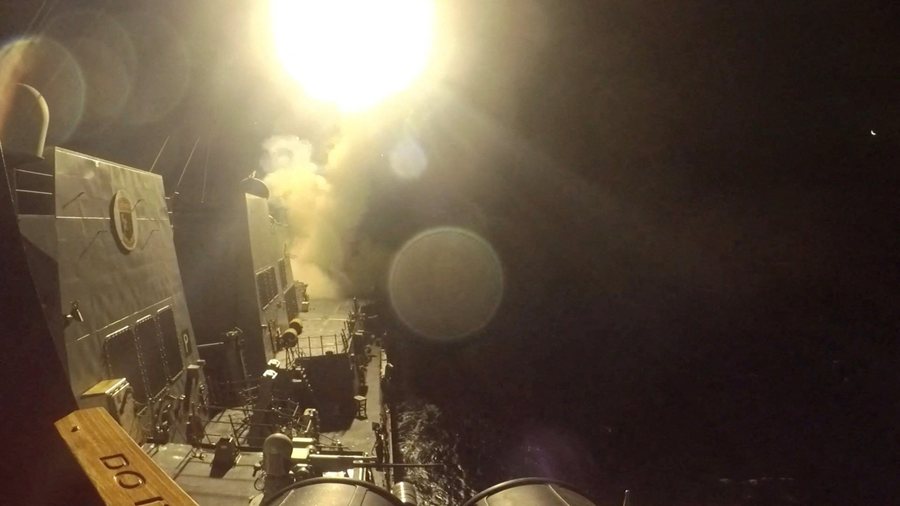
From threats for peace to bombings for security, Washington and Tehran are walking a path where each new step makes it more difficult to turn back...
Wars usually start when someone believes they are in control of the situation. They become dangerous when no one is in control anymore. This is exactly where the Middle East seems to have reached today.
The attacks of the last few hours, the new threats, the bombings, the counterattacks, and the increasingly aggressive rhetoric have created a reality where no one can say for sure what will happen tomorrow. Not in a month. Tomorrow.
For years, the United States and Iran engaged in a fierce but relatively controlled confrontation. There were sanctions, sabotage, assassinations, attacks by regional allies, and displays of force. Yet there was an unwritten line that both sides tried not to cross. Today, that line has disappeared.
The paradox is brutal. Washington declares that it seeks peace, while increasing military pressure and threats. Tehran declares that it is ready for negotiations, while using every pressure instrument at its disposal, from regional networks to the threat to navigation in Hormuz. Each side claims to be defending stability. Each side acts in a way that produces more instability.
At the center of this drama is Donald Trump.
The American president's frustration is becoming increasingly apparent. He came to power promising to avoid war and force his opponents to accept deals from a position of weakness. In his logic, economic pressure, diplomatic isolation, and a show of force were supposed to bring Iran to the negotiating table on American terms.
But reality is not conforming to this scenario.
Iran did not collapse. It did not surrender. It did not give up on its regional ambitions. On the contrary, it showed that it is willing to bear a much higher cost than American strategists had predicted. This has put Trump in a political and strategic trap. If he backs down, he risks looking weak. If he escalates the conflict, he risks entering a war he had promised he would never wage.
This is where the nervousness arises, reflected in the contradictory statements of his administration. One day there is talk of a deal. The next day of bombing. Then the calls for negotiations return. Then come new military warnings. This is no longer a sign of strength. This is a sign of uncertainty about the direction to take.
Meanwhile, the mechanism of escalation has begun to operate on its own. A missile produces a bombing. A bombing produces a response. A response produces a new reason to continue the war. Each action creates the justification for the next action. The space for diplomacy narrows. The space for fatal mistakes expands.
History shows that the greatest conflicts have not always started with detailed plans. They have often started with the belief of each side that it could control the consequences of its actions. This is precisely where the current danger lies. All the main actors continue to talk as if they have the situation under control. The facts show the opposite.
Israel seeks absolute security. Iran seeks regime survival and regional influence. America seeks to maintain strategic dominance and impose an order that suits its interests. But the longer the conflict continues, the more distant these objectives become.
Meanwhile, the global economy is feeling the effects. Markets are reacting nervously. Energy prices are fluctuating. Maritime trade routes are threatened. Millions of people live in the shadow of an escalation that could transcend regional borders.
The question that needs to be asked is no longer who is right. The question is much simpler and much more alarming.
Where the hell are they going?
Because when no one is able to explain what the end of this road looks like, there is a real possibility that no one will control it anymore. And when a frustrated superpower, a regime determined to survive, and a region filled with historical animosities walk in the dark without knowing the destination, history usually does not produce peace. History produces catastrophe./ Pamphlet



Lini një Përgjigje