


 Shkruar nga Pamfleti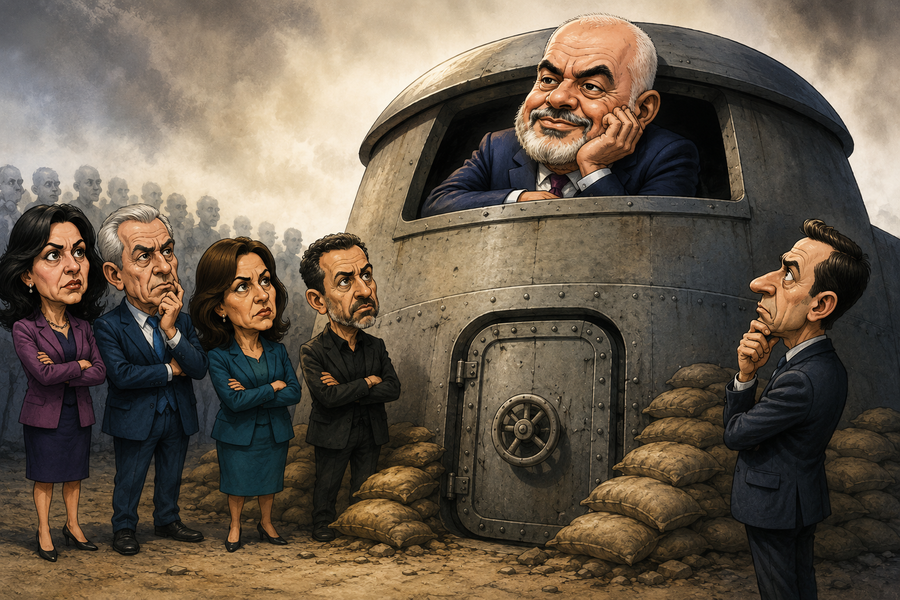
Elisa Spiropali, Petro Koçi, Erion Braçe, Arben Malaj and other voices are articulating their dissatisfaction with the SP leadership, but as long as the criticisms remain scattered and without a common objective, they serve Edi Rama more than his opponents...
Dissatisfied and critical voices towards Edi Rama's leadership have begun to emerge openly in the Socialist Party. The clearest so far has been Elisa Spiropali, who has unveiled a kind of political manifesto for a change in leadership and a change in the way of governance.
In addition to her, figures such as Petro Koçi, former minister and former MP, Ornela Çuçi, former deputy minister, as well as Erion Braçe have spoken publicly with his constant, albeit cautious, criticisms.
Added to these are voices from intellectual and media circles close to the left, such as Mustafa Nano, Fatos Tarifa and media that identify with Erion Veliaj's group.
Figures from the old socialist establishment, such as Arben Malaj, Thoma Gëllçi and Luan Rama, also stand on a clear critical line.
Everyone is critical. Everyone expresses dissatisfaction. Everyone articulates reservations about the way the Socialist Party and the country are being run. But each does so from their own perspective, in a fragmented manner and without political coordination.
And this is precisely where the paradox lies.
This entire situation, which at first glance seems like a sign of weakness for Edi Rama, actually serves him well, because it gives him the opportunity to present himself as a leader who tolerates different opinions and pluralism within the party.
As long as these criticisms remain individual, scattered, and without a common political objective, they do not pose a real threat. On the contrary, they serve as a decoration of democracy.
This only changes when what can be called a “red line” is crossed. As happened with Mustafa Nano, when he openly demanded the removal of Edi Rama. The prime minister’s reaction was immediate and significant. He treated him as ungrateful, reminding him of the diplomatic post he had previously held.
The message wasn't just for Nano. It was for anyone else who might move from general criticism to a direct demand for the leader's removal.
Today there is no longer any room for neutrality or pragmatic calculations. Any politician who reads the situation clearly understands that Edi Rama has entered the final phase of his political cycle.
Almost all serious diplomatic and political circles are thinking about the post-Rama period. Therefore, this is neither the time nor the moment for political timidity.
Even Elisha's Shakespearean pamphlets can serve as oxygen for Rama, if they remain just stylistic exercises and do not turn into political action.
His critics, who in reality constitute a considerable group, are faced with a last chance. They must build a common and coherent stance to open a real battle within the Socialist Party.
Otherwise, they risk repeating the mistake made for years by Sali Berisha's opponents within the Democratic Party, who saw the moment but lacked the courage to seize it.
Because Edi Rama is no longer using the Socialist Party as a political instrument. He is trying to use it as an anti-nuclear bunker to protect himself during a siege.
And that's where the crux of the matter lies.
His critics have only one option: to get Edi Rama out of the bunker.
That's all./ Pamphlet


Lini një Përgjigje