


 Shkruar nga James Zogby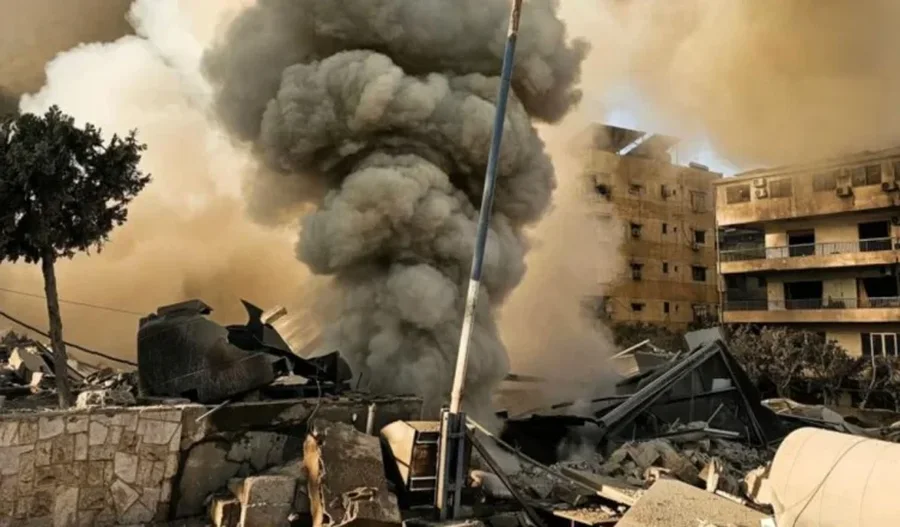
From the Iran nuclear deal to the wars in Gaza and Lebanon, developments in recent years have proven that military force has not produced lasting peace or security. The solution requires diplomacy, political compromise, and regional cooperation.
When the Obama administration was negotiating the nuclear deal with Iran, I asked National Security Council officials: “Why are you using all of your economic, political, and diplomatic leverage to prevent Iran from developing a bomb that it doesn’t have (and even if it did, it wouldn’t be able to use), when those resources could be used to pressure its destabilizing behavior in the region?”
However, when the Nuclear Agreement (JCPOA) was announced, I supported it for three reasons. First, because it was a negotiated solution, always better than conflict. Despite official statements from the White House, diplomats involved in the negotiations assured that the agreement was only a first step and that other regional issues would be addressed later. I hoped that this would lead to a regional security architecture.
The second reason was political sabotage by Republicans in the US, including the invitation of Israeli Prime Minister Benjamin Netanyahu to Congress to challenge the US president - an unacceptable interference in domestic American politics.
The third reason was the reaction within Iran. Our polls showed that after the deal, Iranian public opinion began to shift priorities from regional interventions to domestic issues, such as employment and civil liberties.
When Donald Trump scrapped the deal and began threatening Iran, attitudes shifted in the opposite direction. Citizens rallied more around the flag when they felt threatened.
In the years that followed, tensions between the US, Israel, and Iran deepened.
The Biden administration attempted to revive the deal, but without full commitment, as Iran pursued its regional policies and military development. Meanwhile, the Gulf states sought stability through diplomacy and economic development, trying to reduce tensions with Iran.
They hoped that economic cooperation would bring regional balance and that Israel would address the Palestinian issue to pave the way for peace. But this did not happen. After Hamas's attack on Israel on October 7, 2023, the region was plunged into a wider conflict.
The war in Gaza, clashes in Lebanon, and reciprocal attacks between Iran and Israel escalated the crisis. Within a short time, while Israel was waging a bloody war in Gaza, Iran's ally in Lebanon was embroiled in a costly military clash with Israel in the north, a miscalculation that had devastating consequences.
The Israelis launched a deadly bombing campaign, killing thousands of Lebanese, including the leader of Hezbollah. Months later, Israel and the US attacked targets in Iran and killed key Iranian leaders. Iran retaliated with strikes, sparking a wider confrontation.
The negotiations produced fragile ceasefires, during which the death toll in Gaza and Lebanon continued to mount. When, urged on by Israel and Republican neoconservatives, President Donald Trump decided to “finish the job” by defeating the Iranian regime, the conflict took on a new character.
Iran escalated attacks on neighboring Gulf Arab countries that host US bases and closed the Strait of Hormuz, blocking 20 percent of the world's oil and gas supplies and damaging the economies of the Gulf region.
Reading some Israeli, Arab and American newspapers is enough to make you lose patience. Some far-right Israeli analysts and commentators (and their neoconservative American followers) continue to believe that the solution is another major bombing campaign, accompanied by “targeted killings,” as if these methods had not failed before.
Meanwhile, some hardline Arab analysts praise the “genius” of Iranian tactics. However, it is difficult to see how this could be considered anything other than dangerous and irresponsible, putting the region’s economic future at risk.
The American media is even more bizarre, addicted to vague and uncritical coverage of the president's often contradictory statements. Thus, a decade after the JCPOA, the Middle East and the Gulf region find themselves in a more dangerous situation than ever before.
Although the situation is more complex and the hostility deeper, emerging from this situation requires the recognition that partial approaches and fragmented interventions have only worsened the crisis.
As difficult as it may seem, a regional security framework based on non-aggression, non-interference, and respect for the sovereignty of states is needed, as well as an end to the Israeli occupation and the denial of Palestinian rights.
This means accepting that there is no military solution to the region's political problems. Each new cycle of violence only deepens them. Instead, bold and visionary leadership is needed, which may not exist today, but which remains necessary and towards which we must move. / Adapted from "Pamphlet", from "Asia Times"




Lini një Përgjigje