


 Shkruar nga Pamfleti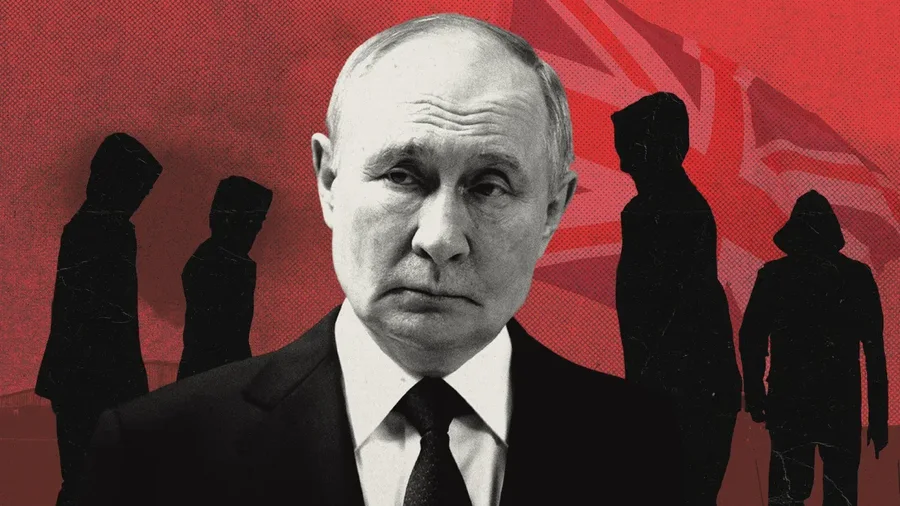
Putin is willing to wait for more years, more blood, more massacres...
From a spark a great fire is born. It is one of those phrases that remains etched in your memory, from the time you studied history in illustrated encyclopedias for children. The illustrated images showed the assassination of Archduke Franz Ferdinand in Sarajevo, followed by the suffering of soldiers in the trenches. The caption and that adjective, "great", underlined the magnitude of what had happened, a senseless massacre with no real cause other than a pretext, something that should never happen again in the heart of Europe.
Now that the war in Ukraine has surpassed World War I in duration, it is time to examine the true mindset of those who launched this new massacre. To get an idea of what awaits us and what the future holds, at a time when Europe’s role in supporting Ukraine has been strengthened and increasingly questioned. The AI-driven mockery circulating on the phones of many Muscovites, depicting Vladimir Putin as an ostrich, hiding its head in the sand, is of little use. The keynote of the Russian president’s speech at the St. Petersburg Economic Forum was a persistent and increasingly pronounced denial of reality.
"Our economy is being deliberately slowed down," he said.
It was the illuminating sentence in a speech that failed to mention the ever-increasing tax rate and the increasingly serious debt of families and businesses. Here too, it is important to understand the current situation, so as not to raise false hopes. The Russian economy faces major problems and is experiencing a period of great turbulence and lack of unity of opinion, the latter problem clearly highlighted by the absence of Central Bank Governor Elvira Nabiullina from the most important event of the year. But it is not ready to fail. The collapse of the Russian economy is simply an illusion, or a mirage.
In his Malayan homeland of St. Petersburg, his small homeland, the birthplace that he holds dear to his heart for the rest of his life, Putin has avoided any problems that his decision to invade Ukraine brings, stubbornly continuing to deny the truth of a conflict that has now spread to Russia, pretending to ignore the fears that grip Muscovites, residents of the "safest city in the world," who no longer go to their dachas for fear of drones. None of this exists for him, just as the recruitment difficulties that, in the face of increasingly weak economic incentives, are a revealing indicator of the distrust and disillusionment of deep Russia. A few nights ago, anyone passing by the Etcetera Theater, in the heart of the capital, would have seen dozens and dozens of men with horrific mutilations, disfigured faces and blank stares, waiting in the square outside for buses to take them back to military hospitals. The war can now be seen and felt everywhere.
However, for the Russian president there is only the reality of the front, of the trenches, as in 1914-1918, and of "peace through strength", a vague phrase with which his media trumpeters celebrated his speech. We talk about new warfare techniques, some fantasize about Russia's fatigue with Ukrainian drones. He claims to be confident in the results of the summer military campaign, while his media speaks of " obvious political-psychological manipulation" by a West that " has once again elaborated a theory about the possibility of our defeat" .
It has never been true that all Russians are in favor of this war, but it is true that many of them have been forced to believe that they are engaged in an existential war against Europe, following the narrative imposed by a man living in his own bubble, far from everyday life and any acceptable representation of it. Mikhail Rostovsky, who according to some is a former student of Putin in the secret services, but who is nevertheless the columnist to whom the Kremlin entrusts the purest interpretation of the president's words, wrote that " great leaders make decisions based on their understanding of reality."
Donbas or war forever, this is the only compromise proposed based on a distorted vision, which Donald Trump foolishly supported last August in Anchorage. But it is the only one that matters, and it is the one we are called to confront. Putin will not change his mind. After the failure to conquer Kiev in three days and the overthrow of Volodymyr Zelensky, made impossible by the inciting resistance of the Ukrainians, there was never a Plan B, this is clear to everyone. Today, all that remains is the fetish of that twenty percent of territory that is still missing to declare a false victory, against Kiev and the West. But to get it, Putin is willing to wait for more years, more blood, more massacres. The Ukrainian fire is far from being extinguished. / Adapted "Pamphlet" from "Corriere della Sera"


Lini një Përgjigje