


 Shkruar nga Donika Emini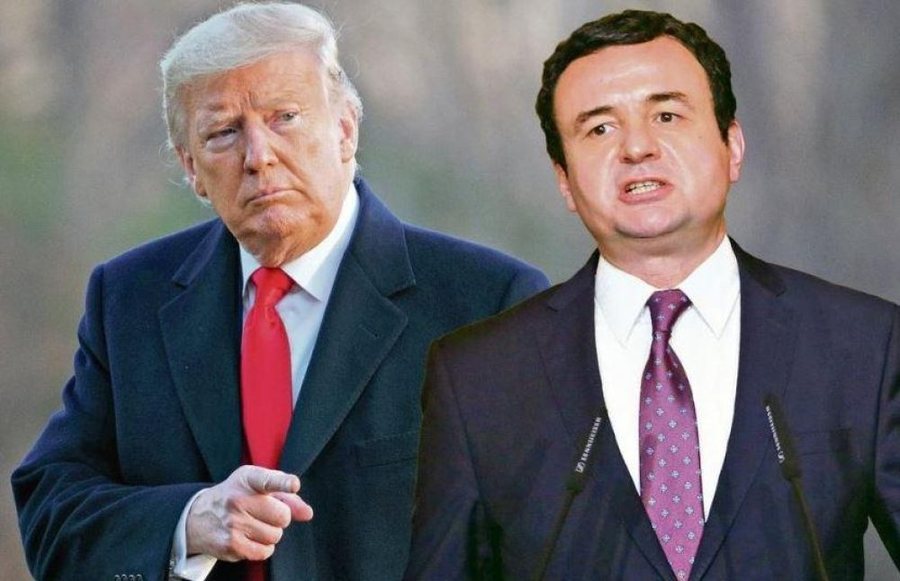
Albin Kurti's absolute mandate in the December elections puts Kosovo facing the challenge of restoring American trust. Relations with the US, once the main pillar of support, require a resurgence to avoid isolation and resume strategic dialogue...
The snap elections of December 28, 2025 in Kosovo, ended a year of political deadlock, giving Vetëvendosje a rare, almost absolute mandate. With over 51 percent of the vote and over 400,000 votes for the list led by Albin Kurti, the party secured 57 of the 120 parliamentary seats, enough to govern alone.
The Democratic Party of Kosovo (PDK) and the Democratic League of Kosovo (LDK) lagged far behind. Few expected Kurti to repeat, let alone improve on, his 2021 result. However, this result marks a decisive consolidation of power after the February 2025 elections, which left Kosovo without a functioning government for almost a year.
The December vote broke that deadlock and gave Vetëvendosje a strong hand not only in forming the government, but also in the presidential elections scheduled for March of this year, an issue that had paralyzed the country's politics throughout 2025.
Kosovo now enters a phase of potentially faster and more coherent governance. However, whether this will bring stability or new tensions will depend on how Vetëvendosje uses its dominance.
The landslide victory was not simply the product of voter enthusiasm. It was also the result of a year of careful political management by Kurti. After winning the February elections without securing a governing majority, Kurti led a caretaker government through months of political and institutional deadlock.
Rather than rushing to create a fragile coalition, he allowed the political vacuum to continue, while gradually and strategically shaping the narrative in his favor.
Although Vetëvendosje, as the winning party, had the formal responsibility to seek partners, Kurti managed to present the opposition as the main culprit for the deadlock. PDK and LDK relied almost exclusively on vetoes, procedural maneuvers, and refusals to negotiate, turning the deadlock into their political identity.
Over time, this strategy became impossible to hide. The opposition, without a clear political direction, ended up giving Kurti an advantage. The timing of the elections further strengthened Vetëvendosje's advantage.
By setting December 28 as voting day, Kurti increased the turnout of the diaspora, which is largely pro-Vetëvendosje - while maintaining control of the caretaker government and distributing aid to pensioners, families in need, alongside promises of wage increases and a 13th month salary for the public sector.
These measures strengthened the popularity and emphasized the leftist profile of Vetëvendosje.
Media dynamics deepened the inequality. Opposition campaigns focused on accusations of corruption and personal attacks against Kurti.
But rather than weakening him, this increased his visibility, while he remained largely absent from the media. In fact, it was his opponents who campaigned for him. Most damaging was the lack of an alternative vision.
Their message was limited to claiming that Kurti was “just as bad” as previous governments and was “making concessions to Serbia,” without offering a renewal of leadership, programmatic innovation, or credible reforms.
International developments also worked in favor of Vetëvendosje. The suspension of the US-Kosovo Strategic Dialogue and the EU's punitive measures for tensions in the north were presented by opposition parties as existential threats.
However, this alarmist rhetoric no longer mobilized voters against Kurti. For decades, elections in Kosovo were shaped by the images of party leaders close to US or EU officials.
But this approach is losing its impact. Voters are increasingly seeing international pressure as a constant rather than a decisive variable, and the opposition's attempt to weaponize these issues backfired.
With a sufficient parliamentary majority, Vetëvendosje is positioned to form a single-party government and largely control the March presidential elections. This reduces the opposition's ability to block institutions without high political costs.
Kurti has already signaled how he intends to govern, describing the opposition not as a partner but as a numerical necessity, and warning that any attempt to block the presidential vote would bring about new elections, where Vetëvendosje would again be well-positioned to win.
This creates a paradox: institutional paralysis is likely to end, and a unified executive, parliamentary majority, and presidency could allow for greater efficiency, faster legislation, and advancement of the Growth Agenda, if the opposition does not obstruct it again.
At the same time, this concentration of power risks weakening parliamentary oversight and democratic balance, especially as the opposition remains fragmented. The December elections were a shock to the PDK and LDK and a test of survival.
The PDK is entering a period of leadership restructuring, but remains anchored in the past, defined by historical ties to the Kosovo Liberation Army and clinging to the hope of Hashim Thaçi's return from The Hague.
This focus on the past and hope for the future positions the current leadership as transitory and limits the party's capacity to rebuild. The LDK, under Lumir Abdixhiku, faces an even deeper existential challenge.
By avoiding a serious internal confrontation, the party risks remaining on the periphery for years to come. The only sustainable path for both parties is reinvention: internal reform, clear leadership, credible political alternatives, and constructive parliamentary engagement.
Continuing the obstructionist strategies of 2025 would make the main opposition parties even more irrelevant. Kosovo's political reconfiguration is taking place against a much more unstable international backdrop.
The post-war global order is fragmenting. US support, especially under a Trump-style approach, has become transactional rather than values-based. The EU is distracted, increasingly focused on Albania and Montenegro in the region, while Kosovo remains blocked, signaling doubts about its European trajectory.
The costs of the 2025 paralysis in Kosovo were high: the implementation of the Growth Agenda was halted, dialogue with Serbia was frozen, financial support was lost, and the country's diplomatic standing was weakened.
Dialogue with Serbia remains blocked due to the internal crisis in Kosovo and internal unrest in Serbia, while the EU has shown little sense of urgency to intervene.
Kosovo is trapped in a system where strategic partners are less engaged and less willing to invest political capital, while it still lacks consolidated international recognition.
Membership in international organizations is becoming increasingly difficult, as the US, a long-standing partner of Kosovo in these processes, is withdrawing from rules-based multilateral mechanisms.
However, there is room for strategic action. A stable government could re-engage with EU states and Brussels, adopt the Growth Agenda, seek new recognitions, and rebuild relations with the US to resume strategic dialogue between the two countries.
The way Vetëvendosje will use its mandate will define Kosovo's political era, deciding whether this period of dominance will become a foundation for reform or a source of new instability in the country./Adapted from "Pamphlet", by "BiEPAG"


Lini një Përgjigje