


 Shkruar nga Gjergj Zefi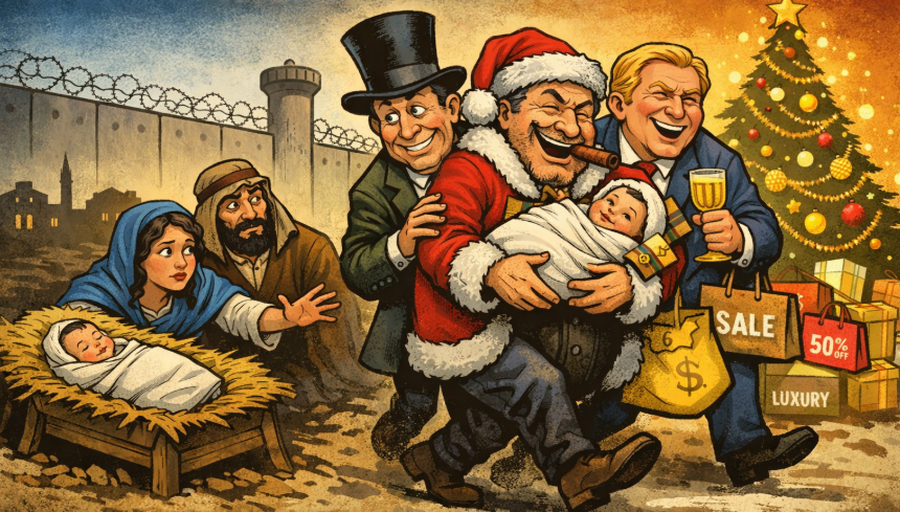
How God moved from the manger to the shop window and how the poor were left out of the celebration...
Christmas, as it is celebrated today in many parts of the world, has become a ritual emptied of its original meaning. The flashing lights, aggressive advertising, competitions for expensive gifts, and tables overloaded with food have shifted attention from essence to form, from man to the superman.
In this unstoppable process of commercialization, precisely those for whom, in essence, this story was born have been forgotten: the poor, the excluded, those who live in insecurity and injustice.
The story of Bethlehem is not a romantic fairy tale for holiday cards. It is a harsh political and social story. It is the story of a people living under an empire, facing displacement, structural violence, and lack of justice, but who continued to believe that God was not far away, isolated in the sky, but present among them. It is there, in such a reality, that the greatest moral and theological reversal of history occurs: God is not identified with the emperors, but with those who suffer under the empire; with its victims.
God does not come as a warrior, he does not appear with an army or symbols of strength. He is not born in a palace, amidst luxury and security, but in a manger, in the most fragile conditions imaginable. The choice to come as a baby is not a coincidence; it is a statement. It is divine solidarity in its most striking form: God unites himself with the most vulnerable part of humanity. With those who have no voice, who have no power, who have no protection.
This is precisely what is lost today amidst the noise of festive offerings and empty speeches about the “spirit of Christmas.” A holiday that should have been a reminder of justice, compassion, and social responsibility has become a global industry that produces millions but not empathy. In this new narrative, the poor are seen as an invisible backdrop, not the center of the message.
It is forgotten that Christmas took place among an oppressed people, seeking justice and hope, not comfort and consumption. It is forgotten that its message was not “buy more,” but “look deeper.” And perhaps herein lies the greatest moral challenge for modern societies: will they continue to celebrate Christmas as a spectacle, or will they have the courage to reclaim it as an act of social conscience?
Because, if God chose the manger and not the palace, then any celebration that ignores the poor, the displaced, and the oppressed risks being anything but faithful to the history it claims to honor./ Pamphlet





Zoti nuk vjen si luftëtar, nuk shfaqet me ushtri apo simbole force. Si çdo ideologji e re politike monoateizmi ka ardhur me luftëtar me ushtri e simbole force po gjithmonë historinë e shkruajnë fitimtarët dhe ti je një nga ata????