


 Shkruar nga Gjergj Zefi
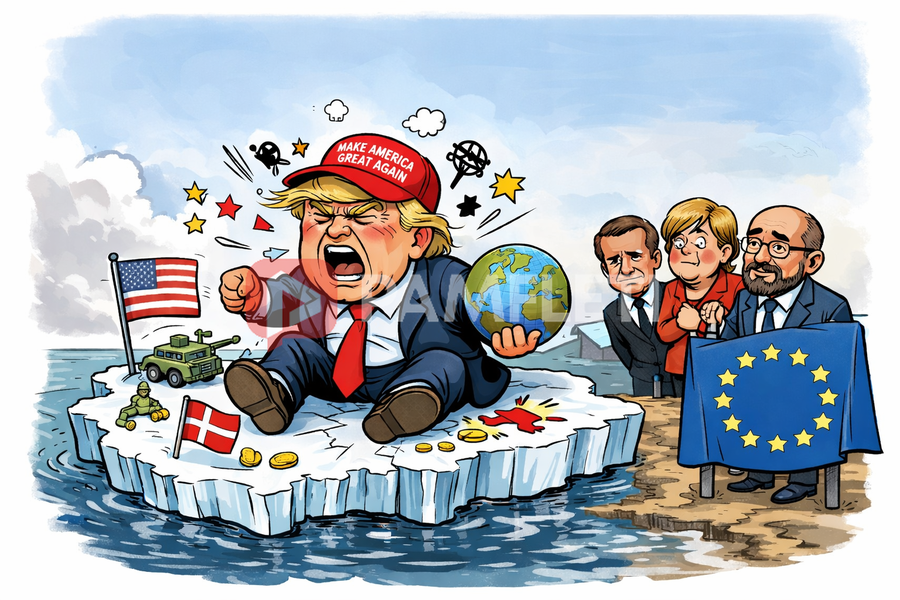
From tariff threats to territorial fantasies, Washington's clash with allies is revealing the new crisis in transatlantic relations...
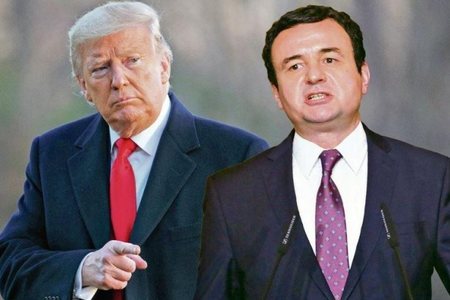
Donald Trump's behavior in relation to Europe and the Greenland issue is confirming a now familiar pattern of his foreign policy: an impulsive, personal and often capricious approach, which more closely resembles the logic of a disgruntled businessman or the behavior of a spoiled child who cannot stand restrictions.
The recent clash with European allies, widely covered by CNN, stems not from a genuine geopolitical strategy, but from Trump's refusal to acknowledge that Europe is neither a subordinate of the United States nor a market that can be blackmailed without political consequences.
The case of Greenland is emblematic of this approach. The revival of the idea of “taking” or “buying” Greenland, an autonomous territory under Danish sovereignty, is not simply a diplomatic provocation, but a sign of a neo-imperial mentality that is at odds with the reality of the 21st century.
For Trump, Greenland is seen as strategic property, a geographical and military asset that can be negotiated like a real estate deal, completely ignoring the fact that it is a territory with a political identity, an indigenous population, and a clearly defined status in international law.
The cold and often ironic reaction of Europeans, especially Copenhagen and Brussels, shows that this type of behavior is no longer taken seriously, but is seen as a symptom of a deeper crisis in transatlantic relations.
At the same time, Trump’s confrontation with the European Union, whether through tariff threats or derogatory language toward European leaders, reflects a clear lack of patience with the mechanisms of traditional diplomacy. Trump seeks instant acquiescence, applause, and quick symbolic victories; when these do not come, the response is vindictive and emotional. This style seriously undermines the credibility of the United States as a serious partner and pushes Europe to think more openly about its strategic autonomy, especially in the area of security and defense.
From a European perspective, the problem is not just Trump as an individual, but the structural insecurity he represents. An America behaving in this way is no longer an anchor of stability, but a factor of unpredictability. While Trump sees Europe as a bloc that must be “brought into line,” Europe is seeing Washington as an increasingly difficult partner, threatening tariffs today, reneging on commitments tomorrow, and absurd territorial claims the day after tomorrow.
In essence, Trump’s behavior toward Europe and Greenland is not a sign of strength, but of political insecurity. Confident leaders do not need to provoke allies to prove their power; they build consensus and long-term influence. In this prism, Trump is not appearing as the architect of a new international order, but as an impulsive actor who reacts badly whenever reality does not fit his wishes. And this, for Europe, is a wake-up call: the transatlantic relationship can no longer rely on the humor of a president, no matter how powerful he may be./ Pamphlet


Të ishte vete ky e puth ne balle por janë shume të llastuar, ata të Bankave e oligarge qose që hiqen si hamshore e tere sorrollopi tyre. I kini degjuar se cfare mufkash nxjerrin nga goja e ky bebja e tyre ekzaltohet e trimerohet. Ne pa je të pare është për të qeshur e gajasur por dhimbje e gjakderdhje madhe e pret njerezimit më keta kopuke.
Është e çuditshme se në çmasë fati jonë varret nga trillet e fatit. Sikur Gavrillo Principi të kishte dalë huq në Sarajevë nuk do niste Lufta e I, sikur djaloshi Tomas Crooks ta kishte marë shënjestrën 2 cm më djathtas, nuk do ti afroheshim kaq shumë fundit tonë moral. Veçanërisht populli që zgjodhi një monstër halabake.