


 Shkruar nga Diplomatico | Pamfleti.net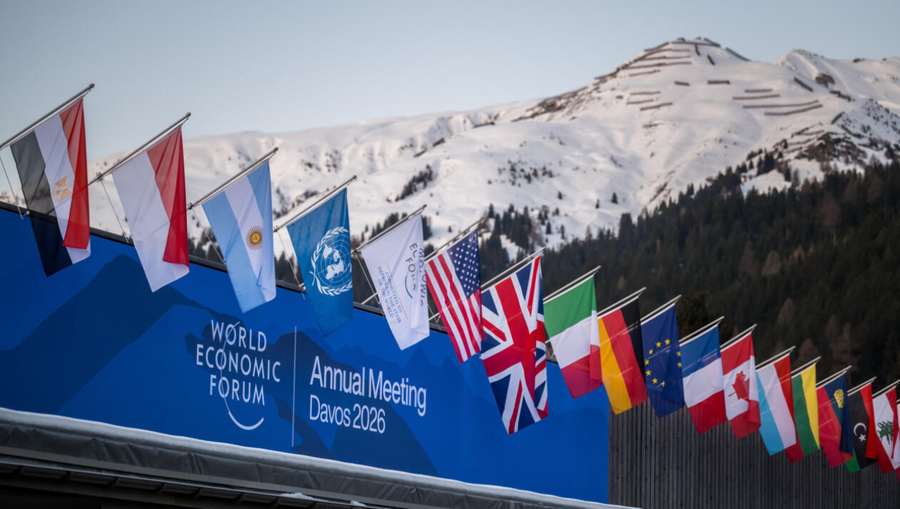
Where the past demands territories, yesterday demands rules, and today demands security...
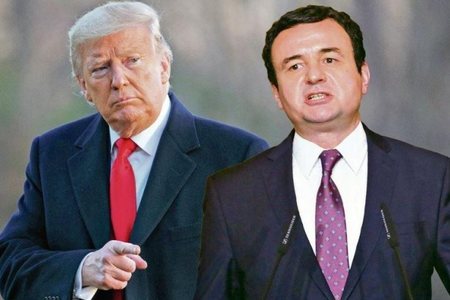
Davos is not just a gathering of global leaders; centuries sit across from each other, each with their own nerves, obsessions, and nostalgias. It is a summit where the 19th century enters the room with a map in hand; the 20th century with treaties and institutions under its arm, while the 21st century sits at the end of the table, restless, checking its phone and wondering why nothing is working as promised anymore. The presence of Donald Trump makes this clash not only visible, but also grotesque: a president with expansionist instincts, who talks about territories, tariffs, and pressure, on a stage that was built to promote cooperation and the illusion of a well-ordered world.
The irony is that Davos was created precisely to close the chapter on the power politics that prevailed before the two world wars.
The World Economic Forum was born from the conviction that an interdependent economy, dialogue, and multilateral institutions would make the world more predictable and, consequently, safer.
Today, in the same corridors where there was talk of globalization and convergence, we hear the language of punitive tariffs, economic blackmail, and "agreements" that resemble 19th-century ultimatums more than 20th-century diplomacy.
The 20th century, represented by leaders who still believe in the rules, alliances, and order of the post-World War II era, looks increasingly like a tired idealist.
He speaks of stability and trust, while the reality of the 21st century reminds him that these concepts did not prevent the financial crisis, the pandemic, the war in Europe, and the fragmentation of the global economy.
Meanwhile, the 21st century does not yet have a doctrine of its own; it moves between fear, technology, and strategic uncertainty, half-heartedly acknowledging that neither the old globalism nor the new nationalism provide clear answers.
Davos has thus become a theater where everyone talks about the future using the vocabulary of the past. Some want to restore the world of great powers and spheres of influence, some to save the crumbling liberal order, and some simply to survive in a system that is changing faster than they can understand.
The great irony is that everyone pretends to be thinking about tomorrow, but in fact they are fighting to impose their own century. And Davos, once a temple of global consensus, today looks more like a living museum where eras do not agree, but clash, leaving open the most frightening question: which of them will set the rules of the coming world? / Pamphlet




Lini një Përgjigje