


 Shkruar nga Gjergj Zefi
The crisis within Fidesz in Hungary exposes the weakness of centralized systems, a model that is showing the same symptoms in Albanian politics...
Orbán under pressure: the internal crisis shaking Fidesz
On the surface, the political system built by Viktor Orbán within his party still looks solid. But behind this facade of stability, there is another reality: Fidesz is facing deep internal tensions that could turn into a structural crisis.
Elites within the party are increasingly concerned about declining public support, pressure, and the increasingly centralized way of decision-making, following the terrible election defeat.
The problem is not just political, it is also psychological. For years, Orbán has built a system where loyalty to the leader has been more important than internal debate. But this very model is now turning into a weakness. When discontent has no normal channels of expression, it accumulates and explodes in unpredictable ways.
In this context, Orbán's response has been typical of leaders facing internal pressure: tightening control and stricter political discipline. There are reports of attempts to isolate critical figures, reorganize structures, and restore the narrative of external threat, a classic mechanism for uniting the ranks.
But even this strategy has its limits.
Because unlike previous crises, this one doesn't come from the opposition or international pressure. It comes from within. And internal crises are always more difficult to manage, because they are not resolved with propaganda, but with real balances of power.
In the long term, this situation could produce several scenarios:
· Stronger authoritarian consolidation, with suppression of any critical voice
· Internal fragmentation that completely destroys Fidesz
· Emergence of new figures to challenge the current leadership
For now, Orbán seems determined to prevent any of these scenarios from materializing. But political history shows that domestic crises rarely disappear; they are merely postponed.
In this sense, what is happening in Hungary today is not simply a debate within a party. It is a test of the very political model built by Orbán: a system strong as long as it is not challenged, but potentially fragile when tensions surface.
At this point, Hungary is no longer an isolated case.
From absolute control to internal cracks and the worrying parallel with Albania
What is happening in Budapest is a reflection of a broader political model that has also been seen in Albania. A model where parties are built around an individual and not on functional internal institutions.
The party led by Sali Berisha is today the clearest example of this logic in collapse. A political force built on personal authority, the moment it enters a crisis, loses the ability to regenerate. Internal conflicts, isolation and the lack of an alternative have kept it in a state of prolonged stagnation.
But what is more significant is that the same dynamic is beginning to emerge in power.
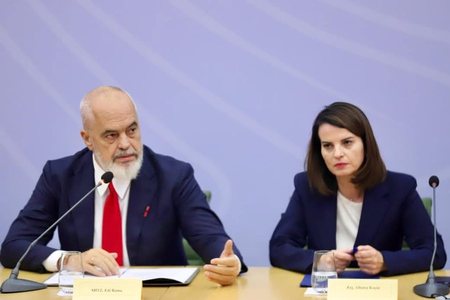
The party led by Edi Rama continues to dominate the political scene, but beneath the surface another reality is simmering: growing internal tensions, rival clans, and fragmentation of interests. The more power is concentrated, the more the internal struggle for influence and resources intensifies.
This is the paradox of authoritarian systems: they appear strong on the outside, but are consumed on the inside.
Because in the absence of internal democracy, conflicts are not resolved, they are postponed. And when they surface, they are not managed by political rules, but by informal clashes and bargaining.
In this sense, Orbán's case is no exception. It is a clear warning to any political system built on a single man.
Political history has shown that these systems do not always collapse due to opposition or international pressure.
Often, they begin to disintegrate from within.
And when this process begins, it is slow, silent, but rarely reversible./ Pamphlet






Lini një Përgjigje