


 Shkruar nga Pamfleti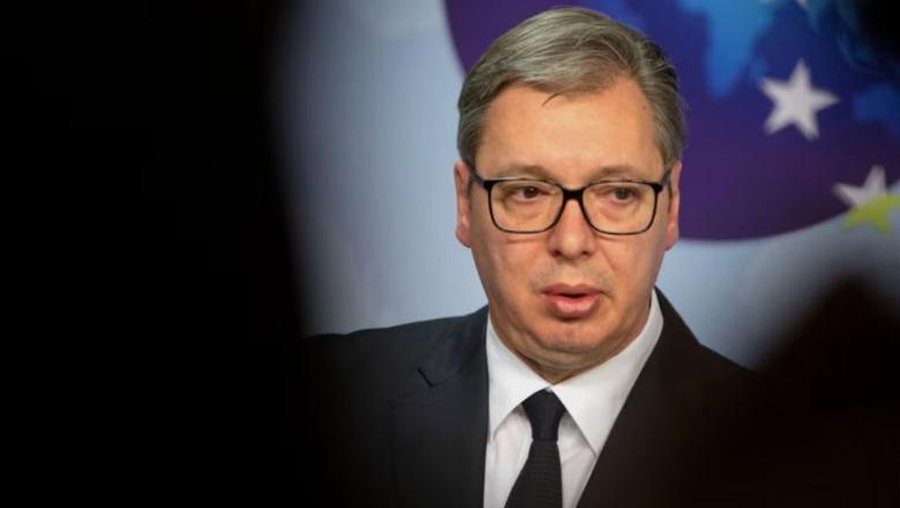
Under Vučić's leadership, Serbia has maintained close ties with Russia and China, while continuing to present itself as a leading EU candidate.
Aleksandar Vučić and Viktor Orban jointly opened the Novi Sad railway station in 2022, a symbol of Serbia's progress and regional connectivity.
The weekend marked the first anniversary of the station collapse, a tragedy that killed sixteen people.
This image has increased the tension between the EU's strategic interests and a regime marked by corruption.
The EU depends on President Vučić to protect its interests in the Western Balkans, in particular, by securing access to Serbia's lithium.
The source lies in the EU's efforts to reduce dependence on China and secure critical minerals.
Serbia holds one of the largest lithium deposits in Europe in the Jadar Valley mine, which could supply up to 90% of Europe’s lithium demand. However, this support has linked Brussels to an increasingly authoritarian government with its citizens, where corruption, media control and democratic backsliding have fuelled widespread distrust of both Vučić and the European project.
Under Vučić's leadership, Serbia has maintained close ties with Russia and China, while continuing to present itself as a leading EU candidate.
The accession process has been characterized by selective oversight, with Brussels offering around 300 million euros in annual grants and exerting limited pressure on Serbia's democratic backwardness and refusal to comply with EU sanctions against Moscow.
Vučić's close relationship with Orbán has also raised concerns that Serbia's accession could strengthen the pro-Russian camp led by Hungary and Slovakia.
In 2024, Belgrade supplied Kiev with weapons worth around 800 million euros, and fears that Serbia would be pushed further towards Beijing and Moscow have prevented stronger criticism from Brussels.
Protests that began after the collapse of the Novi Sad railway station last November have escalated into a nationwide movement demanding accountability and free elections.
Over the weekend, tens of thousands of people filled the streets to mark the first anniversary, observing sixteen minutes of silence for the victims, before reiterating calls for Vučić's resignation.
Many Serbs now see Brussels as complicit in supporting Vučić's regime, with support for EU membership having fallen from 64% in 2020 to just 33% in 2025, according to a Eurobarometer survey.
Unlike previous demonstrations in Serbia, this movement is driven by deep anger and loss of confidence in Vučić's government.
As protests continue, the EU's ambitions in the Western Balkans remain tied to a fragile regime. / Taken from "Eurointelligence", adapted by "Pamphlet"



Lini një Përgjigje