


 Shkruar nga Pamfleti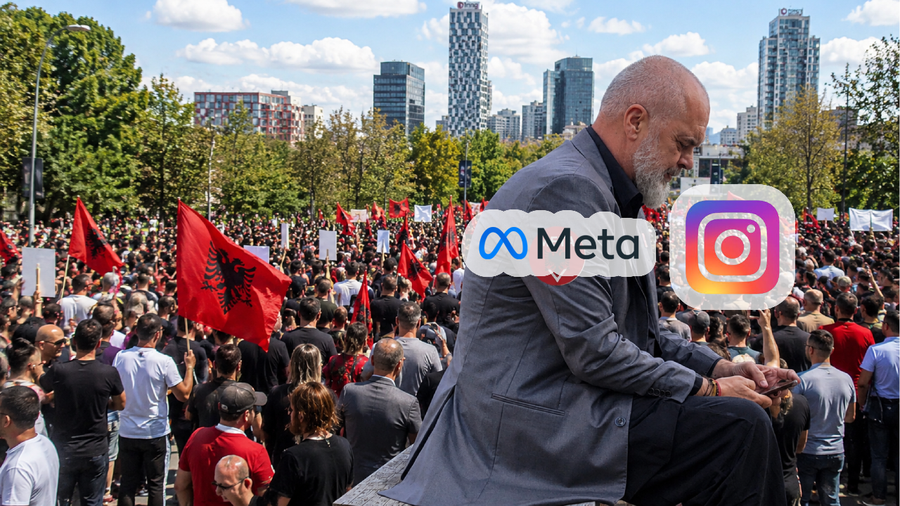
The shift from mastering the digital space to accusing the algorithm as the enemy reveals a communicative panic and loss of control during the protests. The question remains whether this marks the end of an era where a single center decided what Albanians saw on their phones.
For six years, a government ruled the Albanian digital space with the same certainty with which it ruled the country. Image after image, speech after speech, during the 22 days of the Flamingo Revolution, it has lost that certainty. This is the chronology of a turning point: how we went from owning the platforms to openly fighting against their logic.
Dominance over social networks was infrastructure. Charisma or personal presence played a secondary role. While a critical citizen produced a post, the government apparatus set in motion an army of commentators and profiles that produced a volume, graphic quality and distribution that no single voice could cope with. Experts call this mechanism "saturation": it is not open censorship, but the drowning of truth under an ocean of content, where criticism remains trapped in narrow digital courtyards.
The human arm of this machine is known in Albanian political parlance as ‘patronageism’. The mechanism has been described time and again by activists and opposition voices: patronageists comment online and, according to these accounts, influence the ranking of content through dedicated applications that organize mass reactions. During the protests, this practice took the form of open intimidation. Cases were made public where anonymous profiles asked citizens to urgently delete critical comments, claiming to know where they lived, what they did, and what business they had.
The culmination of this logic was the publication of the lists. When a list of about 100 names was released, the comparison made in the Albanian press was severe: the declaration of "enemies of the people", the lightning rod of the dictatorship, Enver Hoxha with Facebook. This was the master of the digital space before May 30. This was the "master".
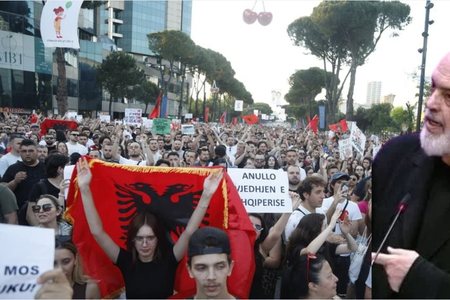
The turn has a precise date and a concrete cause, and this is precisely what makes it defensible. On May 30, footage of the rape and kidnapping of a citizen by private security guards in Zvërnec spread across the networks. By Sunday, May 31, when some citizens called for the first protest in Tirana with thousands of participants, the saturation machinery had already been exceeded. Organic indignation broke the wall of the traditional courtyards and poured onto the "Dëshmorët e Kombit" boulevard. The mechanism built to fight arguments was designed for another battle, not for a video of violence that produced immediate anger. It found itself armed for the wrong war.
Përgjigja e parë erdhi më 1 qershor, në një fjalim mbi një orë të gjatë para grupit parlamentar. Aty nuk u fol për algoritmin, por për "forcat e huaja" që, sipas këtij rrëfimi, nuk duan zhvillimin e Shqipërisë dhe po manipulonin opinionin publik. Referenca kulturore ishte filmi i vitit 1997 "Wag the Dog", ku një propagandist qeveritar shpik një luftë të rreme për të zhvendosur vëmendjen, një ironi që i ktheu kah vetes pikërisht akuza që ngriheshin ndaj të tjerëve.
Nga "forcat e huaja" abstrakte, narrativa kaloi shpejt te një armik me emër. Rreth ditës së gjashtë të protestave, gjatë një Samiti ndërkombëtar, Edi Rama dhe 'zarët' që i kanë mbetur u ankuan se Irani kishte sulmuar Shqipërinë dhe se vendi po përballej me një "luftë hibride", duke aluduar se protestat para zyrës qeveritare ishin të ndikuara nga ky armik i njohur. Rrjeti i argumenteve u zgjerua: Irani, sulmet kibernetike që nga viti 2022, ndërprerja e marrëdhënieve diplomatike me Teheranin, dhe më pas aktorë greqishtfolës, rusë dhe rrjete anti-Trump.
Kjo kornizë është quajtur "alibi e frikacakut". Lufta hibride, sipas këtyre zërave, nuk e mbulon dot krizën e thellë të besimit publik dhe as dështimin për të zbatuar strategjitë e veta. Po e njëjta logjikë ushqeu edhe një raport konfidencial të kompanisë amerikane Blackbird.AI që analizoi narrativat online rreth projektit të Zvërnecit. Kufiri i atij raporti është edhe kufiri i gjithë tezës qeveritare: ai mund të tregojë se disa narrativa u amplifikuan nga llogari të huaja, por nuk provon se këta aktorë e krijuan, e organizuan apo e mbajtën gjallë protestën. Amplifikimi është diçka tjetër nga autorësia.
Çasti që e mbyll udhëtimin erdhi më 20 qershor, sërish para grupit parlamentar, në fjalimin ku më në fund u emërua armiku i vërtetë: vetë algoritmi. Atje u ndërtua një teori e plotë. Algoritmi, u tha nga Rama, shpërblen konfliktin, indinjatën dhe frikësimin, sepse të gjitha këto prodhojnë klikime; klikimet prodhojnë kohë, koha prodhon para, dhe kështu "ekonomia e vëmendjes është bërë ekonomi politike". Qytetarët, sipas kësaj teorie, janë "skllevërit e algoritmeve", ndërsa fitimprurësit e vërtetë janë oligarkët e platformave globale.
In the same speech, the protest as a form was devalued: it is no longer a protest, it was declared, but a "market of emotions and clicks and careers" . Influencers and analysts were mocked as prophets announcing the end of the world, as people who, if you ask them to measure a table, confuse the length with the width. And the most dangerous argument was offered, the one that would be repeated as a refrain: the square opens only in the evening, and in the morning there is no one. The facts on the ground partially provided material: after the massive rally of June 20, only about 30 protesters spent the night in front of the government headquarters. But that same argument betrays the turn, because a movement that gathers hundreds of thousands of people every evening for three weeks is repeated political disapproval, not an algorithmic illusion.
That same day, the diaspora convoys arriving from England, France, and Germany were simply called a media effect, cars "paid" for virality. It had completely shifted from the vehicle owner to the vehicle critic.
The accusation against the algorithm did not go unanswered. Former Socialist Minister Ditmir Bushati returned to Rama with a sentence that sums up the entire debate: the protesters are not driven by Iran or algorithms, but are Albanians revolted by the treatment of their homeland as plunder, aware of the harmful alliance between politics, the oligarchy, the media and organized crime. The desertion of a voice from within the Socialist ranks makes Rama's accusation against the "click market" even more difficult to sustain.
This timeline is a map of a communication panic unfolding in full view of everyone. What is shocking is not just the loss of control, but the way in which that loss manifests itself: the shift from a government that owns the tool to a government that openly accuses the tool as an enemy.
Every change in tone, every shift in narrative from "foreign forces" to "hybrid warfare" to "slaves of algorithms" is a sign that the old machinery is no longer working. This is not a strategic adjustment.
Herein lies the unanswered question, the question that requires more than superficial analysis: did that machinery deactivate, switch sides, or was it simply overwhelmed by the organic volume of an indignation that could no longer be suppressed?
Her answer will tell whether what we are seeing is a fleeting emotional outburst or the end of an entire era. If a single center can no longer decide what Albanians will see when they open their phones, then it is not just the algorithm that has changed. It is the very nature of power. /Pamphlet



Lini një Përgjigje