


 Shkruar nga Pamfleti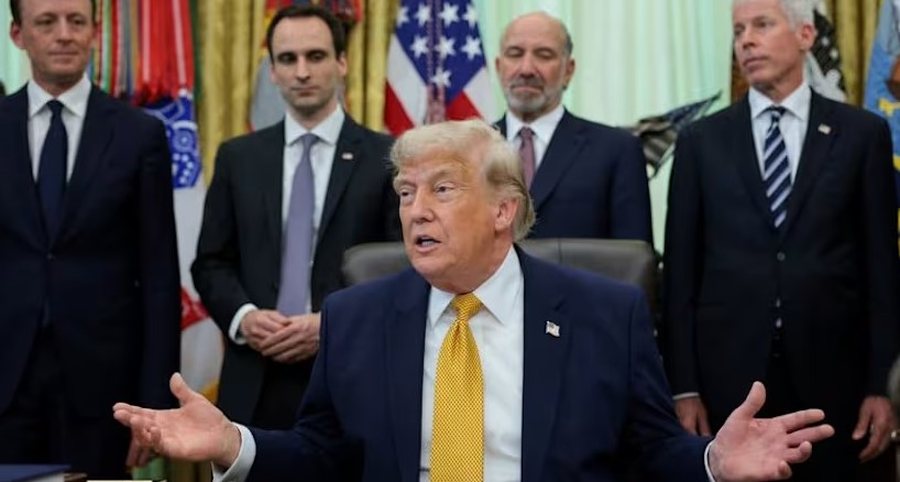
The US president blames the outgoing British prime minister for policies on energy, immigration and relations with the US, as the Labour Party prepares to elect his successor.
United States President Donald Trump on Monday (June 22) criticized outgoing British Prime Minister Keir Starmer after the Labour leader announced his resignation, saying he had "done himself a lot of harm" over energy policies, immigration and the way he has handled relations with Washington.
"I think he's a wonderful man," Trump told reporters during an event in the Oval Office, before accusing Starmer of mismanaging Britain's energy policy, failing to exploit North Sea oil reserves and allowing "wind turbines everywhere."
"The UK buys a lot of its energy. You know where? Norway. You know where they get their oil? The North Sea. Britain has a much better part of the North Sea, but they don't want to use it for environmental reasons," Trump said.
Trump, who had predicted Starmer's departure in a post on the Truth Social platform, said the British leader was "kind of a friend of mine" but had not been supportive enough of the United States on issues related to NATO and the war with Iran.
The two leaders clashed over the use of British military bases in Cyprus to carry out attacks on Iran. The US president expressed dissatisfaction with the fact that Britain had delayed approving an American request to use the RAF Akrotiri base in Cyprus to bomb Iranian targets.
"He said we couldn't use the island for a landing. That was the first time," Trump said, adding that Starmer later accepted the American request, but according to him, it was "a wrong move" that "cost him a lot."
"I wish him all the best. But he has two problems: energy and immigration and crime. But energy and immigration. He has done a lot, a lot of damage to himself," Trump said.
Starmer announced on Monday that he would resign as Labour leader but remain prime minister during an orderly transition period. The decision comes after months of pressure from party MPs and a weakening of his political authority following poor results in local and regional elections.
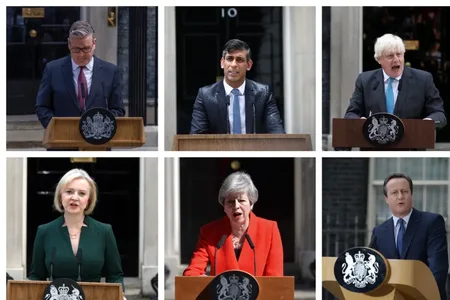
Veteran Labour politician Andy Burnham, the former mayor of Greater Manchester, is widely seen as Starmer's most likely successor after his return to Parliament, which could make him Britain's seventh prime minister in a decade.
Analysts estimate that Burnham is unlikely to face serious challengers, especially since the other leading candidate, former Health Minister Wes Streeting, decided not to run for prime minister.
"There is an argument that you might want a contest to test the ideas of the candidates, but changing a sitting prime minister is not the same as changing an opposition leader," said Ben Wellings, associate professor of politics and international relations at Monash University.
"I suspect this will be more of a coronation than a contest and that the so-called 'King of the North' will become prime minister of Britain by mid-July," he added, referring to Burnham by his nickname, an allusion to the popular series Game of Thrones.
While Reform UK leader Nigel Farage has argued that voters should have the opportunity to have their say through a general election, Wellings said this would not be in the interests of the Labour Party.
According to him, the party would like any initiative by Burnham during his first 100 days in office to produce concrete results before the country goes to the polls.
"This is simply Reform UK and Nigel Farage trying to put pressure on the Labour Party because Burnham's success against Reform will create a serious problem for the success of Nigel Farage and his party," Wellings told CNA's Asia First show.





Mos donte ky i rrjedhuri ta kurorezonin Mbret!? Mbret nuk behesh por te ben populli. Shko jep teste ne shkolle te pakten per histori e mos bej teste per katrorin, rrethin, trekendeshin.