


 Shkruar nga Pamfleti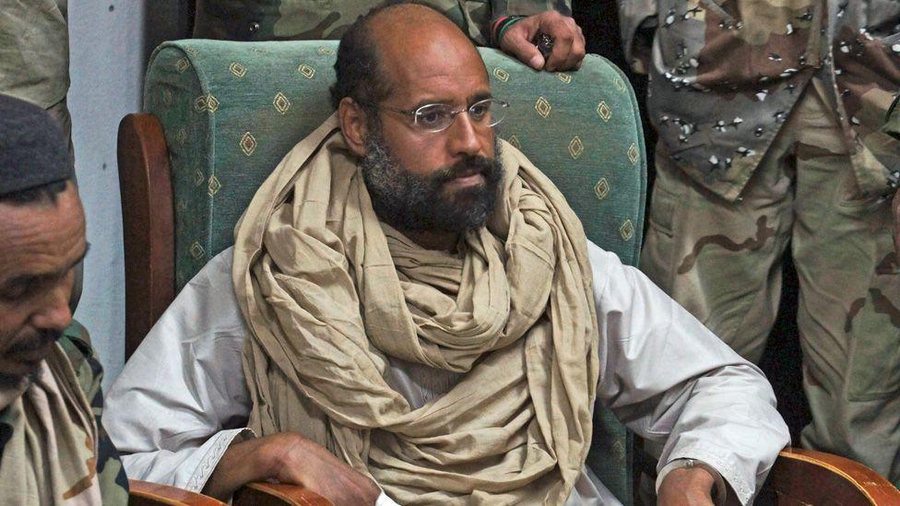
The killing of Saif al-Islam Gaddafi ends a long era in Libyan history
The news of the assassination of Saif al-Islam Gaddafi came unexpectedly, but not surprisingly, given the reality of a Libya that is still deeply unstable and exposed to frequent upheavals of internal balances.
In such a context, keeping the surname Gaddafi has never been a guarantee of security, especially for the son of former leader Muammar Gaddafi, who was killed in 2011 after 42 years in power and who for a period had considered Saif as his political heir.
A legacy that Saif al-Islam himself has tried to keep alive over the years, at least until yesterday, when four armed men entered his home in Zintan and executed him without leaving him any chance of escape. With his death, according to analysts, the era of Gaddafiism finally ends and with it over half a century of political history in Libya and the entire Middle East region.
Mystery over perpetrators and motives
It is still unclear who exactly is behind the assassination and who ordered the perpetrators of the murder. The only certain element is the place where the event took place: Zintani, about 200 kilometers south of Tripoli, an area where the desert meets the mountains and where some of the most powerful militias in western Libya operate.
These armed groups were among the first to rise up against the Gaddafi regime in 2011, and it was they who captured Saif al-Islam as he tried to flee to Niger after his father was overthrown. Since then, Zintan has become a kind of fortress for him: first as a prisoner and then, after the decision to release him in 2017 and the non-execution of the death sentence handed down in 2015, as a “privileged guest.”
The fact that the assassins managed to kill him in this very area shows that some balances have been broken. It could be about developments in the international arena, but also about internal local tensions. Researcher Michela Mercuri has pointed out the coincidence of time between the murder and the publication of new documents related to the Epstein case, which also mention the name of Saif Gaddafi in connection with interests in billions of Libyan funds still frozen in the US and Europe.
On the other hand, analyst Jalel Harchaoui points out that Saif's presence in Zintan has long been viewed with displeasure by some local groups, who considered him a burden and a risk to the stability of the area.
The end of a political symbol
The possibility of Saif al-Islam's possible return to the Libyan political scene is not ruled out. However, this hypothesis also raises more questions than it answers, especially regarding the timing of the assassination, as his political ambitions were not new.
According to analysts, the figure of Saif Gaddafi had more symbolic than real political weight. "He served as an evocative reference, used in some areas of the country to express dissatisfaction, protest or nostalgia for the past, but without ever becoming an organized project or real leadership," says Alessandro Scipione of Agenzia Nova.
In this sense, the assassination of Saif al-Islam Gaddafi represents more the end of a political idea than of a concrete force. Its consequences are expected to be more visible in the history books than in daily political developments, as with the elimination of the last active figure of the Gaddafi family in politics, an era that has lasted over 50 years is finally closed. /Adapted from “Inside Over”





Lini një Përgjigje