


 Shkruar nga Chiara Schlenz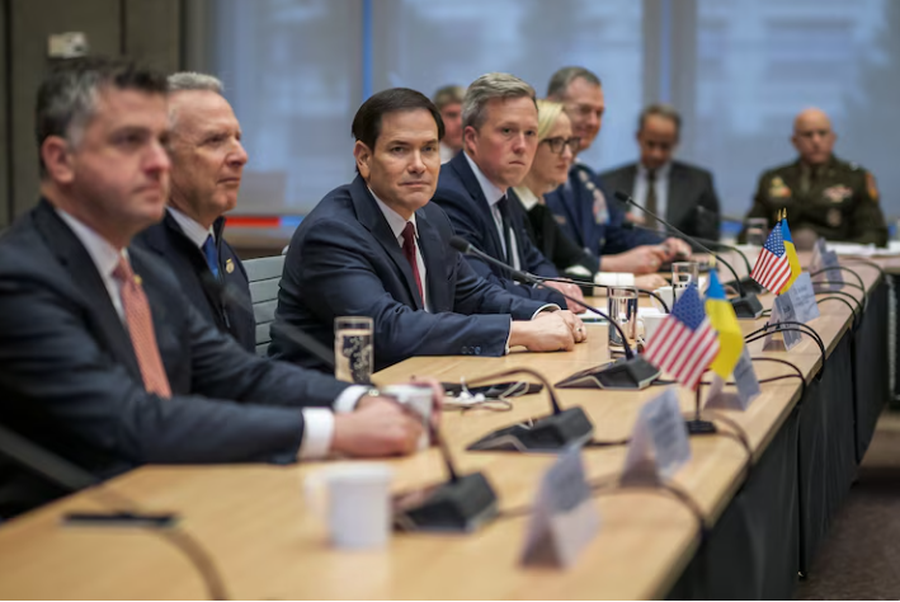
The 28-point plan is causing new tensions after the Geneva talks. The US talks about progress, Europe warns of risks, and Ukraine is fighting for its security. What happens next?
Ukraine negotiations over Trump's 28-point peace plan are descending into chaos. The US is celebrating supposed progress, Europe is warning of dangerous gaps, and Ukraine is desperately trying to protect its red lines.
And Putin? He stands to the side, laughing out loud.
What specific changes have been made after the Geneva talks?
US Secretary of State Marco Rubio called Sunday the “most productive day” of the entire negotiation process. Together with Andriy Yermak, the head of the Ukrainian presidential administration, he presented a revised draft agreement that clearly guarantees Ukraine’s sovereignty. The clarification is a response to harsh criticism of the original 28-point document, whose pro-Russian passages caused outrage. However, much remains unclear. While many points were softened in their wording, their content was not redefined.
How is Ukraine reacting to these developments?
President Volodymyr Zelensky is presenting himself as a determined partner. He knows all too well how dependent his country is on US support, especially after US President Donald Trump again called him ungrateful. At the same time, Kiev is making it clear domestically that a forced cession of territory or a weakening of the Ukrainian armed forces would never be acceptable.
Who really draws the line in Washington?
A fierce battle is taking place in the US over the direction of the negotiations. Trump is trying to make quick progress and is sticking to his vision of being able to present peace as his success as soon as possible, ideally before Thanksgiving. At the same time, prominent senators such as Lindsey Graham and Mitch McConnell are expressing themselves extremely harshly: they consider the draft either naive or even a document that may have originated in Moscow and not Washington. These conflicting signals are significantly weakening the American negotiating position.
How is Europe positioning itself?
Europe is presenting a surprisingly united front. German Chancellor Friedrich Merz, French President Emmanuel Macron and Polish President Donald Tusk are jointly pushing for significant changes to the US proposal. The European counter-proposal, presented simultaneously in Geneva, places great emphasis on realistic guarantees of Ukrainian security. For example, the size of the Ukrainian army would not be limited to 600,000 soldiers, but would be set at 800,000. Moreover, Europe rejects any form of recognition of Russian territorial gains. Behind the scenes, the tone is even more emphatic: the aim is to prevent Ukraine from being forced into a “bad deal”.
What points of disagreement remain unresolved?
Despite diplomatic easing, the main lines of division remain. The question of whether the current front line should serve as the basis for future negotiations is highly contentious; for Ukraine, this would effectively amount to recognition of the current status quo, from which Russia benefits. The treatment of Russian war crimes also remains unresolved, as the US, in particular, has not completely ruled out a general amnesty.
Why does Russia benefit more?
The standoff between the US and Europe allows Kremlin leader Vladimir Putin to maintain his maximalist demands while simultaneously increasing military pressure. The deadly drone attack in Kharkiv, which killed at least four people on Sunday, shows how Russia is influencing the negotiations: with force, with the aim of weakening Ukraine’s negotiating position. A frozen conflict along the current front line would be a strategically ideal situation for the Kremlin.
What happens next this week?
Further talks are planned. The deadline initially set by Trump, deliberately set in the days before Thanksgiving to ideally secure his place in national holiday news coverage as a “peace president,” now appears to have been significantly softened. The crucial question now is whether the US, Ukraine, and Europe can find common ground that goes beyond a cosmetic agreement. If they fail to do so, Russia could continue to exploit Western uncertainty and use its military and political influence unhindered. /Adapted from Blick/



Lini një Përgjigje