


 Shkruar nga Paul Valentino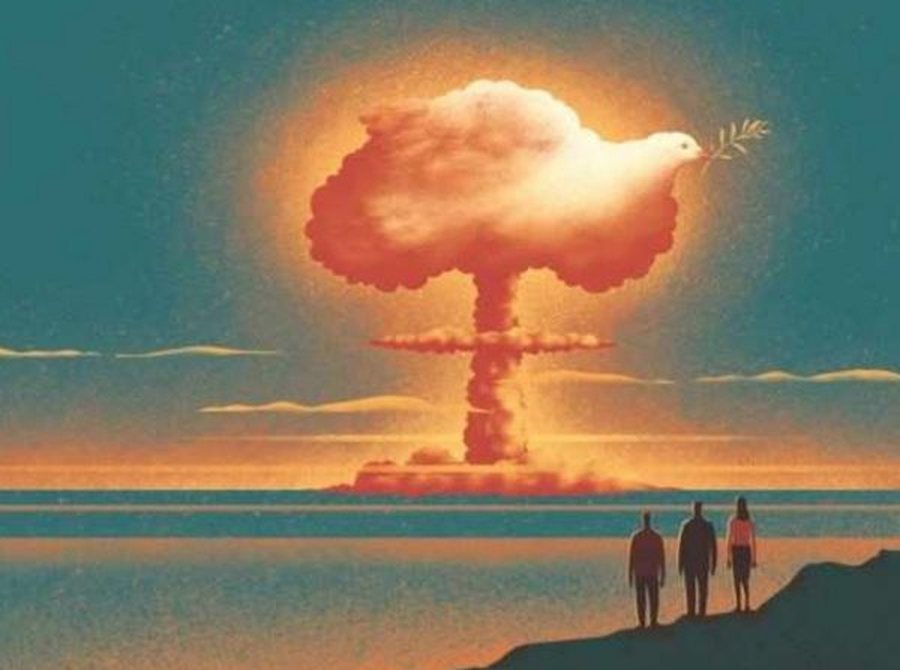
With the expiration of the New START agreement, for the first time since 1967, there are no longer any limits on nuclear arsenals...
Eighty-five seconds to midnight. Last Tuesday, the Bulletin of the Atomic Scientists again pushed back the hands of its metaphorical Doomsday Clock, which for decades has warned of the imminence of a global nuclear catastrophe. That is no exaggeration. Tomorrow, New START, the Strategic Arms Limitation Treaty between the United States and Russia, expires. Since 2010, the treaty has set a maximum of 1,550 nuclear warheads for each of the two superpowers, deployed on submarines, land-based intercontinental ballistic missiles and bombers. It was the last vestige of a fading era.
For the first time in more than half a century, the world will no longer have any mechanism to slow or control the spread of nuclear arsenals. The grand illusion of a planet without nuclear weapons is over, a dream that began in 1967 with the SALT talks between Moscow and Washington, continued with the START I and II agreements, and culminated in New START, signed in Prague sixteen years ago by Barack Obama and Dmitry Medvedev, then president of Russia, with a temporary waiver by Putin. In between, and no less important, was the INF Treaty, signed in 1987 in Washington by Ronald Reagan and Mikhail Gorbachev, the first and only treaty in history to physically eliminate an entire class of nuclear weapons, those with a range between 500 and 5,000 kilometers, known as Euromissiles.
The most remarkable thing about these fifty-eight years has been the shared idea that having fewer nuclear weapons on Earth was a good thing. Having overcome the nuclear bulimia of the 1950s and 1960s, and having repeatedly stared into the abyss, risking all-out war as during the Cuban Missile Crisis of 1962, the two great powers realized that the MAD (Mutually Assured Destruction) doctrine worked, but carried great risks. The way forward was negotiations, which continued even after the end of the Cold War and the collapse of the Soviet Union. The results were undeniable: there were still over 70,000 nuclear warheads in the world’s arsenals, compared with 12,500 today.
Now, however, with the New START treaty expiring without renewal, the nuclear threat has returned, with considerable interest. It was Russia’s invasion of Ukraine that put it back at the center of world politics. From the outset, Vladimir Putin warned the West to stay away, raising the specter of a nuclear weapon of choice. In 2022, US intelligence estimated the likelihood of Russia using tactical nuclear weapons in the field at 50%.
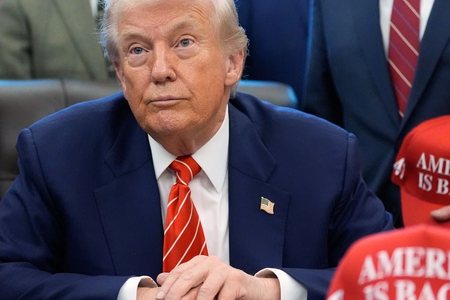
Donald Trump's return to the White House, after announcing during his campaign that he wanted to "denuclearize" or at least reduce nuclear weapons if Moscow was willing to do the same, had raised hopes of a resumption of negotiations on the renewal of New START, which Putin had suspended after the outbreak of the conflict. Things went differently. Trump reduced the State Department's diplomatic team working on the nuclear issue to a minimum, firing most of them. And while Putin and his generals celebrated the successful testing of new and deadly weapons "Wunderwaffe", namely, the submarine-launched Poseidon missile, which exploded near the coast, causing a tsunami, the president of the White House announced that he had decided to resume nuclear testing, thus ending a moratorium observed by the United States for more than thirty years.
But it is not just the United States and Russia that are upsetting the strategic equation. Since 2020, China has more than doubled its arsenal, acquiring 600 nuclear warheads, which are expected to reach 1,000 by 2035. Moreover, a rapid process of modernization, and in some cases expansion, of nuclear weapons is underway in the six other countries that officially possess them: the United Kingdom, France, India, Pakistan, Israel, and North Korea.
There are other factors that make this buildup infinitely more dangerous than that of the Cold War, when a near-monopoly of Russian and American nuclear weapons operated within the framework of well-tested secret communication procedures even in moments of high tension. The first is the growing threat of uncontrolled proliferation. The attack by a nuclear power, Russia, against a non-nuclear power, Ukraine, and the Trump administration’s ambiguous and unpredictable stance toward its allies have put the possibility of acquiring nuclear weapons on the agenda of many nations: Saudi Arabia, South Korea, Japan, Poland, and even Germany have at least begun to discuss it. As for Iran, it has been trying for decades. The second is the advent of artificial intelligence, which will make it easier for those who acquire it, states or non-state actors, to build weapons of mass destruction. Meanwhile, existing weapons are more vulnerable to cyberattacks.
The end of New START is the catalyst that should alarm us all, as even Moscow, through the aggressive former president Medvedev, is warning. Putin had offered to extend it for another year, but only for the part related to the nuclear warhead cap, thus not resuming the intrusive verifications, which are the real strength of the agreement and ensure its compliance. Trump ignored the proposal, but did not resume it, because he claims that any new negotiations must include China, which instead categorically refuses. "If it expires, it expires, we will make a better one," the US president told the New York Times. Unfortunately, in the case of nuclear weapons, history teaches us that the best is always the enemy of the good. / Adapted by "Pamphlet" from "Corriere della Sera"



Lini një Përgjigje