


 Shkruar nga Pamfleti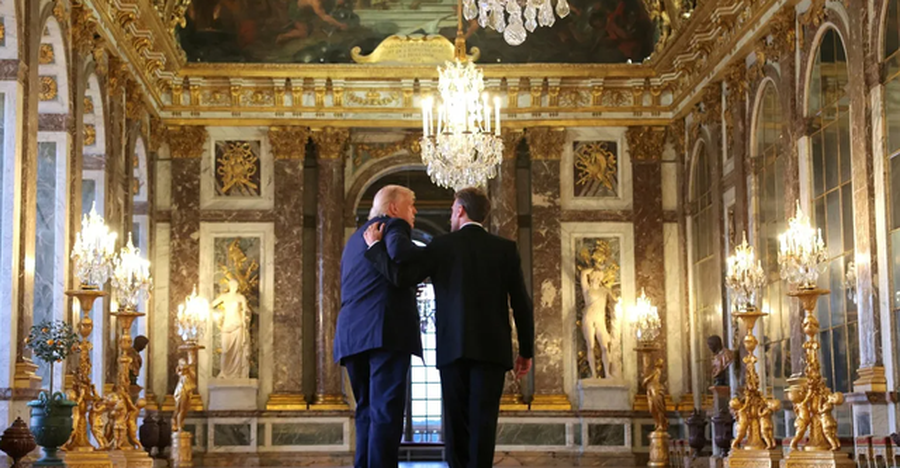
The agreement signed between the United States and Iran to end the conflict in the Middle East is being viewed with skepticism and strong criticism in Israel.
One of the most critical voices is that of Amos Harel, a security analyst at the Haaretz newspaper, who describes the document as a double failure for US President Donald Trump and Israeli Prime Minister Benjamin Netanyahu.
According to Harel, the memorandum of understanding signed in Versailles essentially represents an American retreat from the objectives that were declared at the beginning of the war against Iran. In his analysis, he argues that despite the significant economic and military damage that Tehran suffered, the main benefits of the agreement go in favor of the Iranian regime. The author notes that the agreement provides for the end of the fighting, the easing of sanctions, the reopening of the Strait of Hormuz, and an American commitment to help rehabilitate the Iranian economy.
In return, according to him, Iran has only offered general declarations not to develop nuclear weapons, without clear mechanisms that guarantee the implementation of these commitments.
US intelligence: Israel is trying to sabotage the US-Iran deal
One of the main concerns raised by Harel relates to Iran's stockpiles of enriched uranium. He emphasizes that the agreement does not provide a concrete solution for hundreds of kilograms of highly enriched uranium, but only provides for the issue to be discussed in future negotiations.
According to him, this creates a major strategic paradox: once Iran benefits from the lifting of sanctions and economic normalization, the motivation to make further concessions may be significantly reduced.
The analysis also argues that Trump realized relatively quickly that the war was not producing the expected results.
The objective of decisively weakening or overthrowing the Iranian regime was not achieved, while the closure of the Strait of Hormuz caused shockwaves in global energy markets and increased pressure on the US administration.
For Harel, Trump's decision to sign the deal was essentially a way to disengage from a conflict that was becoming increasingly politically costly within the United States and that was also causing tensions with Washington's Arab allies in the Persian Gulf.
The Israeli analyst notes that recent developments have also exposed the limits of the relationship between Trump and Netanyahu.
Although the two leaders appeared for months to be on a common political and military line, the agreement showed that the strategic interests of Washington and Tel Aviv are not necessarily the same.
Another element that concerns the author is the fact that the agreement does not limit Iran's ballistic missile program and also includes a ceasefire in Lebanon, limiting Israel's ability to act militarily against Hezbollah.
At the end of the analysis, Harel concludes that the political and strategic outcome of the war is far from the expectations that Israeli leaders had after the October 7 attacks.
"The Iran deal is not just Trump's failure, it is also Netanyahu's failure," he writes, arguing that the war that began with the aim of changing the security balance in the region may be remembered as a strategic defeat for Israel.





Lini një Përgjigje