


 Shkruar nga Pamfleti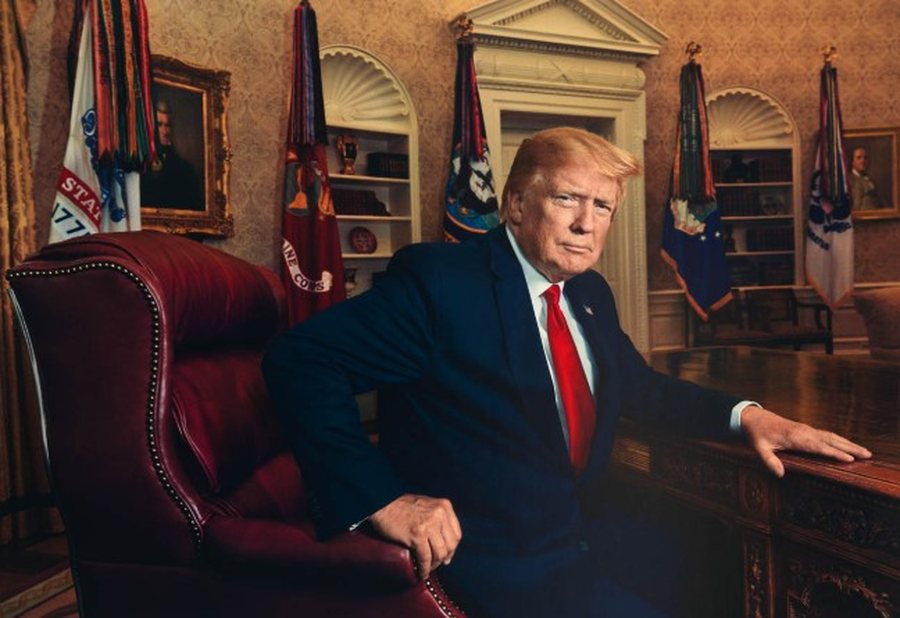
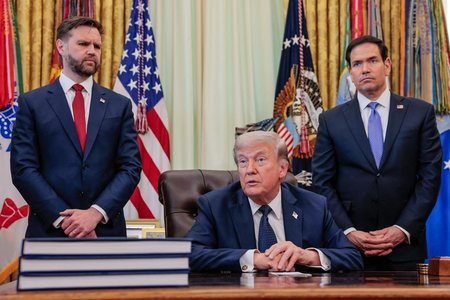
US President Donald Trump told Axios in a recorded interview on Thursday that he discovered the "limitlessness" of his power after starting the war in Iran.
Meanwhile, a soon-to-be-published book, "Regime Change," by New York Times journalists Maggie Haberman and Jonathan Swan, reveals that the American president likes to think he is the most powerful man in history.
"This is not just about testing the limits of presidential power," the website Axios points out, "but about placing him in line with invaders, dictators, and strongmen who subjugate nations to their will."
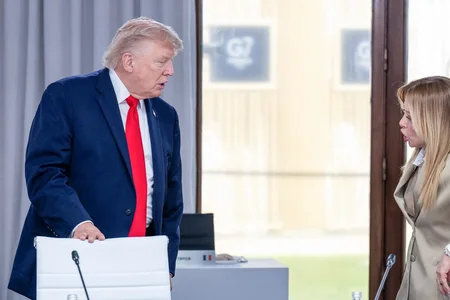
In the interview with Axios, Trump explains that the G7 leaders believed him when he jokingly said, “I’m the boss,” and that Israel “has a lot of respect for me” and will do “what I say.” In the New York Times reporters’ book, there is a scene in which Trump proudly displays a document on “Great Men,” declaring himself more powerful than Attila, Genghis Khan, Napoleon, Stalin, Mao, and Hitler. Trump “began reading it,” the authors write, “reciting the names of some of the most powerful figures in history,” explaining how each of them “had less power than he did as president of the United States.”
Trump proudly published that piece in Truth last Thursday: it was written by a friend of his, Dave King, whom Trump calls a “presidential historian,” but is a Scottish entrepreneur who was also a club administrator for the famous golfer Gary Player. The piece concluded: “The fact that Trump is ready to use his power on a global scale “makes him the most powerful person who has ever walked this planet.”
“They didn’t have airplanes, did they? You couldn’t travel like you do today,” Trump said of Alexander the Great, Caesar, William the Conqueror, and even quoted Napoleon with glee, according to Haberman and Swan. The authors of “Regime Change” find significant his “apparent pleasure in being in the company of Mao, Hitler, and Stalin,” “a pleasure with which he accepts, without hesitation, a place among the men who shaped the world through conquest and fear.”
In the interview with Axios, Trump cited Xi Jinping and Narendra Modi as the leaders he most admires. He says the Chinese president "only thinks about business" and the Indian leader is "a tough guy." In that interview, the US president declined to name leaders he considers weak, but expressed disappointment at Vladimir Putin's absence from the G7, following his expulsion following Russia's annexation of Crimea in 2014. Instead, he focused on Emmanuel Macron's decision to host a dinner in his honor in Versailles, a royal reception that Trump calls "my weakness." Allies, as the US president himself describes them, are only important if they recognize who holds the real power. "If it weren't for me, Israel wouldn't exist today," he added, speaking to Axios, declaring that his relationship with Prime Minister Benjamin Netanyahu is "good, but we have to keep it healthy."
Trump used similar tones against “hawkish” Republicans, who were angered by his Iran deal: “Some people I used to respect... I don’t respect them anymore. They’re extremists.” Although the deal falls short of his initial demands, he called it “an unconditional surrender” by Iran and evidence of “regime change.” The only “constraint” he acknowledges is the economy. “I have only one desire as president... I don’t want to be like the great Herbert Hoover,” forever remembered for the Great Depression./ Corriere della Sera


Lini një Përgjigje