


 Shkruar nga Pamfleti
According to internal European Union forecasts, there is a risk that oil and jet fuel will become insufficient in member states...
While the German federal government is trying to keep calm, the alarm has been raised in Brussels for a long time. EU Energy Commissioner Dan Jørgensen has been warning for weeks that the oil crisis should not be underestimated. According to him, it is expanding into a full-blown energy crisis, which is hitting the European economy hard.
According to internal forecasts of the European Union, there is a risk that oil and jet fuel will become scarce in the member states. For this reason, the EU intends to present new measures soon to reduce consumption and promote energy alternatives. Jørgensen calls for energy savings, but emphasizes that the supply should not be made artificially cheaper than it really is. The first signs of shortages are already starting to appear.
According to Jørgensen, if the conflict does not end soon, the supply of aviation fuel could also face serious problems. The German Airports Association (ADV) also warns in this regard, speaking of the possibility of flight cancellations and price increases.
"There is a fear that especially low-cost airlines and destinations with lower tourist importance will be forced to cut even more flights," ADV CEO Ralph Beisel told the Welt am Sonntag newspaper.
The main reason is that kerosene prices have doubled in the past two months compared to the pre-war period. Beisel does not expect the situation to normalize in the coming months. The International Air Transport Association (IATA) fuel price monitor confirms the rapid increase in prices.
"The most optimistic scenario for 2026 is stagnation in passenger numbers. In the most negative scenario, some airports could face a capacity drop of 10 percent. If this is calculated at the European level, around 20 million passengers would be affected ," Beisel said.
According to him, some destinations may be completely removed from air traffic, while others will be served less frequently and at higher prices.
"By the end of June global reserves will fall to a minimum ," he said.
Analysts, researchers and oil market experts predict that June will be particularly tense. Even a quick peace agreement in the Persian Gulf, they say, will hardly be able to ease the existing supply shortages. The critical point is expected to be reached in June.
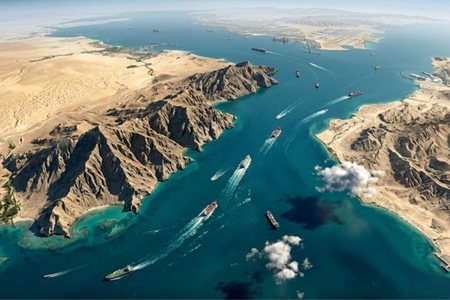
So far, Saudi Arabia has managed to partially redirect oil supplies, while the US and African countries have helped to cushion the effects of the blockade in the Strait of Hormuz through their exports in recent weeks. However, this compensatory capacity is reaching its limits. Kerstin Hottner, head of the raw materials sector at investment company Vontobel, told Handelsblatt: “By the end of June, global reserves are expected to be reduced to a minimum and prices will have to rise significantly for demand to react, i.e. to subside .”
According to her, the price of oil could reach record levels of up to $150 per barrel.
Experts point out that, although "only" 20 percent of world oil trade passes through the Strait of Hormuz, this is enough to gradually consume global reserves and strategic security reserves, especially if major economies such as the US, China or the European Union do not reduce consumption and continue at normal rates.
Even the CEO of the energy company RWE, Markus Krebber, expressed concern in a statement to Handelsblatt: “The real and physical shortage has just begun. The energy coming from the region was still in sea transport for two to three months. Now no new cargoes are arriving.”
Druzhba pipeline stops oil supply
The situation could also become critical for oil during June. According to reports, the US may gradually reduce oil exports to Europe.
Meanwhile, crude oil from Kazakhstan to Germany via the Druzhba pipeline has been suspended since May 1. The German Association of Gas Station Operators warns that this could lead to further fuel price increases and, in the medium term, supply shortages if oil companies and political authorities fail to ensure effective distribution and crisis management.
"Prices would rise immediately ," a spokesman for the association warned the Berliner Zeitung.
He said the supply disruption would eliminate around 20 percent of the up to 12 million tons of oil processed annually at the PCK refinery in Schwedt. About 90 percent of vehicles in the Berlin-Brandenburg region are powered by fuel produced from this oil. Suppliers warn that even motor oil could become scarce.
Meanwhile, the European Aviation Safety Agency (EASA), due to the risk of kerosene shortages, on May 8 cleared the way for the use of aviation fuel imported from the US. American kerosene has a different freezing point, but this seems to no longer be considered a problem under current conditions.
However, it remains unclear how long the US will continue to export refined petroleum products. In the meantime, the German federal government continues to maintain a calm public stance./ Adapted from “Pamfleti” by “Berliner-Zeitung”






Lini një Përgjigje