


 Shkruar nga Pamfleti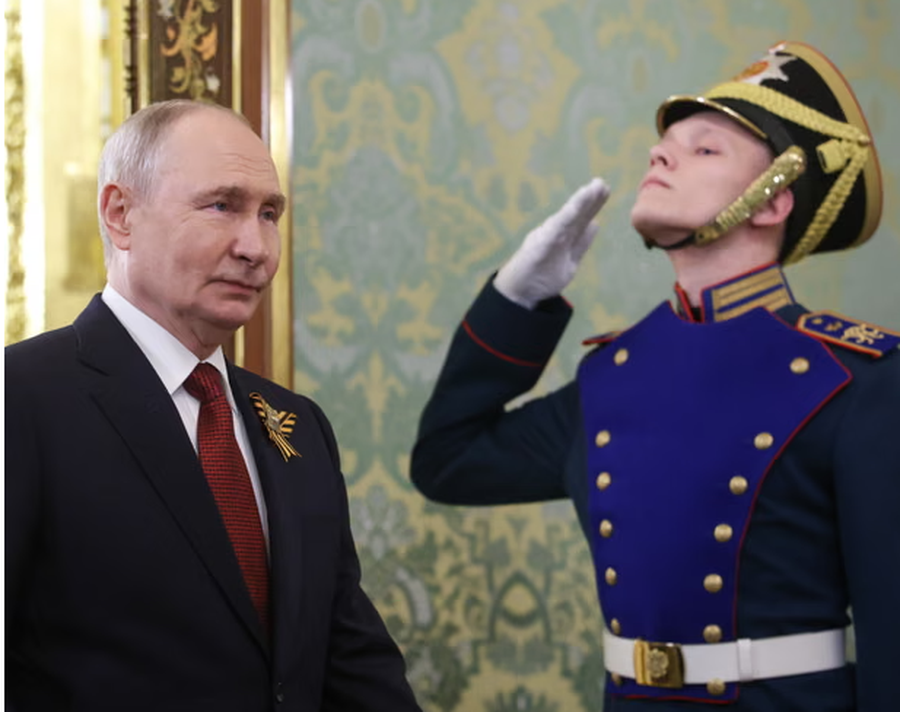
For days, the international press, from the Financial Times to Le Monde, has been publishing articles about the crisis of support for the Putin regime and the growing paranoia of its leader. The topic has now also been covered by the Economist, where a "former senior Russian government official" paints a picture quite different from what we are used to reading in the Italian press, not to mention on television shows.
The opening line is striking: "It began not as an event, but as a sensation, felt simultaneously everywhere: Vladimir Putin has led Russia into a dead end... Its first manifestation is a change in the language used by top officials, regional governors, and business leaders: they have stopped using the first person plural when talking about what the country's institutions are doing."
This change is not a sign of an imminent rebellion, and Putin's response, the article continues, could even be an intensification of repression, or even the launch of another war. These are all choices that, however, would not stop the crisis; they could only "make the rupture more bloody and dangerous," as Polish intelligence reports on Russia's quantum leap in organizing sabotage in Europe seem to confirm. The point is that now, for the first time, Russians are beginning to imagine a future without it. However, on Italian television, it seems that we are not yet capable of this.
What would Putin's usual interpreters and explainers say after his downfall? How would they justify four years of relentless propaganda, focused on endless but minimal variations on the concept: Russia is invincible and will do whatever it wants with Ukraine, so we better please it now?
It's a naive question, because the very fact that Ukraine is still there, after four years of grueling war, shows beyond any reasonable doubt how unfounded this theory was.
Our regular talk show viewers have been misled by the facts for four years in a row, yet they insist that their predictions were completely accurate. After all, they claimed that the Russian invasion of Ukraine was "American fake news" until the day before the attack, yet they continued on the same lines and with the same arguments the next day, as if nothing had happened.
This year, Putin will have to endure the mockery of a virtually unarmed military parade, fearing new Ukrainian drones and missiles, and perhaps also because of a lack of equipment, while cutting off internet connections in half the country and increasing security measures around it. Perhaps, to calm down a bit, he should watch Italian television./ Linkiesta


Lini një Përgjigje