


 Shkruar nga Pamfleti
The first round of US-Iran talks in Oman began amid military threats, Washington's maximum conditions, and Tehran's fear that any concessions would pave the way for new strikes.
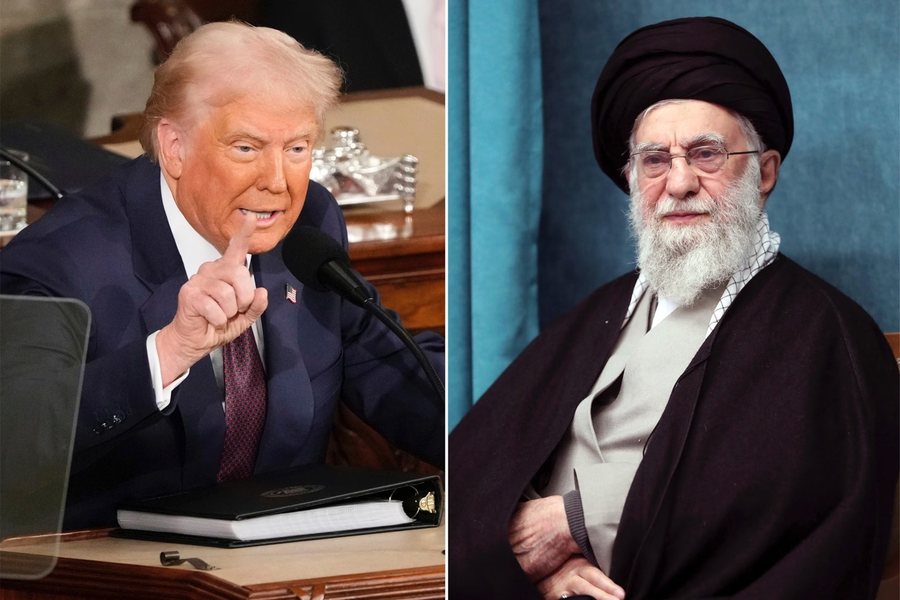
The first round of US-Iran talks in Oman began amid military threats, Washington's maximum conditions, and Tehran's fear that any concessions would pave the way for new strikes.
The United States and Iran have begun the first round of negotiations in Oman, but the sides have come to the table without agreement on the subject matter. Washington wants to include Tehran's missile program and regional influence. Iran will only discuss its nuclear program. This difference puts the process on the verge of failure from the start.
The US administration has made it clear since January that the goal remains unchanged: Iran should not acquire a nuclear weapon. President Donald Trump has publicly reiterated that stance several times. But according to former US diplomat Alan Eyre, part of the nuclear negotiating team from 2010 to 2015, the US strategy changed after the Iran-Israel clash in June 2025. Eyre told Reuters that the US negotiating position became more maximalist after those developments.
Iranian sources told Reuters last week that Trump set three conditions for resuming talks: zero uranium enrichment in Iran, restrictions on its ballistic missile program and a halt to support for regional proxy groups. On February 2, Trump warned that “bad things” could happen if a deal was not reached.
Tehran has for years called the demands a violation of its sovereignty. Two Iranian officials told Reuters that the clerical leadership sees the ballistic missile program as a stronger red line than uranium enrichment. An Iranian official said Iran would not accept preconditions for negotiations but was willing to show flexibility on uranium enrichment, which it describes as a peaceful program.
Tensions have been rising since last year's military developments. In June, the US struck Iranian nuclear targets, joining a 12-day Israeli bombing campaign. Iran responded with missiles and drones at Israel. Iranian authorities said they had replenished their missile stockpiles after the conflict and warned they would use them if national security were threatened.
Alan Eyre described Iran as “strategically the weakest it has ever been,” highlighting Tehran’s fear that any concessions would be interpreted as weakness and would prompt new military pressure. At the same time, Iran is seeking a deal that would lead to the easing of Western sanctions, which have hit its economy hard and fueled internal unrest in recent months. According to Eyre, Tehran does not realistically expect sanctions relief from this US administration, but aims to avoid a direct military attack.
The example of Venezuela, where the US arrested President Nicolas Maduro in January and transported him to New York, serves as an unlikely parallel for Iran. Eyre points out that the removal of a figure like Ayatollah Ali Khamenei would not have the same effect, as Iran has shown itself to be quick to replace a stricken leader. This is precisely the crux of the standoff: Washington wants total guarantees, Tehran wants political and military survival. The negotiations in Oman are taking place between these two incompatible logics.




Lini një Përgjigje