


 Shkruar nga Pamfleti
The American president's big ego is the main problem with an agreement, say Arab and American officials.

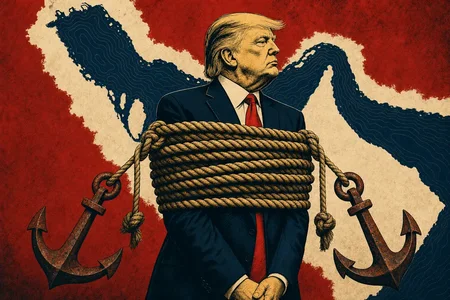
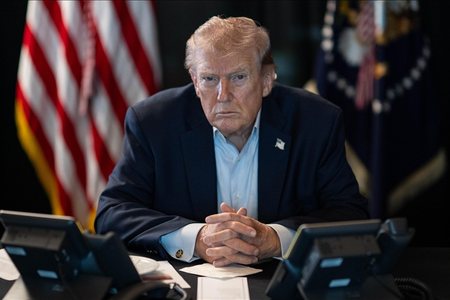
The effort to reach an agreement between the United States and Iran to end the war in the Middle East appears to be stumbling not only because of geopolitical differences or Washington's demands, but also because of the very character of US President Donald Trump.
That’s the main conclusion of a recent Politico analysis titled “The Biggest Thorn in an Iran Deal Could Be Trump’s Ego,” in which U.S. and Arab officials express concern that Trump’s aggressive rhetoric and public insults toward Tehran could undermine diplomatic efforts to end the crisis.
As the report notes, the main problem in the talks concerns not only the content of a potential deal but also whether Trump is willing to allow the Iranian leadership to retain some rudimentary political authority. Diplomats and analysts estimate that Tehran will find it difficult to accept a deal if it is publicly presented as entirely possible.
According to the analysis, some officials believe that the US president sees the negotiations more as a personal victory than as a balanced diplomatic solution. A senior Gulf official, who spoke to Politico on condition of anonymity, argued that Trump “desperately wants this conflict to end,” but does not seem to understand that the Iranian side also needs a way to “save face.”
The publication notes that the concept of dignity and public image is particularly important in Iranian political culture. For this reason, Trump’s constant public attacks are considered counterproductive, reinforcing Tehran’s tough stance instead of pressuring it to make concessions.
In recent weeks, Trump has called Iranian officials “crazy” and “mentally ill” and even threatened to destroy Iran’s “entire civilization.” He has also insisted that the United States has already triumphed in the conflict.
Negotiations and the climate of mistrust
At the same time, according to the analysis, behind-the-scenes negotiations are continuing for a possible framework agreement that could lead to broader talks in the near future.
Secretary of State Marco Rubio confirmed that contacts are ongoing, while there is information about an attempt to formulate an interim plan. Tehran, for its part, is also responding with aggressive rhetoric and ironic references to the US president, at a time when the climate between the two sides remains extremely charged.
In its analysis, Politico recalls that Iran's distrust of Trump has remained strong since his first term, especially after the US withdrawal from the 2015 nuclear agreement reached during the Obama presidency.
At the same time, some diplomats estimate that the Iranians may attach more importance to messages transmitted through private communication channels than to Trump's public statements, considering that the harsh rhetoric is part of the negotiating pressure.
However, the main question raised by Politico remains open: whether Donald Trump is ultimately willing to accept a deal in which both sides can claim to have won.


Lini një Përgjigje