


 Shkruar nga Ian Bremmer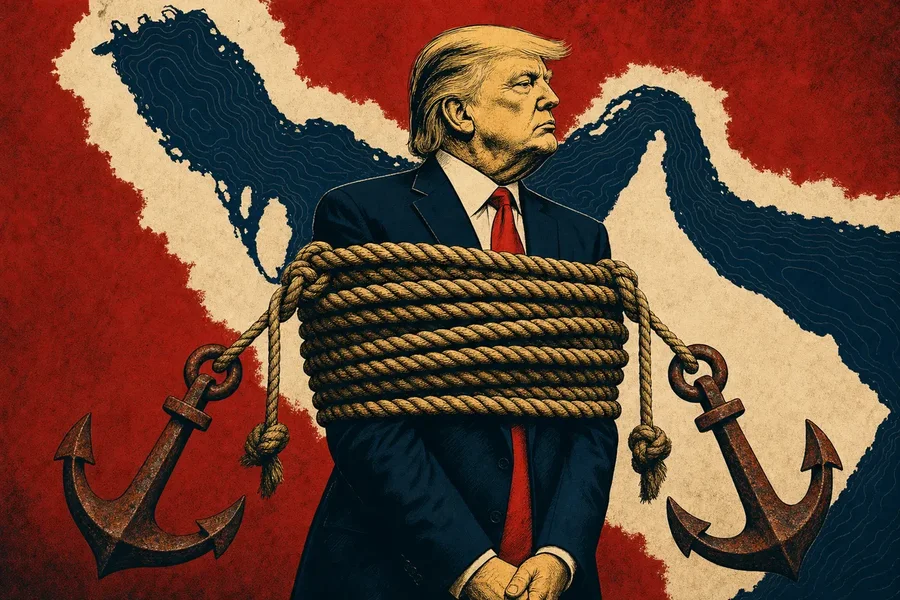
The Trump administration finds itself at a strategic crossroads between the rhetoric of “maximum pressure” and the harsh reality in the Strait of Hormuz. Without a diplomatic deal or a massive military commitment, the promise of a “quick victory” is turning into the biggest geopolitical failure of his tenure.
The Trump administration's latest attempt to project power in the Persian Gulf unraveled with dizzying speed, highlighting the strategic dilettancy that characterizes this crisis.
On Sunday, President Trump touted “Project Freedom,” an ambitious military initiative to escort merchant ships and restore maritime sovereignty in the vital Strait of Hormuz. However, on Tuesday evening, the operation was unceremoniously suspended in a terse post on Truth Social.
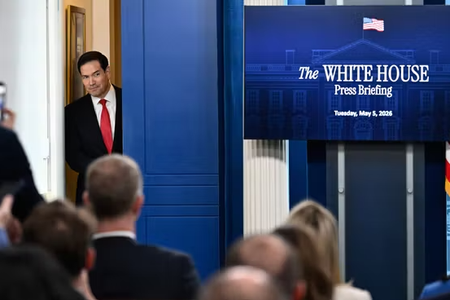
This sudden capitulation came just hours after Secretary of State Marco Rubio assured reporters of the US’s steadfastness in this mission. Although the US Navy managed to successfully escort two destroyers and two merchant ships, the White House’s own standard for “success” was unattainable.
Defense Secretary Hegseth stated that the goal was to prove that Iran does not control the strait, but the reality on the ground dictated a different narrative. Immediately after Trump’s announcement, Tehran responded with live fire on the vessels and launched a barrage of missiles and drones toward the United Arab Emirates, forcing maritime traffic to immediately leave the area.
In an almost absurd attempt to preserve image, Hegseth and General Dan Caine tried to explain that the attacks on the Emirates, the strikes on civilian ships, and the 12 instances of fire against the US Navy had not yet crossed the "threshold" set for a massive response.
“We are not looking for war!” declared the man who now insists on being called “Secretary of War.” As a result, “Project Freedom” was reduced to a technical mine-mapping and information-sharing operation before it “rose”—officially to give diplomacy a chance, but in reality because neutral shipping refused to become targets for the Iranians.
The good news is that, technically, the ceasefire remains in effect at Trump’s behest. The bad news? The Strait of Hormuz remains hermetically sealed. Iran has shown itself willing to risk open war to maintain its strategic leverage, while Washington’s anemic response has only fueled Tehran’s belief that it holds the tactical advantage.
The truth is clear and bitter: short of a regime change - a process that Trump is realizing is easier as a slogan than as an operation - the strait can only be reopened through a pact with Iran or a massive military presence (naval and land).
There is no magical “third way.” Meanwhile, the economic cost is rising exponentially. It’s not just the price of oil; jet fuel reserves are at critical levels, and the blockade of chemical fertilizers to South Asia is threatening the planting season and the stability of an entire region.
Trump finds himself in a vicious circle. He would rather avoid another “endless” war, but he refuses to let go. While both sides have a structural interest in a deal, they are paralyzed by the belief that time is on their side.
Tehran awaits the end of Trump's term, while Trump awaits Iran's surrender. However, the American demand for the surrender of all uranium reserves remains an insurmountable "red line" for the Islamic Republic.
The real danger is that, under pressure, Trump could authorize airstrikes without warning, which would destroy any bridges of dialogue and provoke sabotage of energy infrastructure throughout the Gulf.
The other alternative - declaring an imaginary victory and unilaterally withdrawing - would be a mortal blow to his political ego and the legacy he seeks to leave. What is more troubling is the president's informational isolation.
His advisers, aware of Trump's temperament, prefer to feed the narrative of imminent victory rather than present him with the grim reality. This war is turning into the biggest mistake of his foreign policy, and as long as there is no will for real compromise, the specter of a devastating conflict remains more present than ever./ Adapted from "Pamphlet" by " Gzero"


Lini një Përgjigje