


 Shkruar nga Pamfleti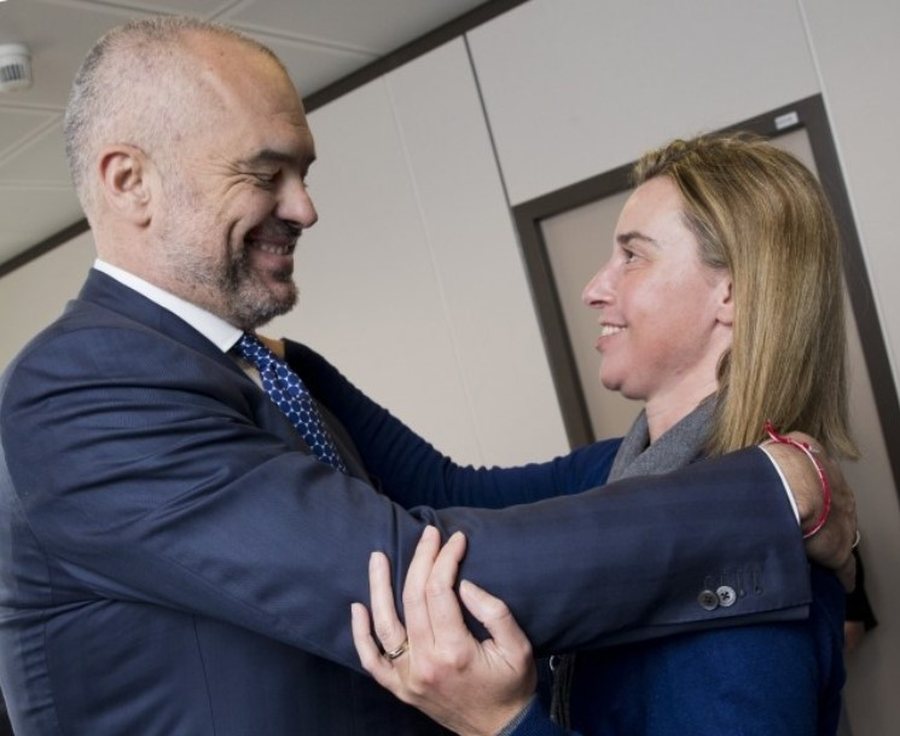
The College of Europe has also opened its branch in Tirana, where Mohgerini has been present several times.
More details emerge from the action in Brussels, where Federica Mogherini, former EU High Representative for Foreign Policy and currently rector of the College of Europe, was arrested.
Two other people were arrested with him, one of whom is Stefano Sannino. Sannino was previously Secretary General of the EEAS under Mogherini, during the period when the Diplomatic Academy was created. He is currently Director General of the Commission's Department for the Middle East, North Africa and the Gulf.
The operation is being led by the European Public Prosecutor’s Office (EPPO), which confirmed that Belgian police had raided the EEAS and the College of Europe and that three suspects had been detained. The investigation concerns allegations of procurement fraud, corruption and criminal conflicts of interest. The EPPO did not name the suspects or the institutions involved and declined to provide further details as the investigation is ongoing.
The European Anti-Fraud Office (OLAF) is understood to have played an initial role by conducting administrative investigations into allegations of misuse of EU budget funds between 2021 and 2022. After interviewing several individuals, OLAF forwarded its findings to the EPPO, which has the competence to investigate and prosecute criminal offences affecting the EU's financial interests.
Investigators are examining whether the College of Europe or its representatives had advance access to confidential information related to a public tender to host and run the EU Diplomatic Academy, an annual EEAS-funded training programme for European diplomats based in Bruges. The tender required applicants to demonstrate that they could provide suitable accommodation for participants.

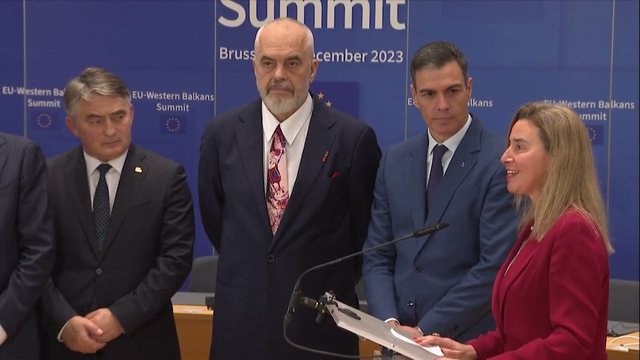
It should be noted that the College of Europe has also opened its branch in Tirana, where Mogherini has been present several times. She is also known for her friendship with Prime Minister Edi Rama.
A particular focus of the investigation is the purchase by the College of Europe, in 2022, of a residential building on Spanjaardstraat in Bruges for around 3.2 million euros. The property currently houses diplomats attending the academy. The purchase came during a reported period of financial difficulties for the institution and shortly before the EEAS launched a tender which later awarded the college around 654,000 euros in EU funding.
Investigators are assessing whether any inside information related to that tender may have been used to gain an unfair advantage, in possible breach of EU procurement rules and professional secrecy.
The College of Europe, founded in 1949, is widely regarded as a leading graduate school for EU officials and diplomats, with many senior figures in EU institutions among its alumni. The college is currently led by Rector Federica Mogherini, the former EU High Representative for Foreign Affairs and Security Policy, who previously headed the EEAS. She began a second five-year term in Bruges earlier this year. Reports say she has so far not commented publicly on the raids.
The period under investigation coincides with the mandate during which the EEAS was led by Josep Borrell, the former foreign minister of Spain, who served as High Representative from 2019 until the end of the previous European Commission.
There is no indication at this stage that Borrell or the current leadership of the EEAS are personally under investigation. The service is now led by Kaja Kallas, who took office as High Representative and head of the EEAS at the end of 2024.
The case adds to a wider pattern of scrutiny of governance, integrity and security around EU institutions. In recent weeks, a series of separate allegations have emerged about Hungarian intelligence activities in Brussels. Investigative journalists reported that Hungarian officers, operating under diplomatic cover in the country’s permanent representation between 2015 and 2017, attempted to recruit EU officials, including Commission staff.
These espionage allegations focus on the period when Olivér Várhelyi, now a European Commissioner, served as Hungary's ambassador to the EU. He has told Commission President Ursula von der Leyen that he was not aware of any such activity. The European Commission has set up an internal group to look into the allegations, saying it is treating them as an operational security matter.
Although legally distinct, the fraud investigation involving the EEAS and the College of Europe and the espionage allegations involving Hungarian intelligence are both fueling a broader debate in Brussels on safeguards against the misuse of EU funds, undue influence and security breaches. For now, the focus in Belgium is on the forensic work of the EPPO and OLAF. Their findings will determine whether the current investigation leads to criminal charges or remains a high-profile reminder of the EU’s efforts to scrutinise its own institutions.




Lini një Përgjigje