


 Shkruar nga Pamfleti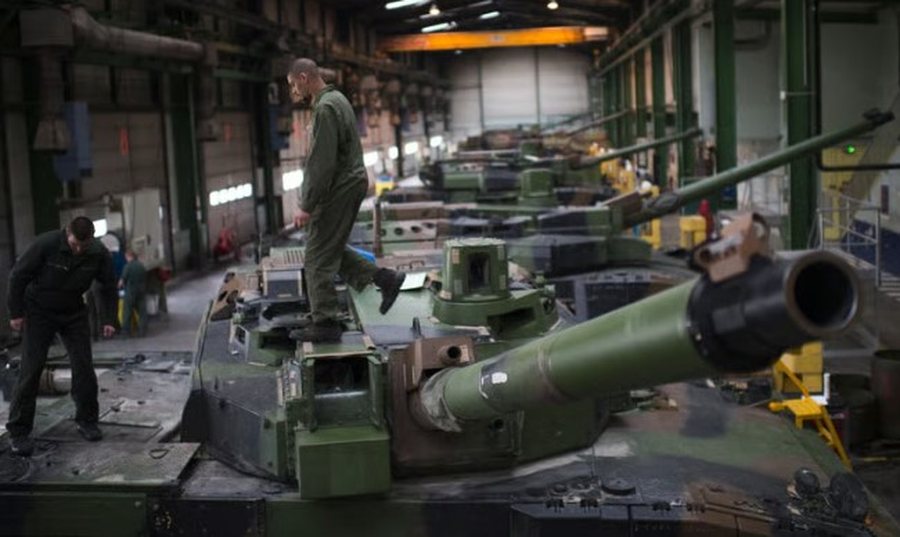
Europe seeks military independence: $1 trillion to replace US capabilities
European governments are facing an urgent defense crisis, amid Russian aggression and uncertainty over American commitment.
However, there are growing signs that Europe is starting to take the risk seriously. In May, the European Commission presented SAFE, a €150 billion fund that provides member states with low-interest loans for defense investments, with the aim of filling critical gaps in military capabilities and strengthening industry through joint procurement. Despite initial doubts, by November 30, 19 countries had applied and the fund was fully filled. Poland alone requested over €43 billion.
SAFE is one of the two pillars of the EU’s new “Readiness 2030” plan (formerly “ReArm Europe”). The other is the NEC clause, which allows countries to increase military spending by up to 1.5% of GDP over four years without being penalized by deficit rules. So far, 16 countries, including Germany, have joined, and this clause could unlock up to €650 billion in additional investment.
Meanwhile, NATO has set a target for European countries to increase defense spending to 3.5% of GDP by 2035, plus another 1.5% for defense-related infrastructure. This urgency has been heightened by fears that the US is shifting priorities to Asia and demanding that Europe finance weapons being sent to Ukraine. Recent peace negotiations have also made it clear that Donald Trump’s approach could jeopardize European security.
Russia, meanwhile, has shifted to a war economy and could become a direct threat to Europe as early as 2027, according to the IISS. Although the Russian economy is much smaller than Europe’s, in purchasing power terms, Moscow will spend almost as much this year as all of NATO’s European allies. Experts warn that Ukraine’s resistance has given Europe a “window of opportunity,” but that window will close quickly if the war ends without a lasting solution.
Europe must replace a range of capabilities for which it has traditionally relied on the US: aerial and satellite intelligence, strategic airlift, long-range missiles and large-scale cloud capabilities. The cost of replacing these capabilities is estimated at around $1 trillion.
According to defense experts, the first priority now is to increase support for Ukraine, especially with air defense systems and long-range missiles. Then, the reconstruction of Europe's combat structures and an integrated air defense system at the continental level. NATO Secretary General Mark Rutte says that European air defense capabilities should be increased by 400%.
Defense spending in Europe has already increased by 50% since 2022 and is expected to reach 500–700 billion euros per year within five years. But not all countries are moving at the same pace—Spain and Italy are expected to lag behind, while Poland will spend almost 5% of GDP next year. Germany is aiming for 3.5% by 2029, and Chancellor Merz has pledged to make the Bundeswehr “the strongest conventional army in Europe.”
However, another major challenge is the often slow and bureaucratic procurement system and the industry's ability to produce on a large scale. Many joint projects, such as ELSA for long-range missiles, are slow to progress due to differences between countries. Even when orders are placed, modern equipment can take 2–3 years to produce.
Experts are calling for a new approach: more innovation, faster pace, long-term contracts and the involvement of new technology companies. Germany is advised to spend 10% of its procurement budget on innovative projects, increasing to 30% by 2030. Britain has already set aside £400 million for an innovation unit that will operate at “wartime pace”.
Europe's challenge is clear: to increase spending, reform procurement systems, reduce dependence on the US, and strengthen cooperation between countries. But a major obstacle remains: few governments are openly explaining to citizens why defense should take priority over social spending, and the rise of far-right parties, often close to the Kremlin, could further complicate the situation.
Europe has the financial, technological and industrial power to act. The only question is whether it has the political will. /Adapted from “Financial Times”




Europa ke qëne është dhe do të jetë e fuqishme, pavarsisht propagandave mediatike nderkombëtare që gjasme nuk e përballon dot agresionin Rus.