


 Shkruar nga Pamfleti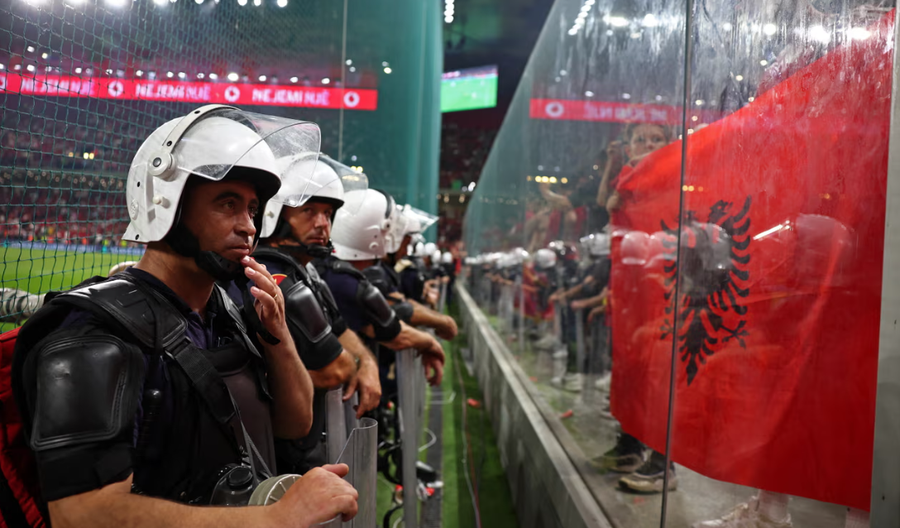
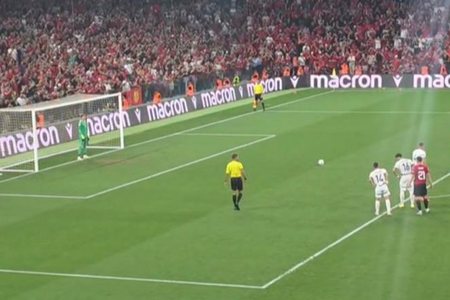
Inside the “National Arena,” over 20,000 fans held their breath and focused every ounce of attention on Rey Manaj. Outside, thousands more who had packed Tirana all day, some waiting in line at the borders and then running to bars or public screens to watch the game, clutched their beers. Albania had won a penalty and no one cared if it was questionable. If Manaj had kept his cool, perhaps a football hero would finally be born and the curse that had hung over this match would be lifted once and for all.
Manaj headed for the shot, perhaps a little more frozen than he should have been, and came face to face with the ball. If he needed a reminder of the context, he only had to listen to the echoes of the chants of “Serbia, Serbia, …. sister” that had been the soundtrack of the day and had only just stopped just before he took the decisive step. The shot was low, very close to Serbian goalkeeper Djordje Petrovic, who saved it without much difficulty. The first-half whistle was heard shortly afterwards, as the Serbian delegation rushed onto the pitch to embrace their goalkeeper. For Manaj, what remained was just a frozen image of a moment that he failed to fulfill.
In the end, this match managed to pass a major test, but only with great difficulty and not without potential consequences. A goalless draw was always the surest outcome to preserve the peace, and, given the disastrous meeting between these two teams in Belgrade almost 11 years ago, the real success was the incident-free finish. There were no drones to breach the tight security, no fights to continue into the late hours of a busy, hot and tense night. No one could boast of having turned the tide of events, either on or off the pitch.
However, UEFA's match delegate, former Swiss police chief Jacques Antenen, had plenty to think about as he walked through the stands half an hour after the game and sat down to discuss with his FIFA colleagues. He had been specially selected for his experience with high-risk events, and it seemed he had plenty to report when, in the 65th minute, referee Davide Massa stopped play for the third time.
Objects had been falling on Serbian players from the stadium's eastern stand, prompting a cry for calm when Sasa Lukic was tackled as he prepared to take a corner kick. Shortly before the 60th minute, Strahinja Erakovic was tackled near the touchline, and another call for a stoppage followed. When Andrija Zivkovic was similarly tackled, the warning signals were clear.
Massa on two occasions appeared to ask the teams to leave the pitch, but then chose to speak at length to players from both sides after gathering them in the centre of the pitch. This ended with the intervention of Albanian captain Berat Gjimshiti, who approached the sector from which the objects had come. The police intervened immediately to prevent a repeat, and the rest of the match passed in relative calm. In the end, Massa deserves credit for the way he managed an unacceptable situation, realising that a more extreme decision could have made things worse.

Thus, a fragile peace will continue until October, when these two national teams will face each other again, and Serbia will have the task of restraining itself from its dangerous elements. There was no room for doubt on the roads to the stadium, especially on “Dëshmorët e Kombit” Boulevard, where the atmosphere before the match was charged. Albania and Serbia will co-organize the European U-21 Championship in 2027, but the local ultras do not share the optimism of the diplomats who conceived this cooperation.
“Old enemies do not make new friends,” read a large banner on the Pyramid of Tirana, accompanied by a photograph of Albanian resistance hero Elez Isufi. Fans climbed over 100 steps to be part of the spectacle; young people on bicycles lit red flares below. Opposite, members of the “Red and Black Fans,” the well-known group that had been excluded from this match after not receiving regular tickets, prepared to march with a banner slamming the Albanian Football Federation.
Their message was clear: “Take our tickets, bring the police in front of us, but you can’t kill the heart that beats for Albania.” Inside the stadium, those who had won the lottery or paid thousands of euros on the black market tried to lighten the atmosphere. It didn’t look like a cold match similar to the sponsored ones when Serbia came out to warm up to incessant whistles and insults. These continued during their national anthem, when children accompanying Serbian players Lazar Samardzic and Aleksandar Mitrovic made the eagle symbol with their hands – an act that has put football’s governing bodies to work in recent tournaments.
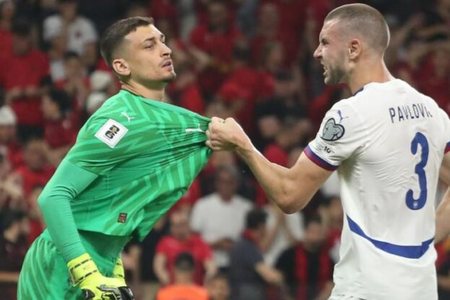
The match, as expected, was tense and showed no signs of either team being able to challenge England at the top of Group K. Despite their technical prowess, Serbia showed little danger up front, although it took a remarkable save from Thomas Strakosha to stop a perfect header from Mitrovic after the break. Mitrovic missed another chance, but it was Albania, driven forward by the fans at every little signal, who should have won. Manaj missed his chance for immortality, but Nedim Bajrami should have made that penalty forget when he was given a clear chance to improve the situation. His weak shot gave Petrovic no trouble at all and perfectly represented what this match was all about.
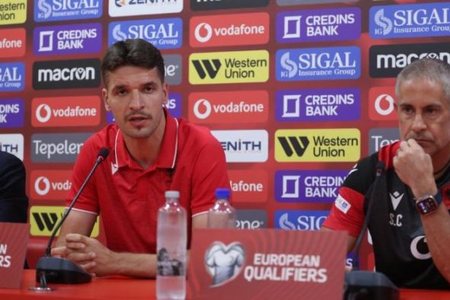
“We deserved more, but this is football,” said Albania coach Sylvinho. These commonplace words will do little to console Manaj. But perhaps the fact that sport was able, at least somewhat, to dominate the post-match discussion is an indication that there is a better way forward, for both friends and foes. / Adapted from The Guardian /


Lini një Përgjigje