


 Shkruar nga Pamfleti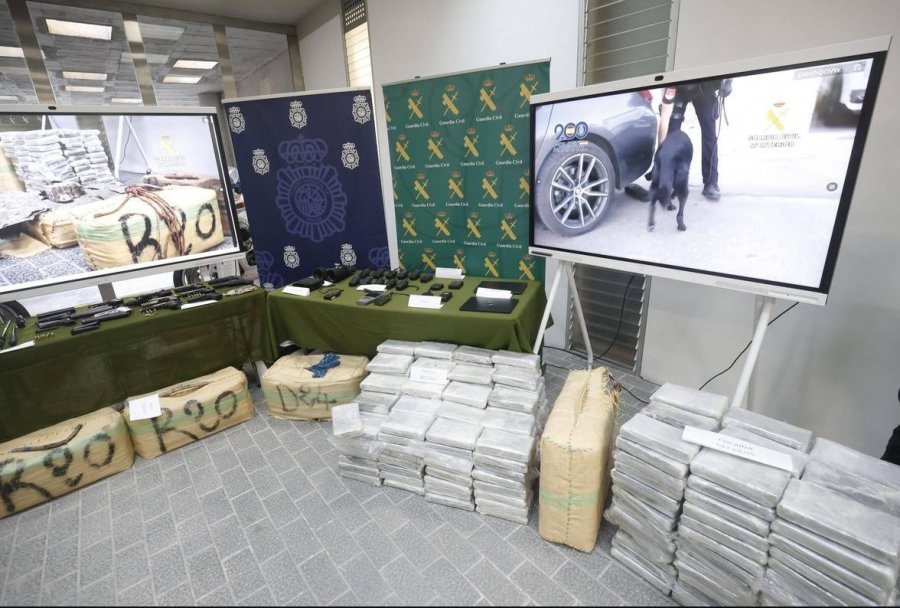
They say that every big journey begins with a small step.
In February 2024, agents of the Judicial Police of the Civil Guard in Algaida, Spain, arrested two petty thieves for a series of thefts in businesses. When the agents carried out a search of the apartment of one of them, they discovered an indoor plantation with about a hundred marijuana plants and illegal connections to the electricity grid. So they also charged him with a crime against public health.
The agents asked the judge for permission to analyze his mobile phone and review his contacts. Almost two years later, after a joint investigation with the National Police, conducted in complete secrecy, with hundreds of phone taps and surveillance, the “Manso-Enroque” operation ended with the destruction of a large network that included all levels of drug trafficking: from their contacts with the Albanian mafia to the introduction through Ibiza of hundreds of kilograms of cocaine and hashish, its transportation throughout Europe and to Majorca and its distribution to the trafficking clans who then sold it to consumers.
In total, 76 people were arrested and 687 kilograms of cocaine, 2,500 kilograms of hashish and 1.5 million euros were seized.
Analysis of the phone seized from a suspected shoplifting suspect allowed investigators to discover that he was apparently involved in drug distribution on behalf of a person identified as Carlos HV.
Observation of this person allowed agents to discover that he managed several marijuana plantations in residential and rural properties occupied without permission.
It is suspected that he used one of these farms, in Llucmajor, to store large quantities of drugs in buried containers.
He was considered the link to the organization's leaders.
Observations conducted on these properties allowed the identification of a car in the name of Gonzalo Márquez, a lawyer who was later considered the mastermind of the gang and the legal representative of Stefan Milojević, leader of a biker gang and suspected executive head of the organization.
After the first prosecutions, the Intelligence Center against Terrorism and Organized Crime (CITCO) discovered that different units of the National Police and Civil Guard were investigating the same people.
In August 2024, a meeting was held attended by members of the Judicial Police of the Civil Guard of Algaida and the Drug and Organized Crime Units (UDYCO) of the National Police in Palma, Ibiza, Valencia and Barcelona.
In these meetings, the connection between the organization located in Majorca and a criminal group composed of Albanian citizens located in Ibiza came to light.
When it was confirmed that it was the same criminal network, dedicated to introducing large quantities of drugs into the Balearic Islands to then transport them to Mallorca, the peninsula and Europe, it was decided that the investigations would continue in a joint and coordinated manner.
This is the beginning of Operation "Manso-Enroque Bal".
Months of silent work follow. Hundreds of phone taps and surveillance with the latest technology. Investigators intercept conversations of the suspects in which they explain in detail how large quantities of drugs are brought into Ibiza.
The packages travel on commercial ships and are dropped at night into the open sea, with navigational markers and GPS devices to locate them. Local traffickers follow the ships' path with powerful dinghies. They pick up the packages from the water and transport them to the dumping site in Ibiza.
The hashish arrives by boats, which also move the drugs offshore. The traffickers from Majorca respond to the Albanian mafia, which places its representatives in these operations to ensure that nothing is lost.
From Ibiza, some of the drugs reach Mallorca, but most of them go to the peninsula hidden in trucks, and from there to the rest of Europe.
At the same time, the gang leaders carried out operations to launder the colossal profits they had made. Initially, they bought luxury cars, but had trouble justifying some of the income to the banks. Then they created instrumental companies, some with an initial capital of 1,500 euros, with which they planned to buy hotels and restaurants.
The alleged mastermind behind these actions was lawyer Gonzalo Márquez. In a phone conversation with him, Milojevic taunted the police: “If they knew that the organization’s headquarters are on Paseo Mallorca…” (referring to his office). They did.
Their activities were analyzed in detail by the Police Money Laundering Group.
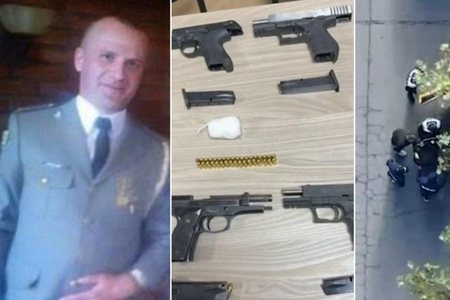
Meanwhile, the gang shows great skill in confronting investigators. Milojevic finds a tracking device in one of his cars and has a mechanic check the rest. They also manage to install GPS devices in police vehicles to keep them under control, and are suspected of having the cooperation of a senior police inspector, who informed them about the investigations, as well as placing one of their associates within the Port Police.
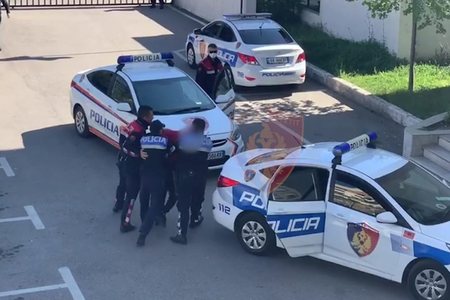
The risk of information leaks accelerates the operation, which begins on August 11. A dozen people are arrested, including those considered key members of the network: Milojevic and Márquez. The police inspector and the Port Police agent are also arrested.
During the following months, new phases against low-level drug trafficking occurred, from Son Banya to Manacor, reaching a total of 76 arrests.


Lini një Përgjigje