


 Shkruar nga Mero Baze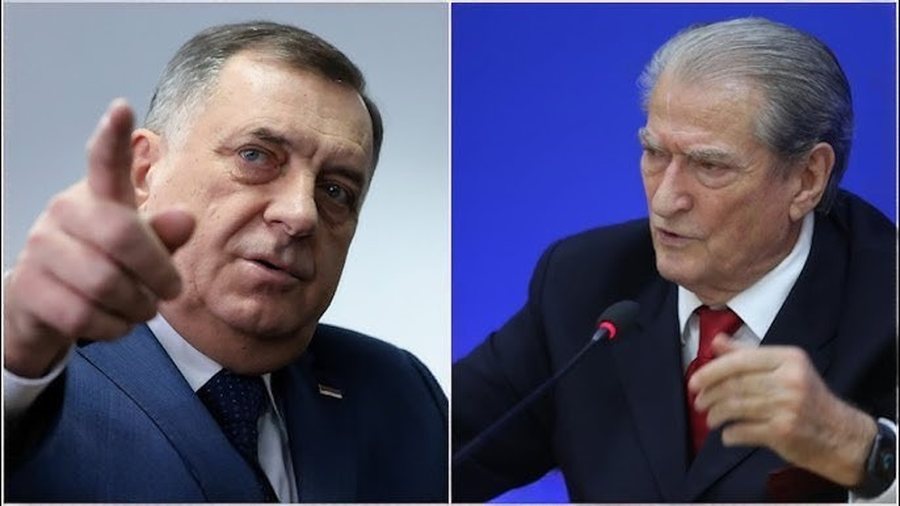
Berisha would do well to negotiate with the US exactly what Dodik did: to leave politics, he and his family, to unleash new energies in the DP, and to free himself from sanctions, even though they are based on a thirty-five-year history of anti-democracy in Albania and state capture.
Bosnian Serb leader Milorad Dodik appears to be stepping down from political life in Bosnia in exchange for the lifting of sanctions imposed in 2017 by the US Treasury Department for actively obstructing the implementation of the Dayton Agreement by defying the Constitutional Court of Bosnia and Herzegovina.
The legal authority for their imposition derives from Executive Order No. 13304, signed in 2003 by President George W. Bush, which authorizes the Treasury Department to impose sanctions on persons who obstruct the implementation of the Dayton Peace Agreement or undermine stability in the Western Balkans.
The sanctions included freezing any of Dodik's assets under US jurisdiction and prohibiting US citizens and companies from conducting transactions with him.
The US President did not personally sign the decision against Dodik, but the Treasury Department implemented the existing executive order as the legal basis for the sanction.
Lifting sanctions against Dodik in exchange for his departure from political life increases Bosnia and Herzegovina's chances of integration into the European Union and undoes a strong center of Russian influence in the heart of the Balkans, which was becoming a destructive model for the stability of countries that have problems with Serbia, including Kosovo.
The lifting of sanctions against leaving politics, in a way, achieves the purpose of the sanctions in this case, as they were precisely to eliminate the risk of undermining the Dayton Agreement, which is the cornerstone of peace in Bosnia.
The fact that the Serbian ultranationalist leader, who is the Kremlin's most beloved figure in the Balkans, managed to negotiate his fate with the US in exchange for fleeing politics is a good example for other sanctioned leaders in the Balkans, although in this case Dodik was sanctioned for geopolitical and national security reasons.
Sali Berisha, unlike Dodik, has been sanctioned by the State Department for undermining democracy, blackmailing the judicial system, and engaging in major corruption along with his family.
To date, no one sanctioned by the State Department has been released from sanctions, while those sanctioned by the Treasury Department have normal practice of reviewing sanctions against reflection in their policies.
In this case, Sali Berisha would do well to negotiate with the US exactly what Dodik did: to leave politics, he and his family, to unleash new energies in the DP and to free himself from sanctions, even though they are based on his thirty-five-year history of opposing democracy in Albania and state capture.
But since he suffers more from separation from history than from power, it would be a good chance for him to prove that neither he nor his sanctioned family members have ambitions for power, and that they are ready to retreat into their lives to let the opposition and the DP choose its own fate, without tying it to the fate of their family sanctions.
Dodik, a leader in whom all of Russian policy in the Balkans has been invested, ultimately chose his own fate and that of his family.
I don't believe that Berisha is more of a hostage than Dodik, who must remain at the head of the DP, even if he is "non grata".
Despite the damage he has brought to this country, the undermining of democracy since 1996, the country's plunge into anarchy and fratricide, his and his family's involvement in major corruption, and the blackmailing of the justice system, he can take an example from Dodik on how to negotiate his political end with dignity.




Lini një Përgjigje