


 Shkruar nga Pamfleti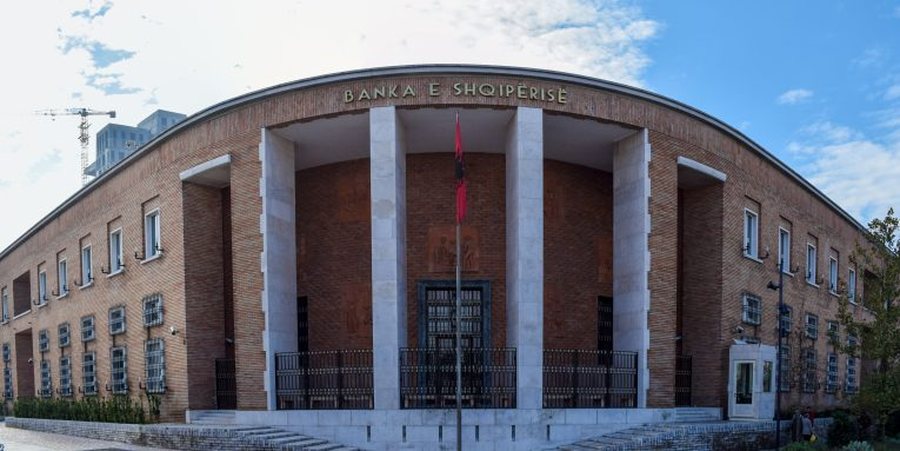
The Albanian economy has grown above its potential in recent years. An analysis by the Bank of Albania, part of the institution's annual report, concludes that the potential growth of the Albanian economy for the period 2023 - 6-month 2025 is around 3.5%. Meanwhile, the actual growth of the economy for the same period has been 3.8% on average.
These figures show that the Albanian economy has reached, and even easily exceeded, potential growth rates, while a faster approximation to EU standards would require reforms that would help expand economic growth potential.
The potential growth rate of the economy is one of the most important macroeconomic indicators, as it determines the pace of sustainable and long-term growth of the country and dictates the space available for increasing social welfare.
In theoretical terms, the potential growth rate means the maximum rate of output growth that an economy can achieve in a sustainable manner, without creating increased inflationary pressures. As such, it constitutes a long-run equilibrium of GDP growth, where the factors of production (labor, capital and total productivity) are used with full efficiency.
In the long term, a higher level of potential growth is a prerequisite for faster growth in per capita income, and tends to improve the indicators of fiscal sustainability and the country's external position. As such, it remains a primary objective of development policies, an objective that has as a precondition the country's macroeconomic stability, but which can and should be achieved only through structural reforms.
In the short and medium term, the potential growth rate serves to guide the direction and to calibrate and coordinate monetary, fiscal and financial policies. These three policies, as instruments for managing aggregate demand, must ensure that its growth rate is in line with the potential growth rate.
Under these circumstances, aggregate demand and supply in the economy grow at the same pace, which implies both full and optimal utilization of production factors – including employment – and low, stable inflation in line with the objective.
For these reasons, the identification of the potential growth rate of the Albanian economy has a special and continuous attention at the Bank of Albania. This process is carried out regularly and periodically, based on the latest updated statistics and using various assessment methods, grouped into statistical and semi-structural methods.
According to the Bank of Albania, the figures show that, despite the numerous shocks that the Albanian economy has faced during this period, the mix of monetary, fiscal and financial policies has managed to keep the level of economic activity close to potential, fulfilling one of the main prerequisites for maintaining macroeconomic balances.
According to the Bank of Albania, undertaking structural reforms is necessary to generate a faster convergence trend with European Union standards. As such, it should remain a continuous work objective, both for public authorities and the private sector./ Monitor




Institucioni me nepotik dhe me i paafte (bashke me Kontrollin e shtetit)..
Pushteti vendor është in egzistent po shkatërron tokën bujqësore duke dhënë leje për ta kthyer atë në varreza makinash ky ishte qëllimi i ligjit famëkeq 7501 atëherë ja ka arrit qëllimit