


 Shkruar nga Gjergj Zefi
In diplomacy, business instinct and public noise are not enough to build peace; the Trump case proves that international negotiations require prudence, discretion, and a fine sense of strategic balance...
In ancient Greece, a shoemaker, contemplating a painting, pointed out to the painter an inaccuracy in the representation of the sandals. The painter accepted the remark and corrected it. But when the shoemaker began to comment on other elements of the painting, the response he received remained proverbial: “Sutor, ne ultra crepidam!” “O shoemaker, stick to the shoes!”, a call not to exceed the limits of knowledge and competence.
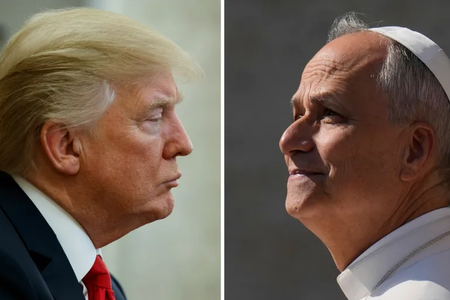
This ancient saying gains particular resonance in analyzing the way Donald Trump has approached complex foreign policy issues, particularly in relation to Iran and efforts to achieve a ceasefire.
In the diplomatic tradition, international negotiations are careful processes, built on discretion, measured language, and a delicate sense of strategic balance. They are not mere exchanges of positions, but continuous exercises of limited trust, where every word articulated in public carries multiple weight.
Trump's approach, shaped by his experience in the business world and symbolically summarized in 'The Art of the Deal', seems to operate on a different logic: immediate transparency, public pressure and the creation of quick narratives for domestic consumption. This method, which in certain economic circumstances can produce results, in the field of international diplomacy carries obvious risks. The publication of elements of negotiations or the preliminary articulation of informal conclusions can be perceived by the other side as an infringement of the negotiating dignity, making compromise more difficult rather than easier.
In relations with Iran, this dimension becomes even more sensitive. We are dealing with a state actor that operates on strong codes of sovereignty and public perception of force. Any formulation that suggests imposition or unilateral surrender risks producing the opposite effect, strengthening the harsher positions within the Iranian political system itself. In this sense, uncalibrated public communication is not simply a matter of style, but a factor that directly affects the substance of the negotiation.
It is important to note that the difference between business and diplomacy lies not only in the object of the agreement, but in the nature of the responsibility. A business agreement affects economic interests; an international agreement affects collective security, regional stability and, in certain cases, the very lives of people. For this reason, the diplomatic tradition has developed its own ethics, where the prudence and coherence of the message are as important as the content.
Against this backdrop, the recent case of public interventions during ceasefire efforts raises a broader question about the boundaries between personal leadership style and the objective demands of diplomacy. This is not to deny the negotiating skills that a figure like Trump may have in certain contexts, but to understand that each field requires its own instruments and codes. When these codes are bypassed, even the most pragmatic goals can be complicated.
In the end, the sentence “Sutor, ne ultra crepidam!” should not be read as a personal criticism, but as a constant reminder of the limits of competence in an increasingly complex world. Diplomacy, in essence, remains the art of the possible through prudence, and any deviation from this principle, however motivated by other dynamics, carries consequences that go beyond the moment. /Pamphlet



Lini një Përgjigje