


 Shkruar nga Gjergj Zefi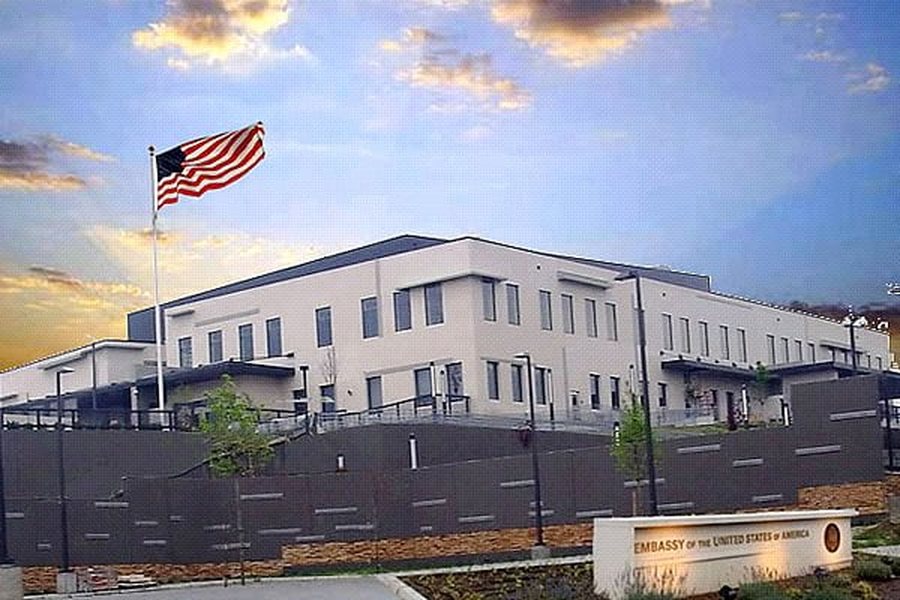
A fragile region is not managed with temporary diplomacy...
The apparent lack of American diplomatic engagement in the Balkans is not a technical detail of Washington's bureaucracy, but a political signal with heavy geostrategic weight, which in a historically fragile region is always read as a warning and not as a coincidence.
For more than three decades, the active presence of the United States in the Balkans has been the decisive element that has contained the outbreaks of conflicts, imposed political compromises, and guaranteed the Euro-Atlantic orientation of the region, often even beyond the will of local elites.
American ambassadors have never been mere protocol diplomats, but figures with real political authority, direct voices of Washington and balancing factors in power games that the European Union, due to its internal fragmentation, has never managed to manage alone.
Today, when in some Balkan capitals the American presence is perceived as weak, temporary, or delegated to technical levels, the message being produced is dangerous: The Balkans are no longer a top-tier strategic priority.
This perception, whether intentional or not, creates a political and psychological vacuum, and the history of the region shows that vacuums never remain empty. Russia reads this situation as an opportunity to increase its influence through political destabilization, anti-Western narratives, and support for actors who see the Balkans as a chessboard, not a space of stability.
China, quieter but equally persistent, exploits uncertainty to build economic and infrastructural dependence, gradually shifting the weight of decision-making away from Euro-Atlantic standards.
In this reality, the European Union remains a necessary but insufficient actor, because its slow expansion and the lack of a common foreign policy make the Balkans feel excluded and insecure.
For countries like Albania, Kosovo, and North Macedonia, which have invested politically and strategically in the Euro-Atlantic axis, any sign of American withdrawal translates into weakening security guarantees and increasing internal and external pressure.
Editorially, the problem is not whether the US has greater global interests elsewhere; that is understandable in an increasingly multipolar world, but whether it underestimates the fact that the Balkans remain a geopolitical node where destabilization costs far more than engagement.
Diplomatic silence, delays in appointments, and the lack of strong figures on the ground are not neutrality; they are political messages that are read and exploited by all actors.
If Washington wants a stable Balkans, clearly oriented towards the West and immune to destabilizing influences, its presence cannot be sporadic or symbolic; but clear, continuous and political, because in this region, every step back translates as an invitation to controlled chaos./ Pamphlet


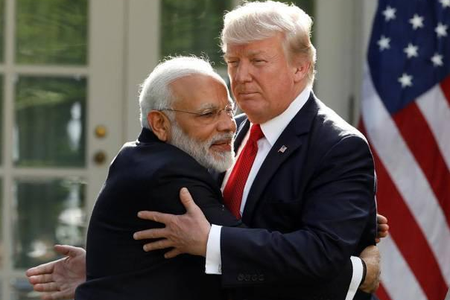
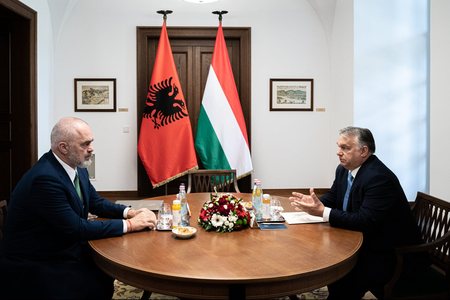


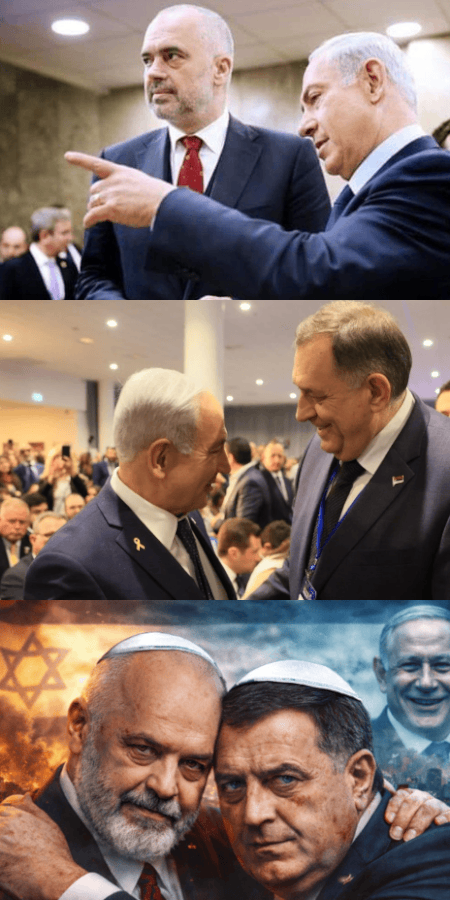
"Por mund të shkëlqej edhe me mungesën e saj/tij(Ambasador/e)". Në rendin e ri botëror SHBA nuk kanë pse të përfaqësoheshin nga ambasador që vinin si menazherë të rendit të vjetër. E ngarkuara me punë është syri dhe veshi i Presidentit Tramp.
Krijuesi i SHBA eshte shume aktiv ne rajon pavaresisht se nuk ben buje mediatike.