


 Shkruar nga Gjergj Zefi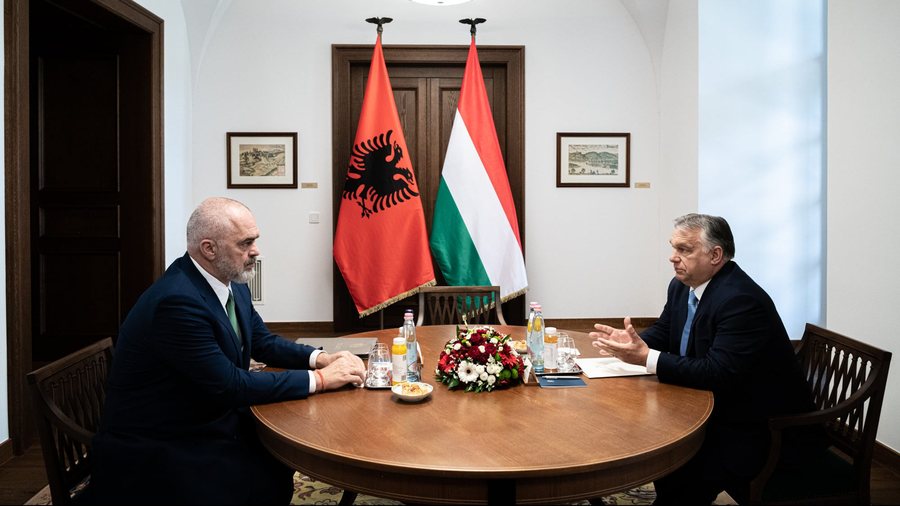
Hungary as a warning: The Albanian opposition between political selfishness and another defeat...
Albania is entering another electoral cycle with an opposition that is fragmented, tired, and often more focused on its own political survival than on the actual overthrow of power.
What is happening in Hungary, where the opposition is facing the consequences of wrong strategic choices in the face of a consolidated regime like Viktor Orbán's, should serve as a cold mirror for the Albanian reality. Not as a model to be blindly copied, but as a warning about the high price of political fragmentation.
In Albania, for more than a decade, Edi Rama’s power has been maintained not only by his electoral strength, but also by the opposition’s chronic inability to build a credible, clear, and disciplined front. Each election is accompanied by the same self-defeating ritual: small parties competing for 1–2 percent, leaders refusing to back down in the name of the public interest, and a moral rhetoric that replaces the lack of strategy. The result is predictable: the government wins not because it is invincible, but because it faces a scattered opposition.
The Hungarian example shows that the dilemma is not moral, but political: is it more important to exist as a party, or to exist as an alternative to power? In Albania, this question is constantly avoided. Each group sees itself as the “real solution”, but none manages to convince the majority. In this chaos, the government benefits from electoral mathematics, from institutional control and from the fatigue of an electorate that no longer sees a real difference between opposition rhetoric and repeated defeat.
Editorially, the problem is not the lack of causes; corruption, state capture, mass emigration, but the lack of real political sacrifice. If the Albanian opposition is not ready to give up its ego, its logos, and its worn-out leaders, then any talk of “change” remains empty propaganda.
Hungary makes it clear: either you unite around a minimal project for rotation, or you accept the role of democratic decorum in a closed system.
Albania does not have the luxury of endless opposition experiments. Every lost election is not simply a loss of mandates, but a deepening of a governance model that is normalizing soft authoritarianism and public cynicism.
In this sense, the opposition's "collective suicide" does not occur in one dramatic act, but in thousands of small decisions not to unite. And the region's political history shows that long-standing powers are not overthrown by strong words, but by the cold mathematics of unity./ Pamphlet




Analiza më e qartë dhe e saktë. Parti që luftojnë për qënien, jo idenë. Shqipëria është filxhan kafeje, kafja avullon, llumi mbetet (llum jo në kuptimin moral, por dinamik). Po të mos kish qenë emigracioni ndoshta nuk do ish kjo tablo mizerabël partikularizmi mikroborgjez që të çon drejt zhdukjes si komb.