


 Shkruar nga Pamfleti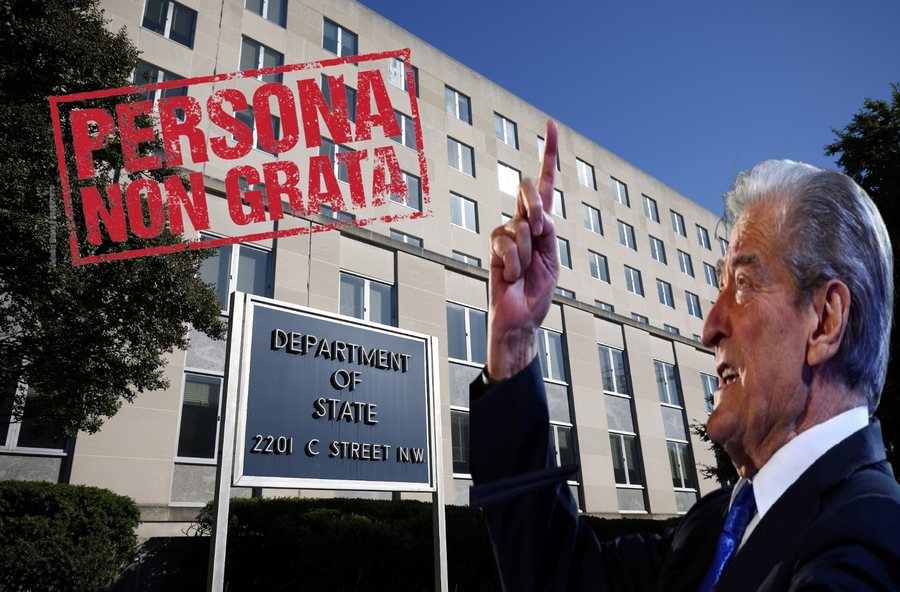
Human Rights First reveals details of US "non grata" declarations...
A comprehensive report published by Human Rights First sheds light on how the U.S. State Department has implemented sanctions under Section 7031(c) over the past four years. This section empowers U.S. authorities to deny entry to the United States to foreign officials and their family members if there is “credible information” that they have engaged in significant corruption or serious human rights abuses.
The new data, collected for the period December 2020 – December 2024, provide for the first time a clearer picture of this mechanism. They show that:
-486 people were sanctioned in total during this period;
-367 cases were made public, while 119 were kept confidential;
-when it comes to corruption, most arrests are public (90% of cases), while for human rights violations they are often kept secret (only 56% are published);
-The State Department has used "national interest" exemptions 61 times, mainly for individuals accused of human rights violations, allowing them to visit the US;
-also, 10 cases have been reported where sanctioned persons have been allowed to enter the US solely to attend UN sessions, due to Washington's international obligations as the host country of the United Nations headquarters.
This combination of public and confidential sanctions has raised concerns among civil society activists, as the secret bans make it difficult to publicly monitor this instrument. Human Rights is calling on Congress to mandate the annual publication of aggregate data on these decisions.
“ The State Department waived several visa bans through waivers, almost all of them because of a “compelling national interest.” There are four different types of waivers or exceptions that the State Department can use if it doesn’t want to impose a visa ban. The new data shows that it issued waivers citing a “compelling national interest” 61 times during this period, all but one of which related to individuals involved in human rights abuses, not corruption.
Despite this data, it is difficult to say how many of the visa bans imposed during this period were lifted by waivers. We recognize that in some cases, a single individual making multiple visits accounted for some of the waivers; and that some waivers applied to visa bans that were imposed prior to the reporting period. However, the waiver of approximately one-eighth of the number of visa bans imposed during this period is significant and likely corresponds to dozens of official visits by individuals that the State Department found to be corrupt or abusive ,” it said.
Berisha, a pure case of public sanction
But if we look at the report, we can very easily connect it to Albania. In this context, former Albanian Prime Minister Sali Berisha remains one of the clearest illustrations of the application of Article 7031(c). In May 2021, Secretary of State Antony Blinken publicly declared Berisha and his immediate family “non grata”, accusing him of significant corruption and undermining democracy in Albania. This decision was part of a long list of public and non-confidential cases, i.e. a case where the US decided to give a clear and transparent message to the Albanian public and political elite.
Unlike some foreign officials who have obtained exemptions to enter the US under the pretext of "national interest" or for participation in UN meetings, Berisha has failed to secure any kind of relief.
“ Under a second exception, the State Department also reported 10 instances of allowing an otherwise detainee to travel to the United Nations in New York during this period. Allowing these visits is and should generally be beyond the discretion of the United States, given the United States’ obligations as host nation under the UN Headquarters Agreement ,” the report states.
According to Sources, Berisha has also attempted to use the same scheme as several other sanctioned international personalities, requesting special permission to travel to the UN, but his efforts have failed.
Moreover, despite having signed a lobbying contract with the company “Continental Strategy”, worth about 6 million dollars, to influence the US administration and Congress, his status as “non grata” remains unchanged. This fact shows that sanctions based on Article 7031(c) are almost impossible to lift, especially when they have been announced publicly and when they have strong political support from the State Department. /Punoi “Pamfleti”



Lini një Përgjigje