


 Shkruar nga Pamfleti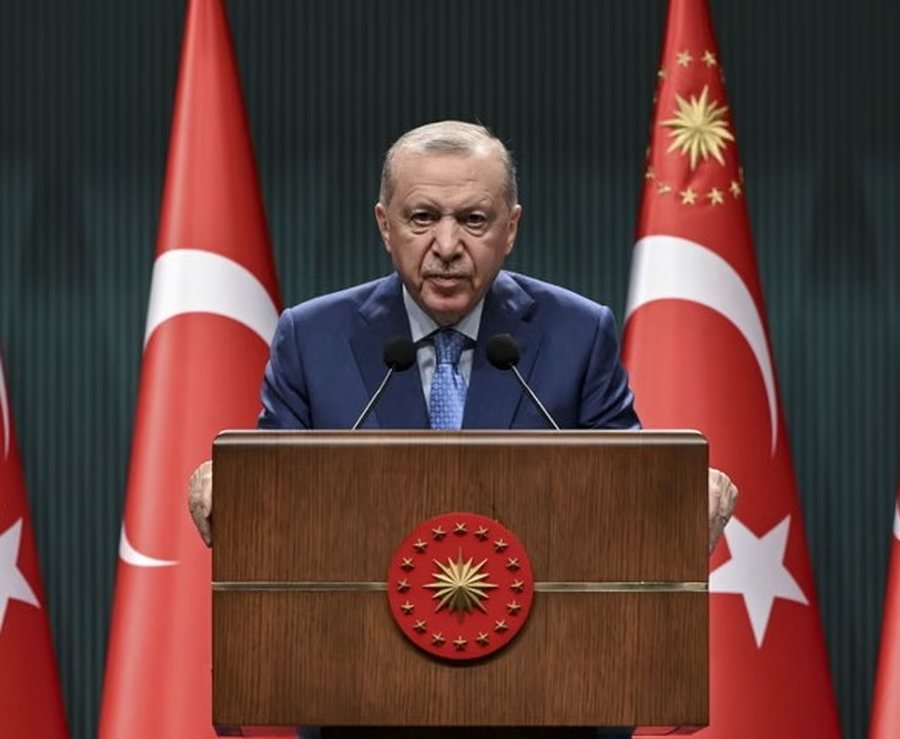
The removal of the head of an opposition party and the closure of a liberal university show that Turkish democracy is moving ever closer to one-man rule. Crackdowns on the opposition, the media and institutions are creating a climate where the outcome of the upcoming elections could be determined long before polling day.
The next presidential election in Turkey is scheduled for 2028, but many believe it could be held earlier. However, if that happens, the outcome could be decided by now, especially after recent political developments.
Last Thursday, an appeals court dismissed the leader of the opposition Republican People's Party (CHP), Özgür Özel, canceling the 2023 leadership race. The 51-year-old was credited with reviving the CHP, which convincingly defeated the Justice and Development Party in the 2024 local elections.
He was also one of the few high-ranking figures not affected by the broad crackdown on the opposition, which has led to the arrest of hundreds of CHP officials and politicians. Human Rights Watch says Turkey's justice system has been turned into a weapon against the opposition.
A massive corruption trial opened in March, with Istanbul Mayor Ekrem İmamoğlu, who was arrested last year on the very day he was elected CHP presidential candidate, among the defendants.
If convicted on all charges, he could face more than 1,900 years in prison. Thursday's ruling was widely seen as an attempt to subdue and further divide the CHP, which called it a "judicial coup."
Meanwhile, Özel's unpopular predecessor, Kemal Kılıçdaroğlu - who lost the 2023 election to Recep Tayyip Erdoğan, despite growing dissatisfaction with the president - has returned to his post.
Since coming to power in 2003, Erdoğan has pursued an increasingly authoritarian course, especially after the Gezi Park protests in 2013 and the coup attempt a decade ago.
After the latter, he implemented constitutional changes that replaced the parliamentary system with a highly centralized presidential system. His loyalists control much of the media, while civil society has suffered a continuous crackdown.
On Thursday, Erdoğan signed a decree to close a private university known as a center of liberal ideas. In theory, the two-term presidential limit still applies, but Erdoğan could run again in the event of early elections.
His rapprochement with the Kurds could also secure the support of the pro-Kurdish Peoples' Equality and Democracy Party for constitutional changes. Meanwhile, the dire economic situation is not expected to improve, given Turkey's heavy dependence on energy imports.
Erdogan has often portrayed himself as the solution to problems he created, but rising living costs are eroding support for him. The central bank this month raised its inflation target for 2025 from 16 percent to 24 percent.
The stock market fell 6 percent after the announcement of Özel's departure, while the Turkish lira hit record lows, although it later recovered slightly. The announcement of another fiscal amnesty is not expected to ease the economic crisis or attract foreign investors in an uncertain legal and political climate.
The Turkish president has maintained domestic support and cooperation with international partners while carefully maneuvering on a complex global stage, which includes wars in Ukraine and the Middle East, as well as instability in Syria.
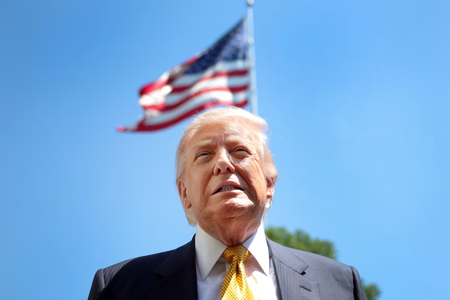
On Thursday, Donald Trump praised Erdogan as a “strong guy” who “has done a very good job.” For the European Union, once a significant source of pressure on Ankara, Ukraine is now the priority.
Meanwhile, as Özel has angrily pointed out, Keir Starmer and the British Labour Party had very little to say about İmamoğlu’s arrest. This is the wrong approach. A democracy does not disappear overnight; it dies slowly, over months, years and decades. There may not be serious doubts about the voting and counting process in the upcoming elections in Turkey.
However, democracy is not only defined by what happens on polling day, but also by who is allowed to stand and whether their voices can be heard. Without a strong and functioning opposition, the next race in Turkey risks being decided now. Adapted from “Pamphlet” by “ The Guardian”


Lini një Përgjigje