


 Shkruar nga Pamfleti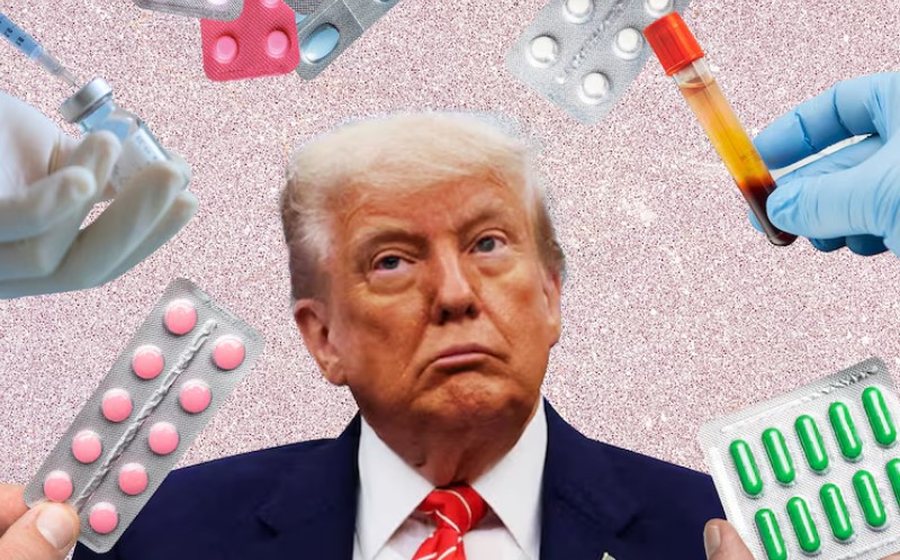
The Donald Trump administration has opened a new front against Europe, this time in the pharmaceutical industry. According to an exclusive report by Politico, Washington is pressuring European countries to increase spending on medicines, arguing that Americans have for years covered the bulk of the costs of research and development of new drugs, while Europe benefits from significantly lower prices.
To advance this strategy, the US administration has also engaged its embassies on the continent, which are developing contacts with European governments to convince them to follow the UK model. London is the first country to reach an agreement with the Trump administration on this issue.
The message being conveyed by Washington is straightforward: if Europe does not pay more for medicines, it risks losing important pharmaceutical investments and falling behind in access to newer medications.
At the center of this initiative is Germany, the largest pharmaceutical market in Europe. According to Politico's sources, German Health Minister Nina Warken and Economics Minister Katherina Reiche have been holding confidential talks with the US Department of Health and Human Services for months. The discussions include investments in the sector, trade policies and how to set drug prices.
This American request comes at a time when Berlin is considering reforms aimed at reducing public costs for medicines, while Washington is seeking exactly the opposite: increasing spending in favor of the pharmaceutical industry.
According to the industry, the price gap between the US and Europe remains significant. For new drugs, American patients pay on average about three times more than their German counterparts. The Trump administration argues that this gap is unfair and that European countries should shoulder a greater share of the financial burden of drug research and development.
To increase the pressure, pharmaceutical companies have warned that they may reduce or shift their investments if European countries continue to keep drug prices under control.
Last week, American company Eli Lilly and German giant Boehringer Ingelheim announced that they were reducing investment plans worth billions of euros in Germany, linking this decision to government policies to reduce costs in the pharmaceutical sector.
The Trump administration is building on British precedent. A few weeks ago, London and Washington reached a deal that shielded British pharmaceutical companies from U.S. tariffs for three years. In exchange, Britain agreed to gradually increase spending on innovative drugs and ease restrictions on their prices.
However, the deal has sparked heated debate in the UK. Critics argue that the British government has agreed to pay billions of pounds extra without providing clear benefits in return. Some organisations have even launched legal proceedings to challenge it.
Another element that is worrying Europe is Trump's new drug pricing policy, known as "Most Favored Nation." Under this formula, which is expected to be implemented in January, the US will seek to pay for drugs the lowest price applied in a group of developed countries, including Germany.
This has created concern in the pharmaceutical industry, as companies may avoid launching new products in countries like Germany or other European countries, so as not to automatically lower prices in the American market, which remains the most profitable in the world.
However, many European experts remain skeptical of Washington's demands.
" In Europe we are already paying too much for medicines," says Yannis Natsis of the European Social Security Platform, who warns that governments cannot give the pharmaceutical industry a "blank cheque" in a period of strong economic pressures.
Beyond the debate over drugs, this issue is increasingly seen as part of Donald Trump's strategy to review economic relations with European allies. After disputes over trade, tariffs and defense spending, the pharmaceutical industry, a sector worth hundreds of billions of euros and with a huge impact on the economies of both sides of the Atlantic, is now at the center of the transatlantic debate.






Lini një Përgjigje