


 Shkruar nga Pamfleti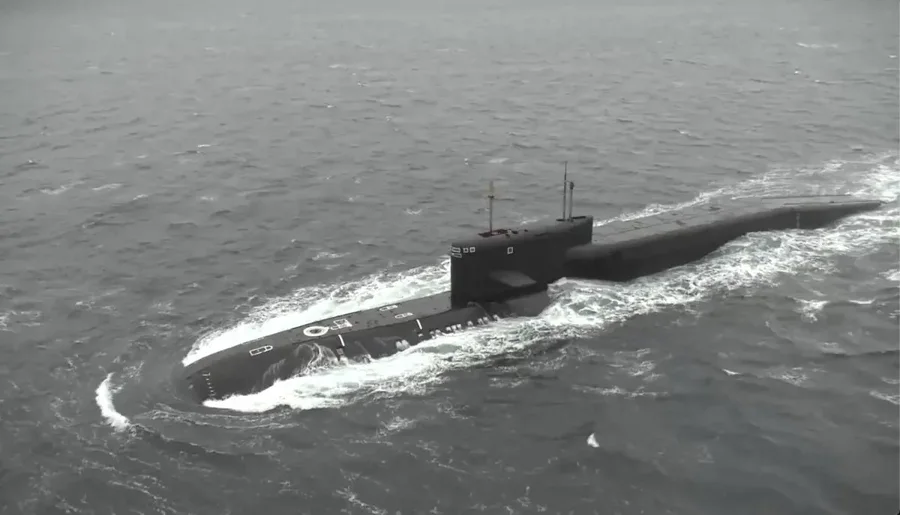
In a joint NATO operation, the Royal Navy is leading the surveillance of a surfaced Russian submarine in strategic waters between France and the United Kingdom, strengthening European maritime security...
The British frigate HMS Iron Duke, based in Plymouth, led a complex maritime surveillance operation as part of a wider NATO mission, closely monitoring the Russian submarine RFS Novorossiysk (Kilo class) and the support tug Yakov Grebelsky.
Both ships, during their surface transit near Ushant Island, off the northwestern coast of France and at the entrance to the English Channel, were subjected to constant radar, visual and electronic tracking by Allied forces.
The operations, conducted between 7 and 9 October 2025, began in the Mediterranean with the initial interception by HMS Cutlass (Royal Navy Gibraltar Squadron), as the submarine passed through the Strait of Gibraltar.
Monitoring then continued in the Bay of Biscay thanks to a French FREMM-class frigate, which then handed over responsibility to HMS Iron Duke. The latter escorted the Russian units through the English Channel until they entered the North Sea, where surveillance duties were finally handed over to the navies of the Netherlands and Belgium. The entire operation involved eleven naval units from six Alliance member countries, in challenging sea and weather conditions.
NATO's maritime strategy and deterrence posture
The Royal Navy reports that the intervention is part of reinforced surveillance and deterrence measures adopted by NATO to counter increased Russian naval activity in the Euro-Atlantic area.
According to British Defense Minister Al Carns, the frequency of Russian transits in strategic European waters requires a level of permanent vigilance, aimed at protecting not only the United Kingdom's maritime sovereignty, but also the security of critical infrastructure, such as undersea cables and maritime communication routes.
The operation confirms the full implementation of the Plan for Change, the UK's national strategy aimed at ensuring rapid, coordinated and effective responses to hostile or suspicious activity.
Cooperation between the various allied naval forces demonstrates a high level of interoperability and strategic cohesion, essential elements for addressing the challenges of an increasingly complex maritime landscape, particularly with regard to underwater and hybrid threats.
The return of Novorossiysk and the logistical crisis of the Russian Navy
The RFS Novorossiysk, a diesel-electric submarine of the Black Sea Fleet, was intercepted last July while entering the Mediterranean by HMS Mersey. After nearly three months of operations in the region, its resurfacing in the Bay of Biscay attracted particular attention, partly because of rumors that appeared in informal Russian channels that the ship had most likely suffered an internal fuel leak. These rumors, although denied by Western technical analyses that ruled out any concrete risk of explosion, highlighted, for some experts, the operational difficulties facing the Russian fleet.
The real critical issue that has emerged, analysts say, may have to do with the growing logistical fragility of the Russian Navy in the Mediterranean. With access to the Black Sea restricted by the war and traditional Syrian bases now inaccessible, Russian ships now appear to be forced to navigate long and complex return routes to Baltic ports.
The Novorossiysk made the crossing alternating between underwater and surface navigation, accompanied by an ocean-going tugboat, a clear sign of reduced autonomous capability. Therefore, this picture tends to reflect a significant reduction in the Russian naval presence in the Mediterranean.
HMS Iron Duke, which returned to Devonport Naval Base on October 10, thus completed its nineteenth tracking mission last year. In total, the ship tracked 27 Russian naval vessels during the same period. / Adapted from Il Giornale /








Lini një Përgjigje