


 Shkruar nga Pamfleti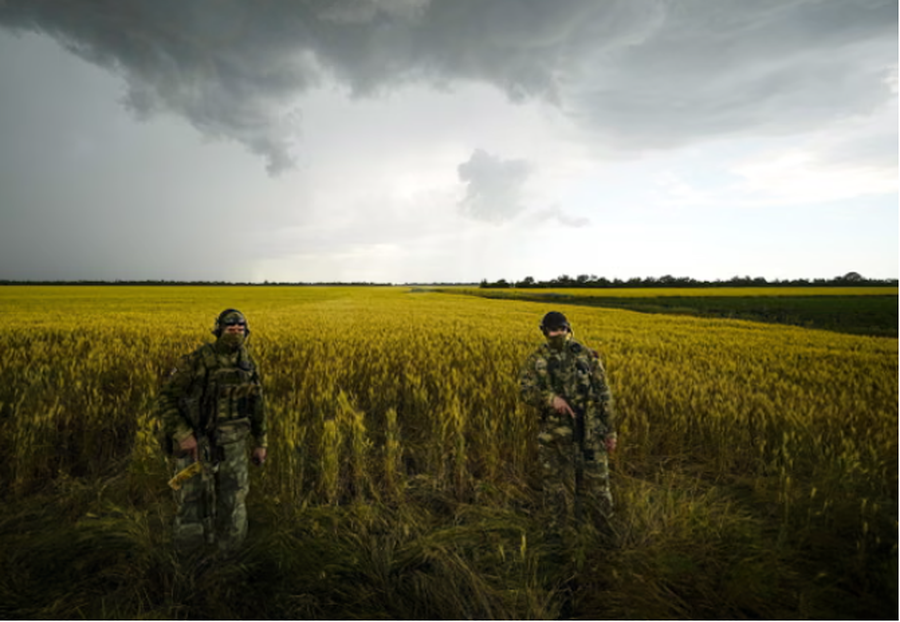
The investigation lists 101 superiors accused of tactics such as using drones to "annihilate" retreating troops and sending soldiers on deadly missions...
Russian commanders are executing or deliberately sending to their deaths soldiers who refuse to fight in Ukraine, according to a new investigation by independent media outlet Verstka, which paints a grim picture of internal violence within the Russian military.
Based on testimonies from serving soldiers, relatives of victims, published videos and official complaint records, Verstka said he had identified 101 Russian servicemen accused of murder, torture or fatally punishing their comrades. The media said it had verified at least 150 deaths, although they said they believed the true number was much higher.
Since the start of Russia's full-scale invasion of Ukraine, reports have circulated widely of soldiers killed by their side and of so-called blocking units deployed to prevent withdrawals.
The Kremlin has repeatedly rejected accusations of a lack of discipline among Russian troops, insisting that such problems are widespread within the Ukrainian military.
But Verstka's report appears to be the most comprehensive to date, documenting a detailed catalogue of methods used to impose obedience and terror within the ranks of the military.
Verstka cited testimony from soldiers who said commanders had appointed “executioners” to open fire on refuseniks and later throw their bodies into rivers or shallow graves, recording them as killed in action.
Other accounts describe commanders using drones and explosives to “kill” wounded or retreating soldiers. In some cases, officers are said to have ordered drone operators to drop grenades on their soldiers, disguising the killings as battlefield attacks.
Verstka, an independent, award-winning Russian news outlet now operating in exile and founded by some of the country's most respected investigative journalists, also documented cases of soldiers being tortured to death.
Soldiers who disobeyed orders were reportedly thrown into pits covered with metal grates, doused with water and beaten for hours or even days. The investigation found that in some cases, they were forced to fight each other in what witnesses described as gladiator-style battles to the death.
One such case appeared in a video released in May 2025 by Ukrainian groups monitoring Russian forces. The footage shows two shirtless men in a pit, while an off-camera voice says: “Commander Kama basically said that whoever beats the other to death, gets out of the pit.”
The men begin to fight, as the voice continues to tease them: "Finish it now, what are you waiting for?", while one of them collapses motionless to the ground.
Verstka also linked some of the killings to financial blackmail schemes, in which commanders demanded payments from soldiers in exchange for avoiding suicide missions. Those who could not pay or refused were “zeroed out,” military slang for elimination.
The investigation also describes cases of troops being sent on suicide missions. It exposes cases where Russian troops were deliberately deployed as “mayachki” or beacons, ordered to march ahead of assault groups without equipment to draw enemy fire.
Initially, most reports of internal executions came from penal formations made up of tens of thousands of former convicts recruited from Russian prisons, but Verstka’s database shows that the practice has spread to regular army units. The culture of impunity and the influx of former prisoners, the report says, have “normalized the violence.”
Most of the identified perpetrators are mid-ranking officers in their 30s and 40s, many of them veterans of previous Russian campaigns or transfers from penal battalions. Few, if any, have faced criminal prosecution.
The media said it was able to obtain detailed biographical information: name, rank, age and unit, for more than 60 of the 101 suspected perpetrators. Despite ample evidence, almost none have been held accountable, Vertska said.
Verstka also said he had received official data showing that Russia's main military prosecutor's office received nearly 29,000 complaints from soldiers and families in the first half of 2025 alone, more than 12,000 of which were related to punishment by their superiors.
A source in the military prosecutor's office told the media that there was an unofficial ban on investigating cases against commanders serving in combat zones.
“They say: ‘if we open this, it could harm operations’. That means these officers have complete impunity,” he said. /Adapted from The Guardian/


Lini një Përgjigje