


 Shkruar nga Pamfleti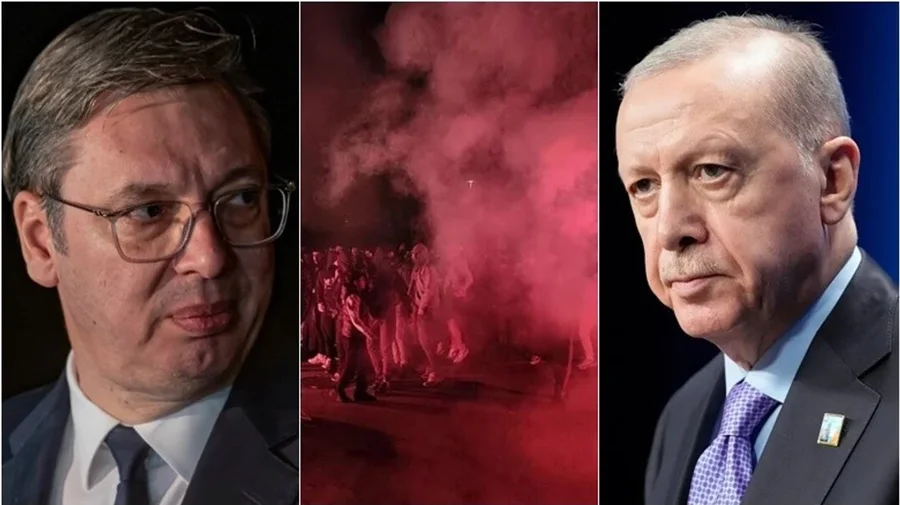
The recent wave of violence in Montenegro, directed against the Turkish population, raises profound questions about the true causes and background of the events that shook this country.
Although the incidents officially occurred after a single stabbing, a number of circumstances indicate that behind the outbreak of hatred lies not just a spontaneous reaction of citizens, but a much broader, organized and politically motivated campaign, which can also be interpreted as a message to Ankara, sent by Belgrade and potentially by Russia, writes Bosnian media outlet Klix.ba.
According to the media in question, it all started on October 25, when a man was stabbed in the Zabjelo neighborhood of Podgorica. It was soon announced that the suspects were citizens of Turkey and Azerbaijan.
Although the motive for the attack was never clearly determined, the news was enough "to ignite the powder keg."
The streets soon filled with groups of young people shouting "Kill the Turk," setting fire to Turkish-owned restaurants and vandalizing cars with Turkish license plates.
What is particularly disturbing is that the violence seemed orchestrated, not spontaneous.
According to him, videos circulating on social media showed organized groups with prepared slogans, while at the same time, stories about the "Turkish threat" and "foreign gangs" began to spread in some media outlets.
The Montenegrin police, Bosnian media emphasize, instead of resolutely protecting the attackers, detained up to 45 Turkish citizens, while Prime Minister Milojko Spajic initially announced the possibility of lifting the visa-free regime with Turkey, a measure that many see as a symbolic concession to the most extreme circles of society, and then this announcement became reality, namely, Montenegro lifted the visa-free regime with Turkey.
President Jakov Milatovic called for calm and warned that "there should be no collective guilt," but the damage had already been done.
The message that Turks can be demonized and the state will not respond effectively was clearly sent.
Many believe the incident is not an isolated case.
Bosnian media outlets point out that many believe that the Podgorica incident is not an isolated case, but part of a wider campaign in which ethnic intolerance is used for political purposes.
In a society where around 13,000 Turks live, some pro-Russian and pro-Serbian media outlets in Montenegro have systematically spread narratives about "Turkish colonization" and "new Ottoman influence" in recent months, this media outlet points out.
Narativa të tilla, sipas burimeve pranë komunitetit malazez të sigurisë, dhe të përmendura nga portali malazez CdM, vijnë nga të njëjtat qendra që kanë mbajtur lidhje me Beogradin dhe strukturat e tij të inteligjencës për vite me radhë.
Dhe ndërsa autoritetet në Beograd kanë heshtur zyrtarisht, fakti është se incidentet në Mal të Zi ndodhën menjëherë pasi marrëdhëniet midis presidentit serb Aleksandar Vuçiç dhe udhëheqësit turk Rexhep Tajip Erdogan u ftohën papritur.
Vuçiç dhe Erdogan kanë ndërtuar një marrëdhënie të bazuar në projekte ekonomike dhe infrastrukturore me vlerë miliarda euro për vite me radhë.
Kompanitë turke janë përfshirë në rindërtimin e rrugëve, investime në energji dhe turizëm, dhe Beogradi e ka quajtur Ankaranë një "faktor kyç stabiliteti".
Megjithatë, ndryshimet filluan këtë vjeshtë, kur Turqia nënshkroi një marrëveshje të re për bashkëpunim ushtarak me Kosovën, duke përfshirë shitjen dhe dhurimin e dronëve luftarakë.
Vuçiç më pas akuzoi Ankaranë për "destabilizim të rajonit" dhe "shkelje të ligjit ndërkombëtar".
Kjo ishte një kthesë e hapur, nga retorika e miqësisë në armiqësi të hapur.Që atëherë, në një numër mediash që mbështesnin regjimin e Vuçiçit, filluan të shfaqen teoritë rreth një "depërtimi turk" dhe "rrezikut të islamizimit të Ballkanit".
Këto mesazhe shpejt gjetën jehonën e tyre në Mal të Zi, ku strukturat pro-serbe në qeveri dhe shoqëri tradicionalisht reagojnë ndaj impulseve politike nga Beogradi.
Mesazhi i Vuçiçit drejtuar Ankarasë nëpërmjet Podgoricës
Duke i ditur këto fakte, e gjithë kjo mund të lexohet si një formë e sofistikuar e mesazhit gjeopolitik, hakmarrje ndaj Ankarasë për armatosjen e Kosovës.
Sipas kësaj logjike, thekson ai, Vuçiq po e përdor Malin e Zi si një terren të ndërmjetëm për një demonstrim fuqie, duke i dërguar një sinjal Erdoganit se Serbia ka instrumente destabilizimi në fqinjësinë e saj të afërt.
Sipas tij, Mali i Zi është, për më tepër, një terren ideal stërvitjeje për operacione të tilla duke shtuar se shoqëria është thellësisht e ndarë, qeveria e Milojko Spajiçit është politikisht e brishtë dhe varet nga partitë që janë hapur pro-serbe, dhe strukturat e sigurisë janë ende nën ndikimin e fortë të kuadrove pranë Beogradit.
Prandaj është e kuptueshme që teza se incidentet në Podgoricë janë një "operacion BIA" i planifikuar me kujdes, i projektuar për të mbjellë frikë politike, për të disiplinuar kryeministrin Spajiç dhe për ta paralajmëruar atë për atë që mund të ndodhë nëse ai përpiqet të largojë partnerët e Vuçiçit nga qeveria, dëgjohet gjithnjë e më shumë në publik.
Është pikërisht kjo dobësi e qeverisë malazeze që e bën atë të përshtatshme për manipulim nga jashtë. Rastësisht, koalicioni qeverisës në Mal të Zi përbëhet nga parti me interesa shumë të ndryshme, përfshirë ato që ndikohen drejtpërdrejt nga Beogradi, shkruan më tej klix.ba, përcjell Telegrafi.
While Prime Minister Spajic insists on the European path, his coalition partners from pro-Serbian parties often sabotage the government's pro-Western moves, maintaining ties with Serbian and Russian structures, which is especially true for Andrija Mandic, the Speaker of the Parliament of Montenegro.
In such a constellation, any crisis, like the one in Zabjelo, can be used as a tool for blackmail and pressure.
Vucic "between Tel Aviv and Ankara"
That Belgrade is increasingly moving away from Ankara and closer to Israel and its authoritarian allies has become clear even earlier, klix.ba points out.
While accusing Turkey of "destabilizing the Balkans," Serbia was at the same time among the rare European countries that continued to sell weapons to Israel during the war in Gaza.
Vučić has repeatedly stressed that he is proud to trade with Israel, a country he calls brotherly, even though the international community has labeled that very country responsible for the mass killing of civilians.
In this context, the attack on Turkey, whether verbally or through orchestrated campaigns of intolerance, becomes part of a broader strategy to reposition Serbia in the new global order, on the side of authoritarian allies.
It is disturbing that slogans reminiscent of the darkest moments in European history were heard during the violence in Podgorica.
Shouts of "Kill the Turk" and attacks on people's property simply because of their origin evoke images that have already cost the Balkans dearly.
The government's response has been slow and not decisive enough. Instead of clear condemnation and protection of victims, the state has opted for populist measures and the rhetoric of "calming tensions," which in practice means tacit approval of hatred.
What scares the citizens of Montenegro the most now is the question, if the perpetrators escaped with almost no consequences, will they have even more space tomorrow?
If the incidents in Podgorica are seen in a broader context, it seems that their message goes beyond the borders of Montenegro itself. It is directed towards Ankara, but also towards other centers. This shows that Belgrade still has mechanisms to destabilize countries in the region whenever it deems it politically convenient.
At the same time, it is also a warning to the Montenegrin government that if it opposes Belgrade's interests, it can expect media campaigns, institutional blockades, but also chaos in the streets.




Lini një Përgjigje