


 Shkruar nga Jasim Al-Azzawi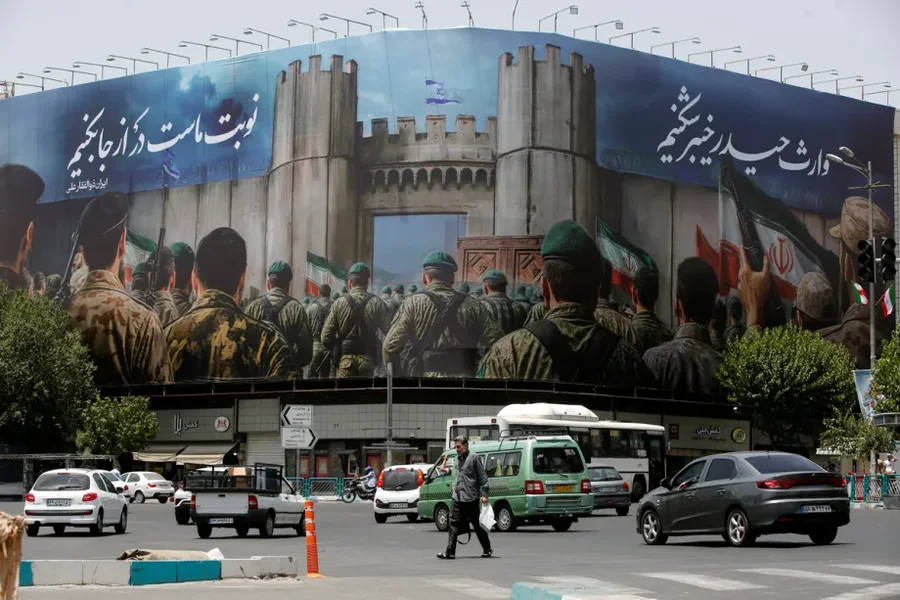
The symbolism was brutal: Iran could surround its scientists with guards, barricades, convoy vehicles and still not reach safety...
In espionage, truth comes with suspicion. Nothing is declared clearly: nothing is definitively concluded.
Stories emerge halfway through, embellished with boldness or stitched with propaganda.
In the latest episode of the deepening shadow war between Israel and Iran, Tehran claims to have achieved its long-awaited counterattack: infiltrating Israel's most sensitive nuclear circles and extracting a treasure trove of classified documents, lists of scientists, maps of facilities, internal files.
Iranian television elaborated the narrative into an almost complete myth: foreign agents carrying threats sent as flowers, a scientist opening a car door to find red roses and a postcard that reads: "we can reach you."
A perfect espionage story, but as always, confirmation remains elusive
But what is certain is that neither side is inventing a larger conflict. Long before the 12-day conflict last June made headlines, the brief and furious exposure of a long-hidden conflict, the intelligence services had been waging the real war far from the sky: slowly, intimately, methodically.
The modern phase arguably began in 2018 when Israeli operatives infiltrated a warehouse on the southern edge of Tehran and removed what would turn out to be more than 100,000 documents related to Iran’s secret weapons program, codenamed Project AMAD. The operation was breathtaking in its banal audacity: a team broke into a guarded facility, loaded half-ton vaults with paper and digital data, and escaped Tehran undetected. Israeli officials later publicly displayed the documents like trophies: engineering diagrams, location maps, designs for nuclear warheads. Undermining Iran’s insistence that the weapon never existed.
What followed inside Iran was a series of bizarre accidents: explosions at Natanz, fires along missile development corridors, industrial “accidents” that always seemed to target the infrastructure most critical to Iran’s nuclear timeline.
Tehran first blamed technical failure, then foreign sabotage, a reluctant admission that Israel's reach extended deep into Iranian territory, supported by informants whose identities would never appear in any indictment.
Then came November 2020, when Mohsen Fakhrizadeh, the physicist considered the spiritual architect of Iran’s weapons program, was assassinated near Tehran in an operation so eerily precise that it seemed the product of remote choreography. Iranian officials later admitted that a satellite-guided automatic weapon, smuggled into the country piecemeal, carried out the killing without the presence of a Mossad gunman.
The symbolism was brutal: Iran could surround its scientists with guards, barricades, convoy vehicles and still not reach safety.
The covert war then escalated into something more: not just espionage, but hybrid warfare. By mid-2025, intelligence had seamlessly merged with overt force. Israeli agents reportedly smuggled drone parts into Iran and built clandestine launch pads inside the country. These unmanned aircraft were then used to shoot down surface-to-air missile systems ahead of large-scale Israeli strikes on Iranian missile and nuclear facilities in what became the short and dangerous “twelve-day war.”
Espionage was no longer preparation for violence. It was violence: striking first before the pilots crossed the airspace.
The Iranian response since then has been twofold: ruthless counterintelligence purges at home and dramatic narrative offensives abroad. Tehran has claimed the arrest of several Mossad-linked operatives; some have been publicly executed on espionage charges. These accounts are often televised, heavily mediated, unverifiable, but indicative of a state convinced that its domestic defenses are compromised.
Then, in June, came Iran's boldest claim yet: it had changed the direction of its own spy pipeline.
Iranian officials said intelligence operatives had seized “millions of pages” of Israeli nuclear documents. They spoke of maps, personnel records, home addresses and even surveillance photos. It all sounded strangely symmetrical to Israel’s 2018 heist of Tehran: a mirror operation, full-on revenge.
But here the story breaks.
So far, no material has emerged that independent analysts can verify as classified. Investigations by open-source journalists show that some of the images Tehran released come from publicly available publications or conference disclosures, research materials that never sought to penetrate fortified nuclear installations. Israel, as expected, has dismissed the claims with studied silence, refusing to dignify a psychological campaign with a rebuttal.
And psychological warfare, this is likely to be
In the realm of intelligence conflicts, declaring a victory matters almost as much as actually winning it. Iran made its announcement not for Western verification but for regional audiences, domestic morale, and signaling deterrence. The subtext was unmistakable: you are not the only ones who can penetrate the shadows.
Which brings us back to the anecdote of the bouquet, the anonymous scientist, the warning note, the red roses. It is unverified and theatrically perfect, perhaps too perfect to be true. The spy wars are full of such tales. Some stem from truth, others from embellishment. But they all serve the same purpose: to shape the emotional climate of fear and vulnerability in which real intelligence work becomes more powerful.
The deeper reality is scarier than any single episode. Mossad’s espionage rivalry with Iran’s intelligence services is not episodic; it is systematic. It relies on the constant recruitment of informants, the cultivation of double agents, the cyber-infiltration of research institutions, the surveillance of academic travel, the compromise of supply chains, and the targeting of scientists abroad and at home. It is quieter than missiles and usually much more effective.
The 12-day war may have ended with ceasefire announcements and diplomatic empty words, but the clandestine machinery never died down; if anything, it accelerated.
The next conflict is unlikely to start with bombs. It will begin, as it always does, with files quietly leaked, phone networks mapped, bank accounts tracked, software compromised, supply routes tapped. The decisive moments will not take place in capitals, but inside laboratories, academic conferences, telecommunications databases, and the minds of scientists wondering if anyone knows their address.
And somewhere, perhaps, a bouquet of flowers waits in the passenger seat of an unlocked car.
Whether the last image is fact or fiction misses the point: in this war, no one declares anything; perception itself becomes a weapon.
The deadliest function of espionage lies not in the secrets it steals, but in the terror it sows. /Adapted from Middle East Monitor/





Lini një Përgjigje