


 Shkruar nga Pamfleti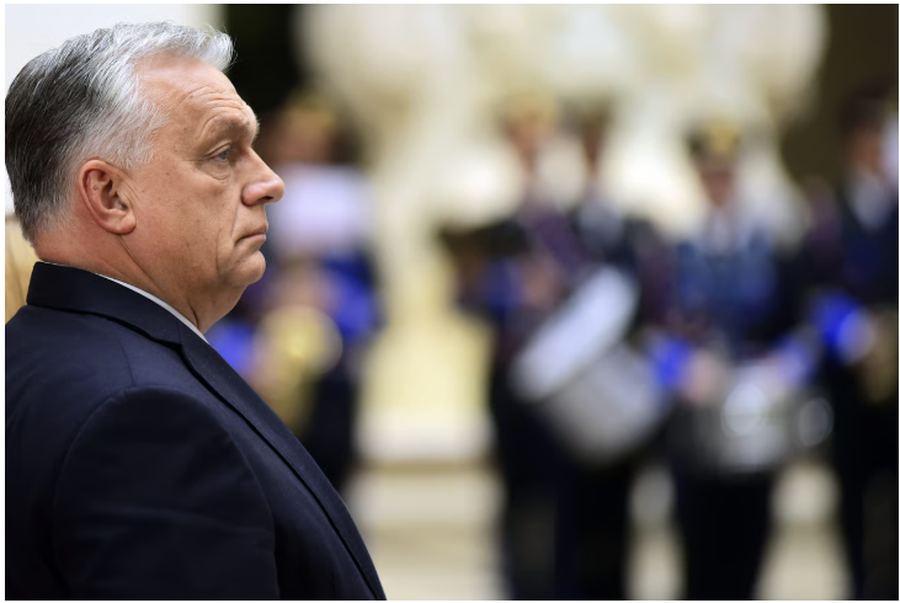
Budapest wants to strengthen its political alliances in Brussels…
Hungary is looking to join forces with the Czech Republic and Slovakia to form a Ukraine-skeptical alliance in the EU, a senior political advisor to Hungarian Prime Minister Viktor Orbán said.
Orban hopes to work with Andrej Babis, whose right-wing populist party won the last parliamentary elections in the Czech Republic, as well as with Slovak Prime Minister Robert Fico, to align positions ahead of meetings of EU leaders, including holding pre-summit meetings, the aide said.
While a strong political alliance remains somewhat distant, its formation could significantly hinder EU efforts to support Ukraine financially and militarily.
“I think it will come and it will be increasingly visible,” said the prime minister’s political director, Balazs Orban, when asked about the potential for a Ukraine-skeptical alliance to start acting as a bloc in the European Council.
"It worked very well during the migration crisis. That's how we were able to resist," he said of the so-called Visegrad 4 group of Hungary, the Czech Republic, Slovakia and Poland at a time when the Eurosceptic Law and Justice Party was in power in Warsaw after 2015.
The then Polish Prime Minister, Mateusz Morawiecki, led the charge as the largest member of the alliance, with the “V4” group promoting pro-family policies as well as strong external borders for the EU, and opposing any forced relocation of migrants between member states.
The Visegrad 4 alliance split after Russia's full invasion of Ukraine, as Poland supported aggressive stances towards Moscow and Hungary took the opposite stance.
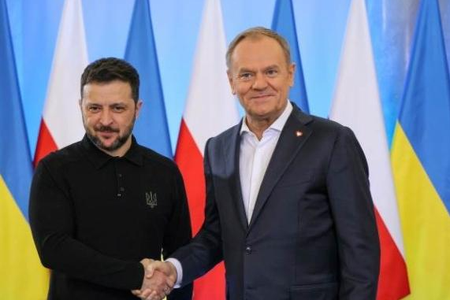
A new Visegrad alliance would have three members instead of four. Poland's current center-right prime minister, Donald Tusk, is strongly pro-Ukrainian and unlikely to enter into any alliance with Orban.
However, Fico and Babis have supported the Hungarian leader's views on Ukraine, calling for dialogue with Moscow instead of economic pressure. Babis has been criticized for his public skepticism in supporting further European aid to Kiev, with the current Czech foreign minister warning in an interview with Politico that Babis would act as Orbán's "puppet" at the European Council table.
However, it may take some time for any version of the Visegrad alliance to reform. While he was re-elected as Slovakia’s prime minister in 2023, Fico has not sought to forge a formal alliance with the Hungarian leader on specific policy areas. Babis has yet to form a government after his party’s recent election victory.
Beyond Visegrad 3
Hungary’s push for political alliances in Brussels goes beyond the European Council, Balazs Orban said. The Hungarian prime minister’s Fidesz party, part of the far-right Patriots for Europe group, could expand its partnerships in the European Parliament, he said, citing the right-wing European Conservatives and Reformists group, the far-right Europe of Sovereign Nations group and “some left-wing groups” as potential allies.
Mainstream parties like the center-right European People's Party could sooner or later turn against European Commission President Ursula von der Leyen, destroying the centrist majority that supported her re-election, the adviser said.
“So this reconstruction of [Visegrad 4] is happening. We have the third largest European parliamentary faction. We have a network of think tanks, which is widely present here in Brussels, and there is also a transatlantic branch. And we are looking for partners, allies on every topic.”
The Mathias Corvinus Collegium, a think tank that receives most of its funding from allies of the Hungarian leader and is chaired by Balázs Orbán, has expanded its presence in Brussels since its founding in 2022.
The Hungarian prime minister, who has been in power for the past 15 years, faces a re-election battle next year. Opposition leader Péter Magyar's Tisza Party is currently more popular than Orbán's Fidesz party, according to Politico's Polling Survey.
Asked about the upcoming election campaign, the aide said it would be "difficult, just like always," blaming Brussels for what he called an "organized and coordinated effort to overthrow the Hungarian government," which included "political support for the opposition."
The European Commission states that measures to withhold funds from Hungary stem from Budapest's opposition to EU law and not from a political agenda.
Asked whether Budapest continues to support Hungary's Health Commissioner, Olivér Várhelyi, who has been accused in the media of leading the recruitment of spies into EU institutions when he worked as an EU diplomat, Orban said the commissioner was "doing an excellent job."
“They are simply issues that are used to portray Hungary as a country that is not loyal to the institutions,” he added. “We want to be in. We are part of the club.” /Adapted from Politico/





Lini një Përgjigje