


 Shkruar nga Marta Serafini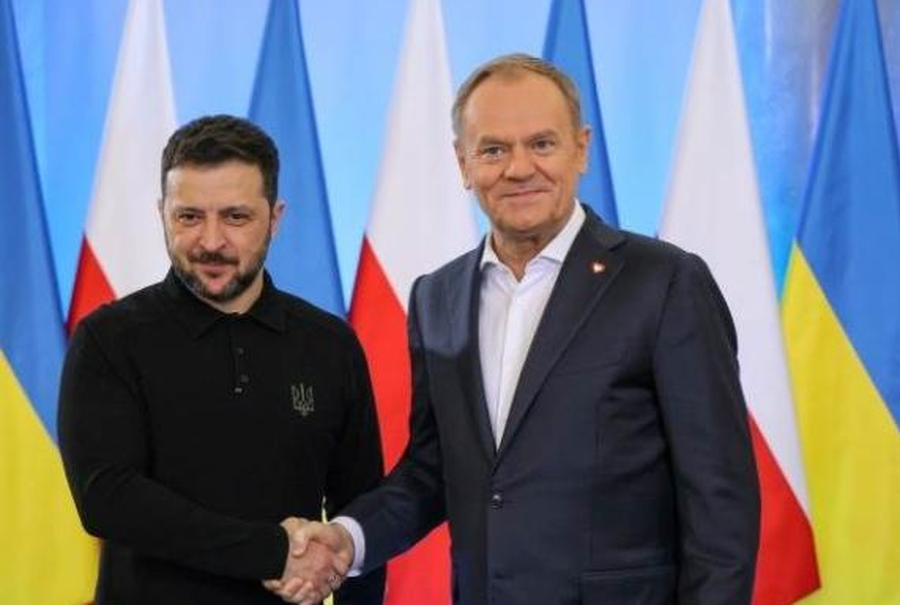
Ukraine risks exhausting its democratic legitimacy. The pact between government and society has broken down. In July, the first anti-government protests since the start of the war denounced corruption and abuse of power...
Ukraine is ready to face war with Russia for another two or three years, according to Polish Prime Minister Donald Tusk, who, in an interview with the Sunday Times, quoted Volodymyr Zelensky's assessment. However, the country is paying a truly heavy price on three fronts: economic, political and military.
The EU dream
Compared to two years ago, war fatigue is increasingly palpable in society. The war has eroded faith in the future: the UN estimates that over 5 million people have fled Ukraine.
Economic activity, already paralyzed by power outages and Russian missiles, is suffering from a labor shortage, while schools are emptying. In this context, economic growth of 2 percent is seen as a success.
A third of this comes from defense and technology. Membership in the European Union remains the “Holy Grail” for many Ukrainians since the Euromaidan protests.
But it is opposed by Hungarian Prime Minister Viktor Orbán and Polish agricultural interests. And that’s not all. The public budget is supported almost entirely by foreign aid. Ukraine has received most of the $15.6 billion in financing from the International Monetary Fund (IMF) program agreed in 2023, and the two sides are now negotiating a new $8 billion package. Domestic taxes barely cover military spending. A $45 billion shortfall is expected for 2025, while Western pledges amount to just $27 billion. “There is no money left,” a Ukrainian official admitted to The Economist. The IMF is pressuring Kiev to devalue the hryvnia.
Front lines
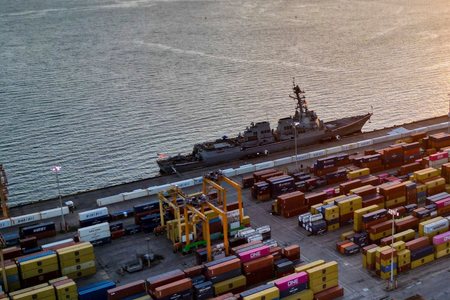
On the military front, after three and a half years, Russia has failed to achieve decisive objectives: it has not captured Kharkiv or Kiev. Ukrainian ports are busier than before the war, and the Russian fleet has withdrawn to Novorossiysk. The front lines have been practically at a standstill since 2022.
Ukrainian innovations and the use of drones have made every move extremely dangerous. Over a million Russians are estimated to have been killed or wounded. In this context, since the beginning of the invasion, Ukraine has resisted largely thanks to civil society: networks of businesses and volunteers fill the gaps of the state and the "Ministry of Chaos", as Ukrainians call the Ministry of Defense.
Many military innovations were born in the garages of Kiev and other major Ukrainian cities, but Russia is capable of copying them and producing them faster. Recruitment is increasingly tough; the infantry is short of men.
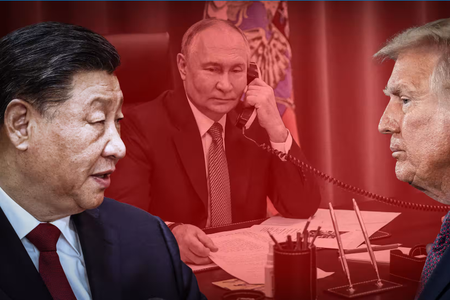
At first, volunteers lined up to go to the front; now many are fleeing. Without broader recruitment, it is hard to imagine a victory. Some are speculating about a compromise imposed by Trump: diplomatic concessions to Moscow that were unthinkable even a year ago, including recognition of the annexation of Crimea and a freeze on the front, are now considered acceptable.
And it is now clear to almost everyone that, for the time being, much of the lost territory cannot be regained. Ukrainian negotiators, however, see no real hope and repeat: "Russia is selling air."
Accusations against the presidency
Beyond men, Ukraine risks exhausting its democratic legitimacy. The pact between government and society has cracked. In July, the first anti-government protests since the start of the war denounced corruption and abuse of power.
Zelensky, elected in 2019 with full control of parliament, has further centralized power because of the war. Opponents argue that his image as a Western hero has made him arrogant.
Now he rules with a narrow circle, dominated by his chief of staff, Andriy Yermak. The presidency is accused of intimidating the media and opponents, filing political lawsuits, and tolerating extortion by the security services. Protests have not stopped this trend. The future looks uncertain: neither a ceasefire nor a long war offer easy solutions. Peace would require reconstruction, care for veterans, managing resentment, and less foreign aid. The government is considering holding elections in 2026, if conditions allow.
Polls show that Zelensky could win the first round, but could lose in a runoff to former Chief of the General Staff, General Valery Zaluzhny. However, many citizens do not identify with either candidate.
Despite everything, there are reasons for hope: civil society, the private sector, the military, the digital economy, and defense are showing significant progress.
But Zelensky, who saved Ukraine at the start of the war, now seems to have lost his way. It remains to be seen whether he will be able to find a new one. /Adapted from Corriere /



Lini një Përgjigje