


 Shkruar nga Pamfleti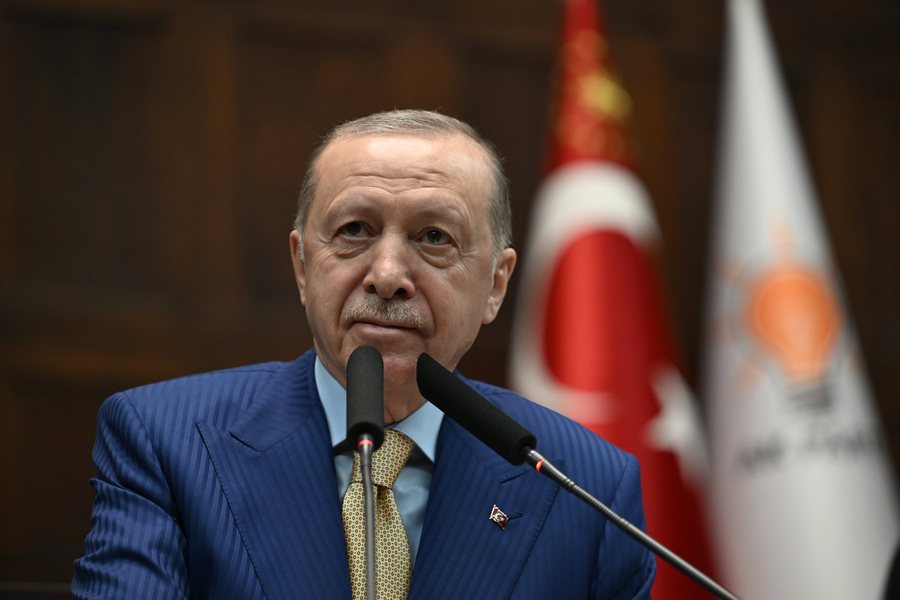
The constitutional reform initiative aims to shift the public debate from the economic crisis to institutional issues and reopen the discussion on the presidential system and Turkey's political direction...
By reviving the debate on constitutional reform, Recep Tayyip Erdogan seems to aim to shift the focus of the public agenda from economic pressures to institutional issues, while simultaneously reopening the debate on the presidential system and Turkey's future political direction.
Turkish President Recep Tayyip Erdogan’s reintroduction of the constitutional reform debate is not an isolated institutional initiative, but part of a broader political strategy aimed at redefining the relationship between state, power, and society in Turkey. The timing of his speech, delivered during a ceremony marking the 158th anniversary of Turkey’s Council of State, reflects the Turkish leadership’s attempt to shift political attention away from economic pressures and growing fatigue with governance, toward a debate focused on institutional and constitutional issues.
Erdogan presented his political journey as a continuation of a long reformist tradition, which according to his narrative begins in the Ottoman era and culminates in the current presidential system. Through repeated references to “legal certainty,” “equality before the law,” and the abolition of “privileges and discrimination,” he aimed to revive the narrative of strengthening popular sovereignty through institutional reforms undertaken over the past two decades, writes Independent Balkan News Agency.
Of particular political significance was his statement that the government had “removed the barbed wire between the people and democracy,” directly linking the presidential system to the unconditional expression of the popular will. These comments also constituted a defense of the governing model established after the 2017 referendum, at a time when the opposition and parts of Turkish society are increasingly raising concerns about the concentration of powers in the presidency.
His decision to address the country’s highest administrative court also carried strong institutional and political symbolism. The Turkish president devoted a significant portion of his speech to the relationship between the judiciary and the executive, arguing that the judiciary should not function as a mechanism for political interference in the decisions of an elected government. In doing so, he reiterated a long-standing position of the AKP government regarding the role of the judiciary in the wake of the political and institutional clashes of the past decade.
His references to the events of December 17-25, 2013, and to “structures that had infiltrated the judiciary” are part of the Turkish leadership’s ongoing effort to present institutional reforms as a necessary response to domestic centers of influence. At the same time, Erdogan sought to distance himself from Turkey’s Kemalist past, arguing that previous constitutional frameworks had been shaped in the shadow of military interventions or elite political structures.
His reference to a “new, inclusive, liberal and civil constitution” is closely linked to the government’s attempt to bring the debate over Turkey’s institutional identity back to the center of public discourse. Despite numerous amendments made to the current Constitution in recent years, the Turkish presidency aims to reopen a broader discussion on the country’s political framework, presenting the existing system as the product of periods dominated by political and military influence, rather than the result of a broad political and social consensus.
Beyond the institutional dimension, the agenda for a new constitution also carries clear political consequences. Persistent inflationary pressure, growing economic fatigue in broad segments of society, and the need to maintain the cohesion of the governing coalition are creating the conditions to shift the public debate towards issues of political identity and institutional orientation.
At the same time, the resumption of the constitutional debate could also serve as an instrument for reshaping political alliances. The government seems aware that the opposition would find it difficult to openly reject a discussion presented as democratization and political renewal, without paying a political cost, thus creating a new arena of political confrontation focused on the future of Turkey's political system.
However, the prospect of a deep constitutional reform remains extremely complex. The ruling bloc currently lacks the parliamentary majority needed to adopt a new constitution without a broader political consensus or a referendum. At the same time, skepticism remains strong within Turkish society towards any changes that could further strengthen presidential powers.
Erdogan's speech shows that Ankara is gradually entering a new phase of institutional and political confrontation. At stake is not only the content of a possible new constitution, but also the question of who will shape the next phase of Turkey's political and constitutional identity, in a period of increased domestic and regional challenges. / Pamphlet /







E shihni cfare te ben ferexheja ne koken e femres ne koke si gruaja e ketij zhulsi? Lexova qe kundershtari tij, parashikohet te denohet qindra vite me burg. Ja cdo te thote, yxhym, bulldum, maskarallek sulltanat. Paraja, sa paraja kurve, ben qe pasi te ka shkerdhyer para e mbrapa per 500 vite e nis nje dhjerokraci, hap shkolla turke otomane, hap medrese, ngre xhami "madheshtore", ideologe muslo qe lehin per mohimin e kombit, mohim identiteti kombetar, vjedhje te pasurive kombetare e lista nuk ka fund. Kesaj i thone lesh e li shtet qe kemi.