


 Shkruar nga Pamfleti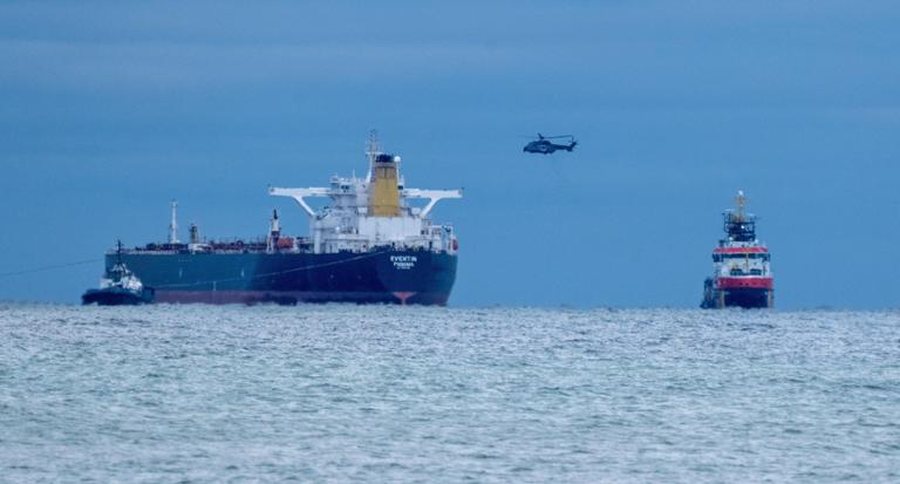
With its ghost oil ships, Russia is bypassing sanctions on Ukraine. But the EU wants to weaken Putin's war economy and is drawing up a controversial plan...
They sail the world's oceans, bringing Russian oil to the international market, but also secretly filling Russia's war fund for its war of aggression in Ukraine. These are the ghost tankers in Vladimir Putin's so-called shadow fleet.
Partially wrecked ships have long been a thorn in the side of the European Union (EU).
Not only is the Kremlin ruler using them to very effectively circumvent sanctions, but recently the tankers have apparently also been used as launch pads for drone spy flights in the Baltic Sea region. The EU is therefore drawing up a controversial secret plan as a defensive strategy.
EU foreign policy chief Kaja Kallas is pushing for tougher measures against Russia's so-called shadow fleet, which is used to circumvent international oil sanctions.
According to a working document for the meeting of Foreign Ministers being held in Luxembourg, the size of this fleet is now estimated at between 600 and 1,400 tankers.
"These ships not only contribute to the Russian war economy, but also pose a significant threat to the environment and the safety of maritime transport," warn experts from the EU High Representative for Foreign Affairs and Security Policy in the document obtained by the German Press Agency.
Accidents can cause oil spills and other marine pollution, with devastating consequences for coastal areas, ecosystems and fisheries.
Since many of the ships in Russia's shadow fleet have unclear ownership structures and, according to experts, are uninsured or insufficiently insured, taxpayers in coastal states are likely to have to cover the damages in the event of an accident. For the EU, this is another reason to enforce its sanctions.
For years, Moscow has used its shadow fleet to circumvent a price cap on Russian oil imposed by Ukraine’s Western backers. To that end, it mostly charters aging ships with difficult-to-transcribe ownership structures and uses various methods to hide the origin of oil cargoes. Sometimes the satellite-based Automatic Identification System (AIS) transponders are disabled or tampered with, and sometimes the oil is transferred between tankers offshore.
Particularly worrying is the warning about the possible military use of the fleet in the shadows. Experts fear that the ships could be used as platforms for launching drones for jamming or espionage attacks. This suspicion also arose after mysterious drone sightings in Denmark, which led to significant air traffic restrictions, especially in the capital, Copenhagen.
To bring the problem under control and further weaken Russia's economy, Kallas is now proposing not only tougher measures against the ships and shipping companies involved, but also more intensive cooperation with coastal states and those countries under whose flags the ships are registered.
Ideally, these states should give their consent for the ships to be inspected by the navies of EU countries. Since June 2025, three EU naval missions have been tasked with monitoring the shadow fleet and gathering intelligence about it. This includes Operation Aspides, which in fact aims primarily to help protect merchant ships in the Red Sea from attacks by Yemen’s Houthi militia. The German Bundeswehr is also involved in the mission.
The plan is to increase the number of ships affected by port bans and punitive measures as part of the 19th package of EU-Russia sanctions over the Ukraine war from the current 444 to 562. At a meeting of EU foreign ministers in Luxembourg on Monday, Kallas said she hoped an agreement on the 19th package of sanctions could be reached at a meeting of EU heads of state and government this week. However, they must constantly look for new ways to combat the shadow fleet, as Russia is inventive in circumventing sanctions.
At the same time, Ukraine is intensifying its efforts to bring Russia’s economy to the brink of collapse in retaliation. For months, the Ukrainian military has been bombing energy facilities in Russia, both gas power plants and oil pipelines. Just this weekend, a power plant in Orenburg was hit again, the Kyiv Independent newspaper reports.
The facility is located 900 kilometers from the Ukrainian border.
The tactic of limited strikes against Russia's economy is having an effect.
According to a report in the Moscow Times, Ukrainian attacks have recently shut down at least four major Russian oil refineries, with an annual capacity of 44.3 million tons, about 13 percent of Russia's total refining capacity.
According to Reuters, Russian oil product exports fell by 17.1 percent in September compared to August, totaling 7.58 million tons. Therefore, it is not excluded that a stronger blow to the shadow fleet could cause significant losses to Putin's military fund. /Adapted from Pamphlet/





Lini një Përgjigje