


 Shkruar nga Pamfleti
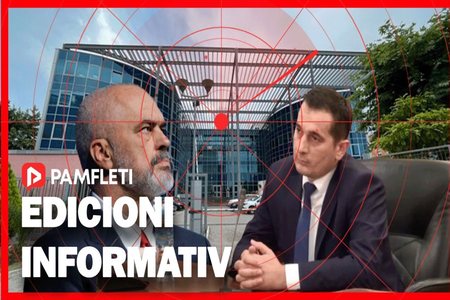
Security expert Ilir Kulla has analyzed the "incident" that occurred at the Prime Minister's Office, where BKH investigators attempted to enter armed. The Prime Minister reacted harshly to this. Kulla, who served as a security advisor to the Presidency, has recounted an episode during the time when Bamir Topi was at the head of the institution. In "Të Pashoq", he has also shown the path that should have been followed to avoid disagreements.
-Let's clarify that procedure, what is it like, are they allowed to be armed or not?
I had an experience many years ago, when President Topi was in office and I was the National Security Advisor. An incident occurred one Sunday. Someone entered the side door of the Presidency in a car, was drunk, crashed, crashed the car there and the soldier, in self-defense of his duty, shot. No one was injured there.
And I come, that is, I go to the institution. The president was somewhere, but the main people of the institution at that time, sorry, Mr. Flloko who was the secretary general, Mr. Xhaxhiu who was the chief of staff, I who was the National Security Advisor, I think someone else, and the commander of Internal Security of the Presidential Guard. A prosecutor also comes, whose name was Braho, but it is not this Braho, it was a prosecutor from Tirana, who said that he should issue a detention order for the soldier.
I told him: you cannot issue a restraining order for the soldier. You called the soldier's superior, that is, the commander of the Guard. He makes available to you whatever you need, perhaps even his isolation within the Guard and others, but he has done his duty, because that is his duty. If you attacked the special institution, he will respond. And so it was done.
Then there was an investigation, the matter was closed, but there was no arrest, because the soldier did his duty. It is the case of January 21. In the case of January 21, with the police leaving, because it was the police who initially confronted the protesters, we had a direct clash between the Guard and the protesters, which caused four deaths and many injuries.
Yes, you are letting the Guard clash. The Guard has heavy weapons, weapons of war. They use them for defense, but they are weapons of war. Even MP5s and Kalashnikovs. They do not have personal defense weapons, pistols. They are weapons of war.
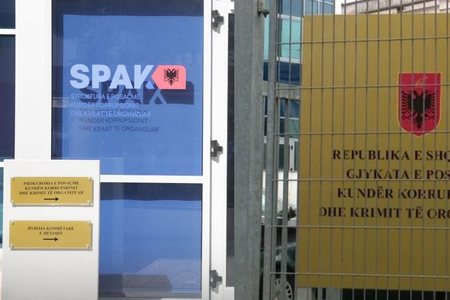
And at that time, the clash arose, after the prosecutor general of the time, Mrs. Rama, issued a detention order for the leaders of the Guard. And that was precisely the clash then. Should people who are doing their job be detained? That is why this issue is now in the Special Prosecution Office.
So, should people who are doing their job be stopped? At that time, the prime minister of the time, who is now the leader of the opposition, took the protection of those who had implemented the protocol.
-But in this case, both of them were doing the work.
Yes, I'm still trying to explain this. Those who had done their job, that is, they had defended the institution and they had defended it by going beyond and committing a massacre, by killing people. Yes, they had done their job, they were at work, because they had not gone outside. So, it's not that they went out into the streets and killed people in the streets. They were inside.
And this is the big question mark with the January 21 event. Let's come to today's case. The Guard has the security protocol. And the security protocol, even if you and I go to the Presidency or the Prime Minister's office, the Guard's says: please, you will pass, you will have control, you will sign this document, where you will go, because that's how the security protocol is.
Guard, military, you know. That is, an armed BKH agent is no exception.
-Doesn't it matter?
The only entity that can resolve this issue is the National Bureau of Investigation, because they are also police officers, to ask the responsible institution, either the Council of Ministers, the Presidency, or the Guard of the Republic, and say: we will go, take action. Now, we have our armed people, because that is how we do our job.
-They said it, the law dictates it.
Yes, well. The law dictates to these and the law dictates to them. The only thing that could be done is to notify, for example, the Guard commander of the Guard, or one of the deputy commanders, or the chief of staff, to get a list of those who would go, to have someone accompany them, to do their activity, to enter and exit.
But under normal conditions, there is no military unit and there is no institution of particular importance, be it the Presidency, Parliament, or Prime Minister's Office, where a Guard officer or non-commissioned officer of the Guard can allow you, even if you are a representative of another institution, to enter, because that is how it is written.
Either you change their job and job description, or you find another solution. So it's one of those typical cases where both parties are doing their job.



Lini një Përgjigje