


 Shkruar nga Andi Hoxhaj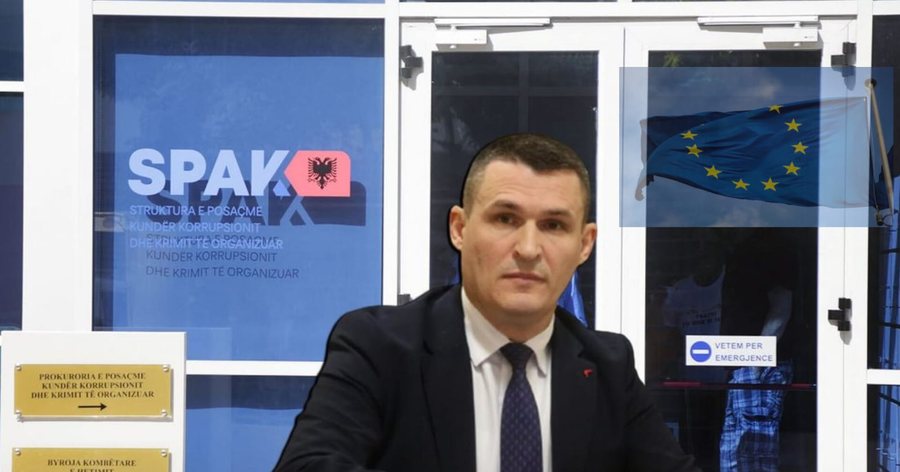
SPAK has accused almost all of its public officials, including former presidents, prime ministers, ministers and mayors, of abuse of office. And it has done so under a criminal provision that is supported by the EU.
In 2023, the EU proposed an anti-corruption directive in response to multiple scandals, including Qatargate, Huawei and the Uber dossier. The proposal also sought to address recent backlogs in the rule of law, as well as the fact that some EU members have fallen in Transparency International’s Corruption Perceptions Index rankings.
Highlighting how corruption continues to affect the EU, the directive aims to standardise the definition of corruption offences and establish common penalties across the bloc. And to date, in line with EU procedure, the proposed draft law has been presented by the European Commission in 2023, and the EU Parliament and the EU Council have amended and agreed on most of its content.
But since late June, negotiations have been at a standstill over three proposals in the text of the directive, which have been the subject of disagreements between member states. The main sticking point is the criminal offence of "abuse of office" by public officials, with opponents calling for it to be reclassified from a criminal offence to an administrative offence.
Simply put, the anti-corruption directive is at a critical juncture. The question is, will the bloc finally take a step forward, or will it continue as usual?
Italy and Germany are currently leading the opposition, with the support of Hungary, Luxembourg and the Netherlands. They argue that the provision is vague, overly broad and open to abuse, as it could be used to target and indict public officials in order to create a public spectacle of fighting corruption. They also argue that it could discourage officials from working for the public administration or approving publicly funded projects for fear of facing prosecution.
Italy itself abolished the offence of abuse of office in 2024, after it had been part of its criminal law for almost a century. So including the provision in the EU directive would require reinstating it in their own law. Moreover, the reasoning behind Italy’s decriminalisation was that the law hampered decision-making at local and central levels of government, with officials fearing accusations of misappropriation of public resources. It had also become a politically motivated instrument of prosecution harassment, with recent figures showing that only nine in 5,000 criminal cases resulted in convictions.
Some other EU members support this perspective, but the truth is that changing the law to an administrative offense would make it easier for public officials to engage in clientelism, nepotism, and outright corruption, potentially opening the door to more white-collar crimes and muddying the waters over potential conflicts of interest.
Currently, Parliament considers the decriminalisation of abuse of office to be a red line, essential for the bloc’s efforts to continuously fight corruption. This is a major problem in the EU and so far, the EU has consistently failed to adopt strong legislation to address the problem, let alone implement it effectively.
That is why on 2 June, 57 civil society organisations published an open letter calling on EU leaders to demonstrate real political will, setting a higher standard for integrity and accountability across the bloc.
They are right: the EU can make real progress against corruption with this legislation. Whereas a watered-down directive would send the wrong message both to its citizens and to the world, especially to candidate countries, where the EU has made the fight against corruption a key precondition for membership.
Or do we have one law for the EU, and another for EU aspirants?
The bloc last assessed the impact of corruption in 2014, estimating it costs more than €120 billion a year, with some studies estimating it could be as high as €179 billion. Yet most anti-corruption NGOs and indicators suggest that corruption is still on the rise in the EU.
For example, during the Covid-19 pandemic, almost all (25 out of 27) EU members "saw an increase in tenders with only one bidder, a key sign that the tender may have been rigged in favour of the bidding companies".
The opposite is happening in Albania, where the Special Prosecutor’s Office against Corruption and Organized Crime (SPAK) has charged almost all of its public officials, including former presidents, prime ministers, ministers and mayors, with abuse of office. And it has done so under a criminal provision modeled on the previous Italian criminal law on abuse of power, which is supported by the EU.
Meanwhile, the US’s suspension of the Foreign Corrupt Practices Act and the dismantling of its kleptocracy units, a major setback in the country’s global efforts to address corruption, only makes the need for the EU to recognize its role on the world stage more urgent.
EU members must demonstrate real leadership and challenge the message they are currently sending: that the EU does not take the fight against corruption seriously within its walls, while it is happy to take moral precedence elsewhere, whether in accession talks with Ukraine or by considering Albania and Montenegro's EU membership.
EU members must rise to the occasion, adopting a strong anti-corruption directive that will impact the bloc and beyond without further delay. /Adapted from “Pamphlet” by “Politico”





Lini një Përgjigje